
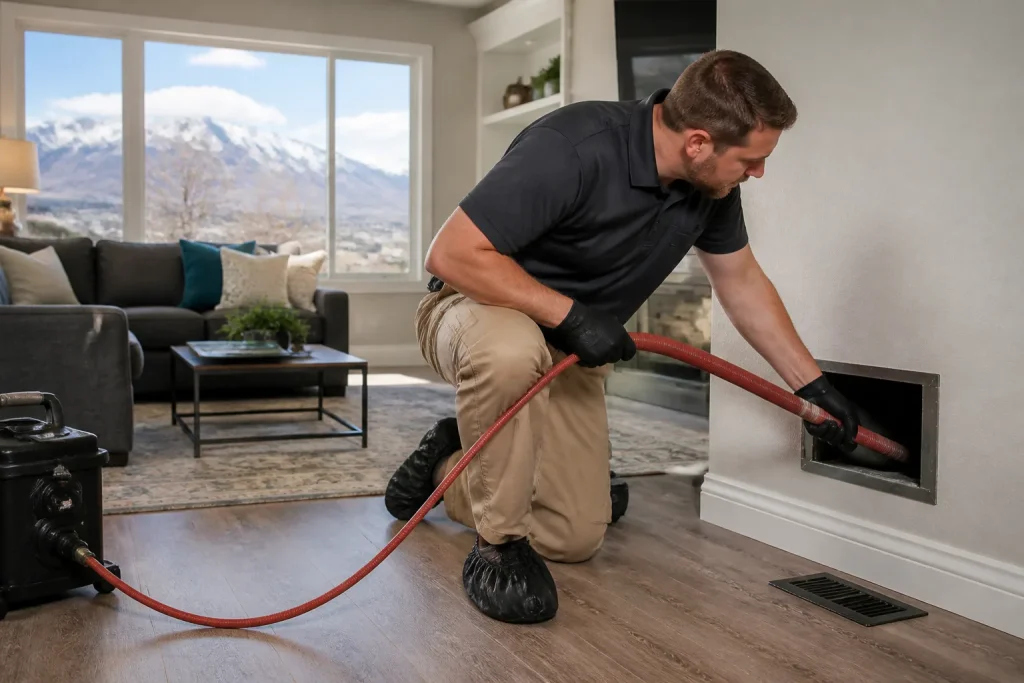
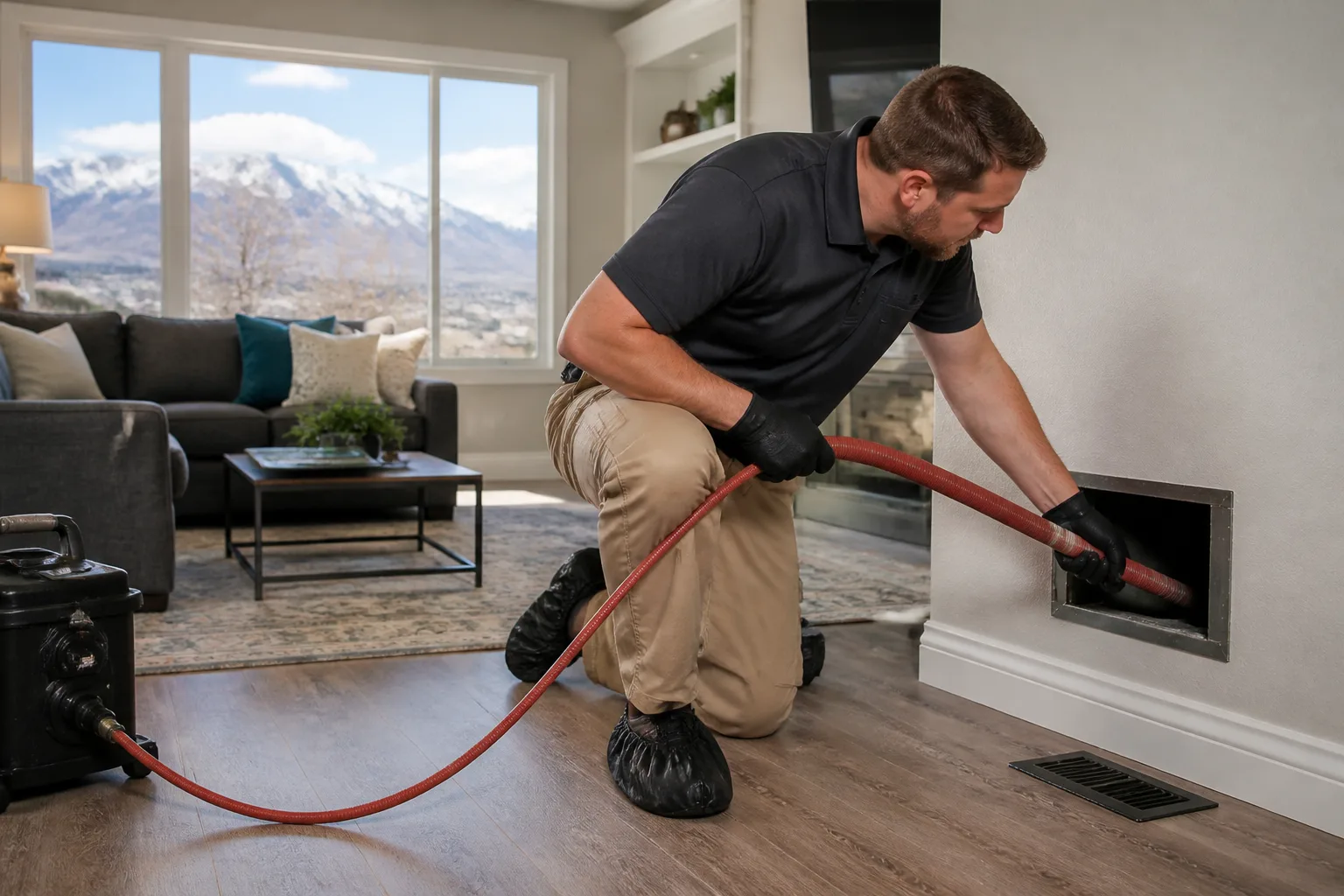
Honeywell Air Duct Cleaning in Salt Lake City: A Homeowner’s Guide
If your Salt Lake City home has a Honeywell TrueCLEAN or a Honeywell electronic air cleaner installed, a technician who doesn’t pull and wash those cells before running negative pressure is dragging debris straight through a component that costs $300 – $600 to replace. That’s the mistake we want you to avoid. Honeywell equipment is good hardware, but it changes how a duct cleaning should be sequenced, and most generic cleaning protocols don’t account for it. This guide explains what’s different, why it matters, and how to prepare your system before anyone shows up. If you’d rather hand it to a specialist than work through it yourself, call (855) 658-4198.
Why Honeywell-Equipped Homes Need a Different Cleaning Approach
Standard duct cleaning assumes a straightforward path: negative pressure at the air handler, agitation through the branches, debris captured at the source. That works fine on a plain forced-air system. Add a Honeywell electronic air cleaner and a TrueZONE damper panel, though, and the same protocol can damage components or leave the system significantly under-cleaned. We’ve seen both happen.
The electronic air cleaner is the first issue. Its collector cells are charged plates that grab fine particulates before they reach the blower. They’re designed to be removed and washed. Run a contact vacuum or high-volume negative pressure through a system with the cells still seated, and you’re pushing loosened debris into a honeycomb that was never meant to handle bulk material. The cells can bend, short, or load up so heavily they stop collecting. A replacement set runs several hundred dollars, which makes “we’ll just vacuum around it” a costly shortcut.
The second issue is zoning. Honeywell TrueZONE systems use motorized dampers to direct conditioned air to specific areas of the house. A cleaning that pulls suction on the whole trunk at once fights those dampers rather than working with them, and the branches serving closed zones get far less airflow and far less cleaning. Technicians need to sequence zone by zone, opening each damper in turn, so every branch sees full negative pressure. If you have a Honeywell-equipped home in Salt Lake City, ask whoever cleans it how they plan to handle the zone panel. The answer tells you a lot.
Electronic Air Cleaner Cells: Remove, Wash, Reinstall
Honeywell electronic air cleaner cells need to be removed from the cabinet and washed by hand. They should never be vacuumed in place during a duct cleaning. Here’s why the step is non-negotiable:
- The cells are the collection point. They hold the finest dust, the particles that slip past a standard filter. That load has to come out, not get pushed deeper.
- The plate spacing is precise. Bending a plate or knocking a wire loose changes how the cell charges and reduces its capture efficiency.
- Washing restores performance. A properly washed and dried cell goes back in working like new. A vacuumed-in-place cell often doesn’t.
In our experience, homeowners in Salt Lake City ask about this step more than any other, usually because a previous cleaning skipped it and the air quality didn’t improve afterward. Ask the technician directly: will the cells come out, get washed, and go back in dry? If the answer is vague, that’s your signal.
Sequencing Negative Pressure Around TrueZONE Dampers
On a zoned system, the technician should clean one zone at a time rather than pulling suction on the entire duct system simultaneously. Whole-system suction on a zoned home does two things poorly: it under-cleans the branches behind closed dampers, and it puts unnecessary stress on the damper actuators.
What a proper sequence looks like on a typical Honeywell TrueZONE setup:
- Confirm the zone controller setting so the dampers can be driven open deliberately, zone by zone.
- Open one zone, run negative pressure and agitation through that branch, then close it and move to the next.
- Verify each motorized damper actually strokes. A stuck damper is a common find, and it’s worth knowing about before the cleaning, not after.
- Clean the trunk last, once every branch has seen full airflow.
This is slower than a blanket pass, and it’s the only way to get an honest result on a zoned Salt Lake City home. Our air duct cleaning work follows this zone-by-zone pattern whenever a Honeywell panel is in the picture.
The Media Filter Bypass Risk Most Cleanings Miss
Here’s the detail that catches people: if the media filter bypass damper is left open during cleaning, the air handler pulls unfiltered air straight past the filter. The whole point of a media filter upgrade is to stop that bypass, and a cleaning that runs with it open undoes the benefit before the system is even back in service.
Check the bypass before any work starts. The damper should be seated so air has to travel through the filter, not around it. After the cleaning, confirm it’s still seated. If you’ve paid for a Honeywell media filter upgrade and your dust hasn’t improved, an open bypass is one of the first things to rule out. It’s a small part that quietly cancels out a real investment.
This is also where our use of Abatement Technologies air-filtration units earns its keep. We capture dislodged particulates at the source during the job instead of redistributing them through the house. Cleaner ducts, confirmed, not just a truck and a vacuum.
How to Prepare Your Honeywell System Before the Technician Arrives
Ten minutes of prep makes the visit smoother. Before the technician arrives, do these four things:
- Locate your zone controller. Note the current setting and whether the system is in heat, cool, or fan-only mode.
- List which zones have motorized dampers and which are manual. Motorized dampers can be driven open during cleaning; manual ones need to be handled differently. Knowing which is which saves time.
- Find the air cleaner cabinet and note the model. This tells the technician whether they’re working with collector cells, a media filter, or both.
- Check the bypass damper position and mention it if anything looks off.
Beyond that, clear access to the air handler and the return grilles. That’s it. If you’re comparing quotes, ask each company how they handle EAC cells and zone dampers. Our technicians use Rotobrush and Nikro negative-pressure systems, the same equipment specified by commercial and restoration contractors, and they’re familiar with the Aprilaire and Honeywell components most often installed in Salt Lake City homes. Equipment you can look up matters when the quote is on the table.
Does DIY Cleaning of EAC Cells Affect the Honeywell Warranty?
Washing Honeywell electronic air cleaner cells yourself is generally a normal maintenance task and doesn’t void the equipment warranty. But some things do, and it’s worth knowing where the line sits:
- Hand washing the cells per the manufacturer’s instructions is routine maintenance. Most warranties assume it.
- Running the cells through a dishwasher or using harsh cleaners can damage the plates and may not be covered.
- Bending plates or breaking ionizer wires during handling is damage, not maintenance, and a warranty claim may be denied.
- Neglecting the cells entirely can cause motor or blower strain that falls outside coverage.
A full duct cleaning that removes, washes, and reinstalls the cells as part of the job keeps the maintenance documented and the components handled correctly. If you’re unsure what your Honeywell warranty covers, check the paperwork that came with the system.
When to Call a Pro
Not every Honeywell system needs a full cleaning on day one. But there are signs it’s time to bring in someone who knows the equipment:
- Dust returns within a week of cleaning or changing filters.
- Airflow to one zone has dropped noticeably.
- You notice a musty smell when the system kicks on.
- Your EAC cells load up fast or stop collecting altogether.
- A previous cleaning skipped the cells or the zone dampers.
Our HVAC cleaning work covers the full duct ecosystem, so if the cleaning turns up a damaged damper or a leaking seal, you don’t need a second contractor to fix it. Cleaning, repair, sealing, and sanitizing get resolved in one visit. We also handle dryer vent cleaning if your vent run is due.
The Bottom Line
Honeywell equipment is worth protecting, and cleaning it correctly comes down to four things: pull and wash the EAC cells, sequence negative pressure zone by zone, confirm the media filter bypass stays seated, and document the work. Skip any of those and you’ve paid for a cleaning that leaves the system under-served. Our technicians have up to 14 years of experience with professional Rotobrush, Nikro, and Abatement Technologies gear, and Aprilaire and Honeywell components are within our scope of familiarity.
If you’re in Salt Lake City and need help, Salt Lake City Air Duct Cleaning Co offers free estimates. Call (855) 658-4198. We answer 24/7. Fast dispatch from 7am to 7pm, Sunday through Friday.
Frequently Asked Questions
There’s no single price, because cost depends on the size of the system, how many zones it serves, whether an electronic air cleaner is installed, and the condition of the ducts. The written estimate sets the final price, and it’s free. Call (855) 658-4198 for an exact quote.
You can, but you shouldn’t. Vacuuming the cells in place pushes debris into a component that’s meant to be washed by hand, and it risks bending the plates or damaging the ionizer wires. Cells should be removed, washed, dried, and reinstalled as part of any proper cleaning.
Cheap quotes usually skip the steps that take time: pulling and washing EAC cells, sequencing negative pressure through zones, or running real filtration capture during the job. A discount pass can leave a Honeywell-equipped home significantly under-cleaned. Ask what’s included and how they’ll handle your zone panel before you compare prices.
Ask for before-and-after photos of your own ducts and a walkthrough of what was cleaned. A technician should be able to show you the cells after washing, confirm each zone was pulled, and point to the bypass damper. If you can’t get a straight answer, that tells you something too.
Written by the team at Salt Lake City Air Duct Cleaning Co.
Need Air Duct Cleaning Help?
Call Salt Lake City Air Duct Cleaning Co - the local pro we connect you with is licensed and insured, with free written estimates in Salt Lake City.
(855) 658-4198