
Top Signs You Need Air Duct Cleaning Service – Don’t Ignore These
Dust on your vent covers is a weak indicator of what’s actually inside your ductwork. The debris that matters sits at the first elbow past the register, in the return plenum, and along the trunk line – places you can’t see from the living room. If you’re trying to decide whether your system needs attention, the reliable signs are airflow changes, visible debris at the source, and contamination events like renovations or pest activity. If you’d rather have someone look than guess, call (855) 658-4198 for a free estimate.
What Are the Real Signs You Need Air Duct Cleaning?
The honest answer: most of the signs people search for are surface clues, not proof. Wiping a dusty vent cover takes thirty seconds and tells you almost nothing about the inside of the duct run. What justifies cleaning is contamination you can verify – debris visible past the register boot, reduced airflow at multiple vents, or a specific event (renovation, rodent activity, new construction) that introduced material into the system.
Here’s how we separate cosmetic dust from confirmed internal debris:
- Cosmetic register dust: a gray film on the grille face, easily wiped, usually from room air circulation and ordinary house dust.
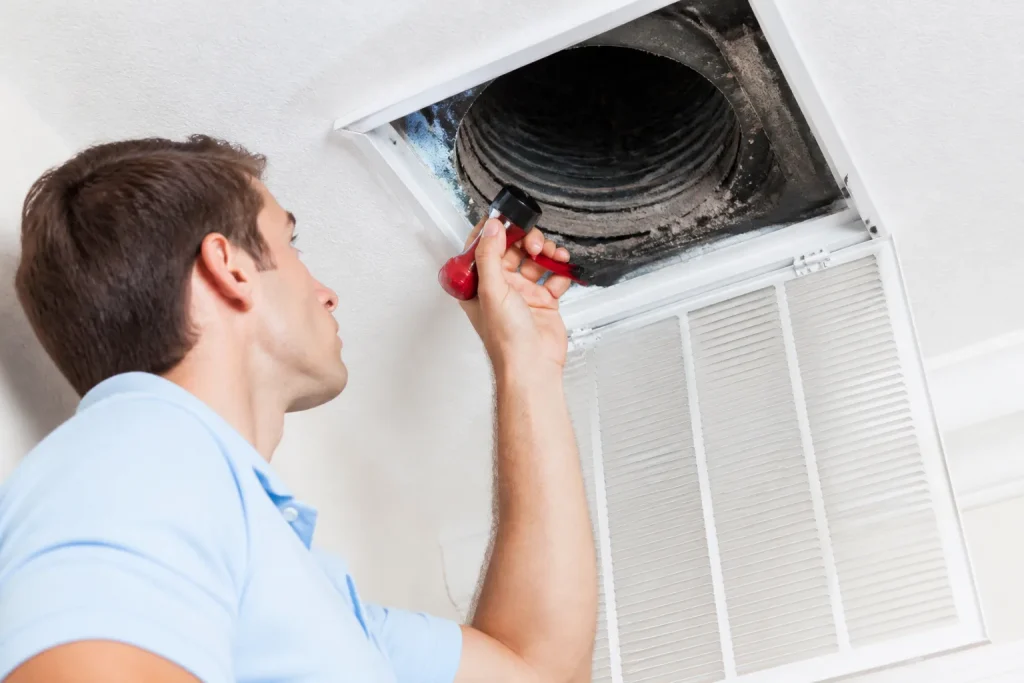
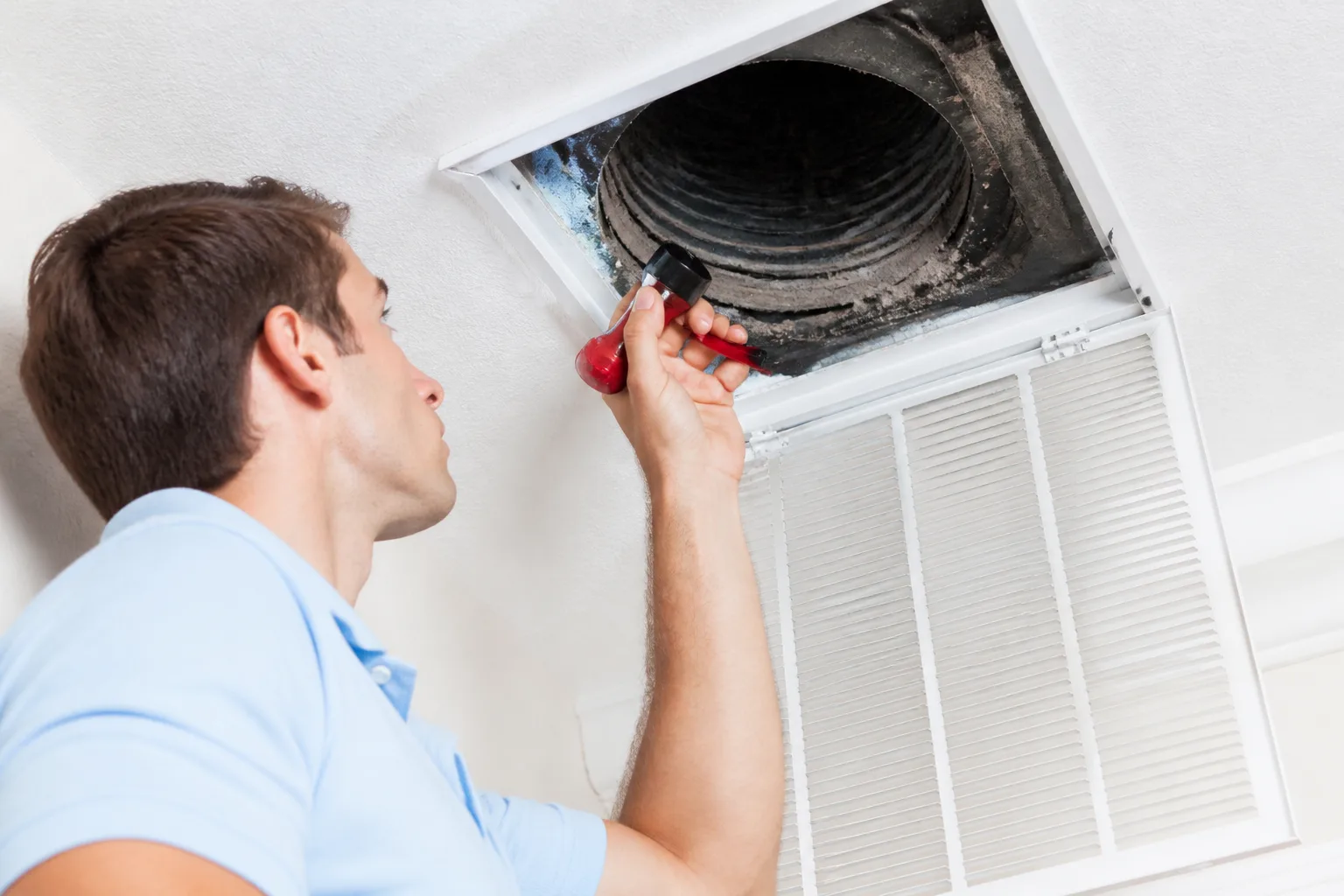
- Confirmed internal debris: debris visible when you remove the register and look down the boot with a light, or when a camera inspection shows accumulation on the duct floor and at elbows.
- A documented contamination event: drywall work, insulation replacement, pest activity, or water intrusion that opened or flooded part of the system.
If your only sign is a dusty grille, wipe it and monitor. If you’re seeing debris past the boot, that’s when a professional inspection in Salt Lake City is money well spent. Our technicians have up to 14 years of experience reading exactly this distinction.
Inversion Events and Fine Particulate: A Salt Lake City-Specific Signal
Salt Lake Valley inversions trap fine PM2.5 particulate near the ground for days at a time. That particulate doesn’t stay outside. It gets drawn into return air paths, and a filter only catches what it’s rated to catch. The fraction that slips through settles inside the return plenum and on the duct floor, where it accumulates quietly across multiple inversion seasons.
Inside the return plenum, that accumulation looks like a fine gray-brown film coating the sheet metal, often darker at joints and transitions where airflow slows. It’s not dramatic. It’s not fuzzy or alarming. It’s just there, layer after layer, sitting in the path of every cubic foot of air your system moves.
Patterns we watch for in Salt Lake City homes:
- Dark film on the return plenum walls that wipes off easily on a white cloth.
- Fine grit collecting at the base of the air handler cabinet.
- Dust reappearing on horizontal surfaces within days of cleaning.
- Airflow that feels weaker after a heavy inversion stretch.
A filter helps, but it doesn’t fix what’s already settled. When we clean, we use negative-pressure setups with Abatement Technologies filtration so that accumulated particulate gets captured at the source rather than redistributed into your living space. That matters more here than in a city with cleaner winter air.
New Construction and Recent Renovation: The Sign Most Homeowners Miss
If your home is under five years old, there’s a strong chance your ducts captured construction dust before you ever moved in. Drywall dust, insulation fibers, and sawdust settle into the system during the build, and a builder’s rough clean doesn’t always address the inside of the trunk line. This is one of the most contamination-dense scenarios we encounter.
The same logic applies after a renovation. Any permit-required HVAC work that opens duct sections introduces debris, and not all of it gets vacuumed out before the system goes back online. Cutting into a duct to add a return or reroute a run leaves fine dust that recirculates for years.
What a proper post-renovation inspection should reveal:
- Whether duct sections were opened and resealed, and whether the seams are still tight.
- Visible dust or fiber accumulation at the first elbow past each affected register.
- Whether the return plenum shows loose debris from cutting or demo work.
- Condition of any flex duct that was handled, moved, or compressed during the job.
If you’re moving into a new build in Salt Lake City or just wrapped a remodel, have the system looked at before you settle in. Cleaning, sealing, and repair can be handled in one visit, which matters because a second contractor for sealing is a headache nobody needs.
Rodent Activity: How to Tell It Apart From Ordinary Dust
Rodent debris in ducts is not the same problem as accumulated dust, and it needs a different response. Ordinary dust is uniform, gray, and settles evenly. Rodent activity leaves a signature that’s distinct once you know what you’re looking at.
Tells that point to rodents rather than dust:
- Shredded insulation: torn, fibrous clumps rather than a smooth film.
- Droppings near register edges: small dark pellets at the boot or on the grille face.
- Chewed flex duct: visible tears or gaps in flexible runs, especially in attics or crawl spaces.
- Staining at duct joints: rodent urine leaves a dark mark that follows a seam.
If any of that is present, cleaning alone isn’t the fix. Contaminated duct interiors should be sanitized with a product rated for HVAC environments. Guardsman-line sanitizing treatments are part of our standard service scope for exactly this reason – not a pressure-sell add-on, but the step that follows cleaning when biological contamination is confirmed.
In our experience across Salt Lake City homes near open space and older neighborhoods, rodent intrusion into duct systems is more common than people expect, and it’s worth a proper look even if the only symptom is a smell you can’t place. For broader system cleaning, see our guide to air duct cleaning.
When to Call a Pro (and What to Ask)
Some signs you can check yourself. Others need equipment. The line is fairly clear:
- You can wipe a register cover. You can’t safely pull flex duct or open a plenum.
- You can watch for changes in airflow. You can’t visually confirm what’s at the far end of a thirty-foot trunk line without a camera.
- You can notice a smell. You can’t tell whether it’s dust, mold, or rodent contamination without inspecting the source.
If you’ve confirmed debris past the register boot, had a renovation that opened HVAC sections, or found any sign of rodent activity, it’s time for a professional inspection. Ask what equipment will be used. Professional duct cleaning relies on contact-vacuum and negative-pressure systems – Rotobrush and Nikro rigs are standard in the trade – not a shop vacuum with a long hose. Ask whether the company can also handle repair and sealing if the cleaning reveals loose joints or torn flex duct. And ask whether before-and-after photos of your own system are included.
One flat price per system, agreed before work starts, is the standard we hold ourselves to. If a quote is built per-vent or starts with a coupon figure, that’s a flag worth heeding.
Related services in Salt Lake City: if your dryer is taking longer to dry clothes or the vent smells musty, that’s a separate job worth scheduling alongside duct work – see dryer vent cleaning. And if your system is overdue for a full look at the air handler and coils, our HVAC cleaning page covers what that involves.
The Bottom Line
The signs that justify duct cleaning are the ones you can verify: debris visible past the register boot, a documented contamination event like new construction or renovation, rodent activity inside the system, or accumulation from Salt Lake Valley inversion seasons that filters can’t fully address. Cosmetic dust on a vent cover isn’t enough on its own – but it’s a reasonable prompt to have the system looked at properly.
If you’re in Salt Lake City and want a straight answer about whether your ducts actually need cleaning, we offer free estimates. Call (855) 658-4198. We answer 24/7. Fast dispatch from 7am to 7pm, Sunday through Friday. The local pro is licensed and insured as their state requires, and you’ll get one flat price per system with before-and-after photos of your own ducts. Our technicians have up to 14 years of experience, and everything from cleaning to sealing to sanitizing is handled under one roof – no handoffs, no second contractor. For a full picture of what we do, visit Salt Lake City Air Duct Cleaning Co.
Frequently Asked Questions
You know they need cleaning when you can confirm debris past the register boot, when a renovation or new construction left material inside the system, when there’s rodent activity, or when a professional inspection shows accumulation at elbows and in the return plenum. Dust on a vent cover by itself is not enough – that’s cosmetic and easy to wipe. If you want to verify what’s actually inside, call (855) 658-4198 for a free estimate.
It can. Salt Lake Valley inversion events trap fine PM2.5 particulate near the ground, and that particulate gets drawn into return air paths where filters don’t catch all of it. Over multiple inversion seasons, fine film builds up inside the return plenum and on duct floors. Whether that justifies cleaning in your specific home depends on what an inspection finds – cleaning based on evidence beats cleaning based on the calendar.
Possibly, yes. Construction dust from drywall, insulation, and sawdust settles into ductwork during the build, and a builder’s clean doesn’t always reach the inside of the trunk line. Homes under five years old are among the most contamination-dense scenarios we inspect. If you’re moving into a new build in Salt Lake City, it’s worth having the system checked before you fully settle in. Call (855) 658-4198 to schedule an inspection.
Rodent debris looks different: shredded insulation fibers rather than a smooth film, droppings near register edges, chewed flex duct, and dark staining at duct seams. Ordinary dust is uniform and gray. If you find any of the rodent signs, cleaning alone isn’t the full fix – sanitizing with a product rated for HVAC environments follows the cleaning. Have it inspected before you assume it’s just dust.
Written by the team at Salt Lake City Air Duct Cleaning Co.
Need Air Duct Cleaning Help?
Call Salt Lake City Air Duct Cleaning Co - the local pro we connect you with is licensed and insured, with free written estimates in Salt Lake City.
(855) 658-4198