
How to Choose the Right Air Duct Cleaning Company in Salt Lake City
You’ve done the responsible thing. You checked reviews, looked up the certification, and lined up three quotes. And you can still end up with the wrong company. A certified technician running a portable vacuum in a large Salt Lake City home with a zoned system may not have the equipment to pull a real vacuum on those ducts, and the certification on the van tells you nothing about that. Here’s what to ask instead.
If the whole thing feels like more homework than you signed up for, call us at (855) 658-4198 and we’ll walk you through it.
Key Takeaways
- Certification tells you the person was trained – it doesn’t tell you the vacuum is big enough for your home.
- Ask for the CFM rating of the vacuum and whether it’s truck-mounted or portable.
- A camera scope inspection before cleaning is not optional; it’s how a real scope of work gets written.
- Your contract should list supply lines, return lines, the air handler coil, and the drain pan separately.
- Per-vent pricing is where bait-and-switch lives in this market.
Why doesn’t certification alone tell you whether a company is right for your home?
Because certification measures training, not equipment capacity. A technician can hold every credential in the trade and still pull up in a van with a portable unit that simply can’t move enough air to create meaningful negative pressure inside a larger duct system. The ducts stay dirty, the invoice still reads “cleaned,” and nobody can prove otherwise.
Salt Lake City homes make this worse than it might seem. Plenty of houses here run two-zone systems, and older properties around the Avenues, Sugar House, and Rose Park often carry a mix of original ductwork and later additions. That patchwork adds length, elbows, and leaks that all work against a small vacuum. A 1,200 CFM portable can be a reasonable tool in a small condo. In a 3,500 square foot house with long duct runs, it’s a guess dressed up as service.
The right answer for a home that size is a vacuum system rated high enough to establish negative pressure across the whole run, then held there while the work is done. Truck-mounted systems reach that range more easily than portable units. That’s not an upsell – it’s physics.
What should you ask about vacuum capacity before you book?
Ask two things, in plain words: what is the CFM rating of your vacuum system, and is it truck-mounted or portable? A company that does this work well will answer both without hesitation, because they know the number matters.
- Get the CFM number. CFM, or cubic feet per minute, is the measure of how much air the system moves. Higher capacity means the vacuum can hold negative pressure across more duct length.
- Ask whether it’s portable or truck-mounted. Portable units can serve smaller homes fine. Larger Salt Lake City houses with long runs usually need the higher-capacity end.
- Ask how they seal the system during cleaning. Negative pressure only does its job if air is pulled from the ducts, not from every gap in the return side.
- Ask what they bring to capture dust at the source. Equipment that traps dislodged debris as it’s loosened keeps it out of your living space. We deploy Abatement Technologies air-filtration units on every job for exactly that reason.
- Ask what equipment they run. “Rotobrush, Nikro” is an answer you can look up. “Professional equipment” is not.
Write their answer down. A company that can’t or won’t state the CFM rating is telling you something useful.
Why does a camera scope inspection matter before any cleaning starts?
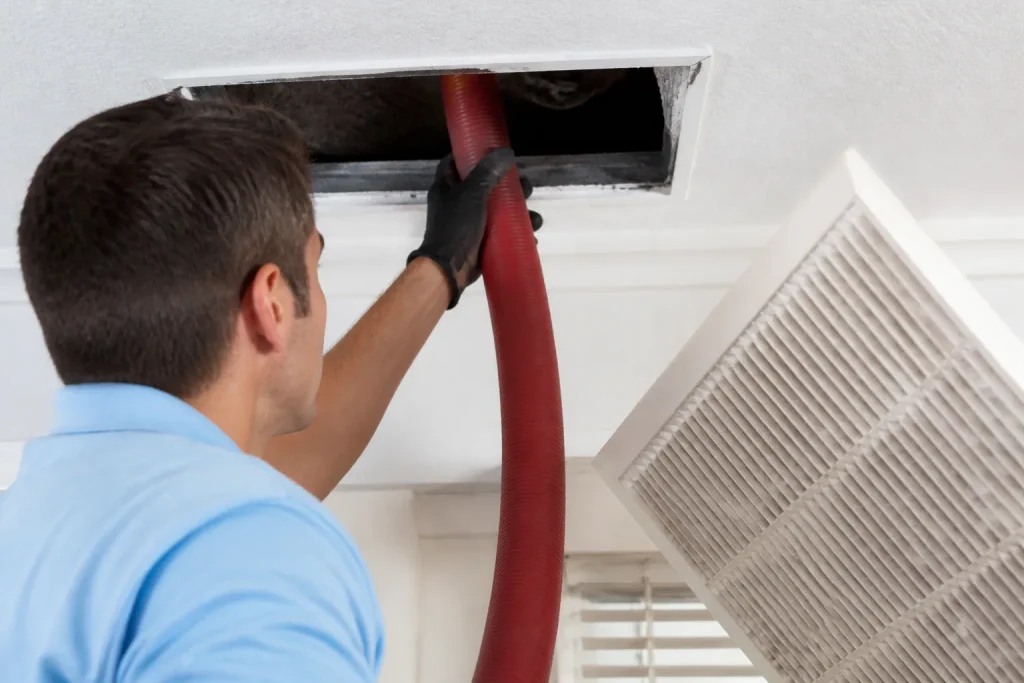
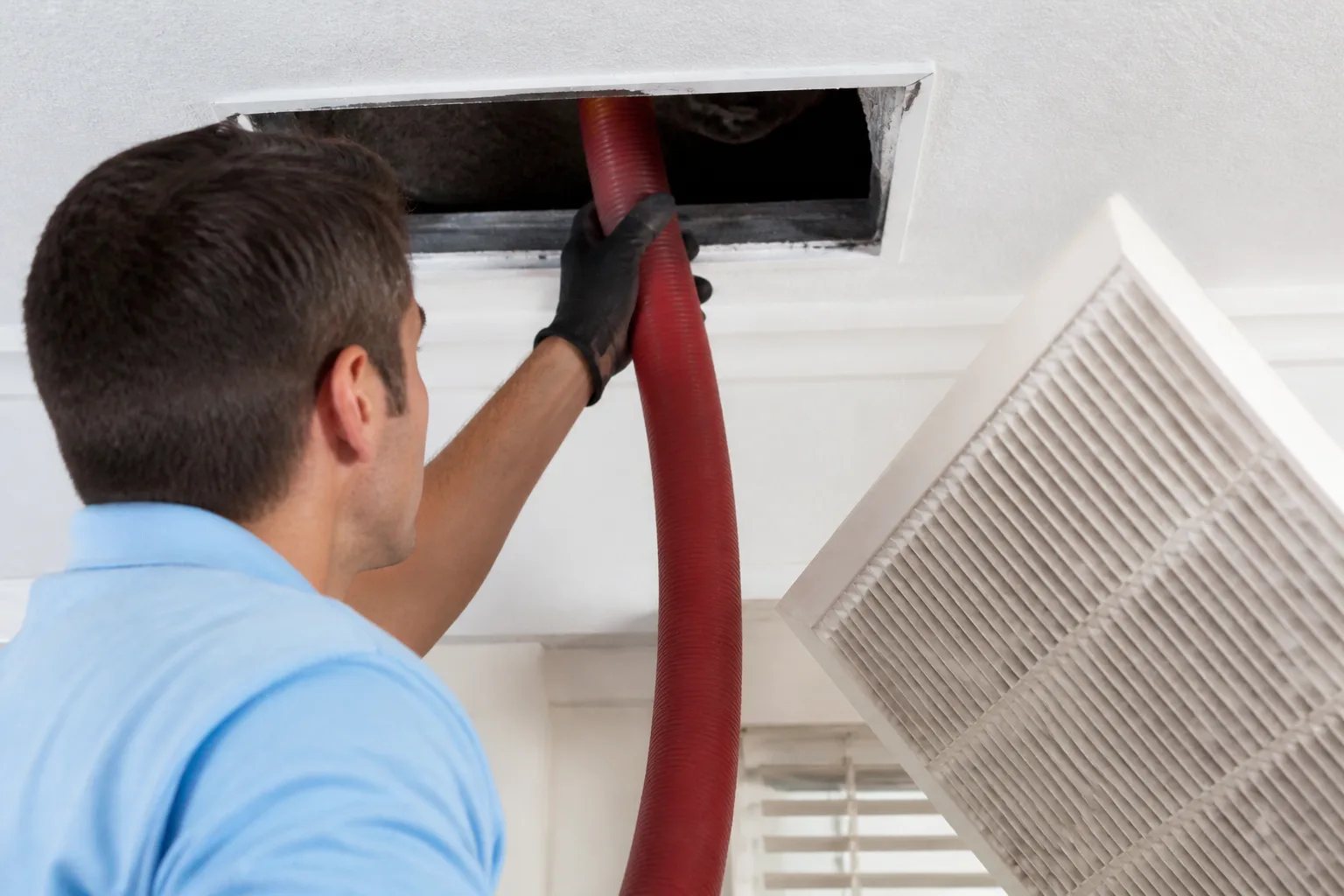
Because without one, the company is guessing about how dirty your ducts are, what shape they’re in, and whether anything is broken. A camera scope shows the condition inside the runs, reveals gaps and disconnected sections, and confirms whether the previous cleaning actually reached the far end of the system. Any company that skips this step is pricing a job it hasn’t looked at.
For a homeowner, this inspection is your protection. If the ducts turn out to have a separated joint or a crushed section behind a wall, cleaning isn’t the whole answer – repair and sealing are. In a Salt Lake City house with ductwork added over time, that’s a realistic finding, not a scare tactic. The scope shows it before the work starts so it can go into the estimate.
A proper inspection covers the supply runs, the return runs, the connections at the air handler, and the visible interior of the plenum. Ask to see the camera footage if you want to. A real specialist will show you.
Does specialization matter for repair and sealing, not just cleaning?
Yes, and it matters a lot. Cleaning a duct system surfaces problems – loose joints, sagging flex runs, contaminated coils. If the company on site only cleans ducts as an add-on to other work, then the moment a problem turns up, you need a second contractor to fix it. The cleaning stops, the repairs wait, and you’ve hired twice.
HVAC companies and carpet cleaners commonly offer air duct cleaning alongside their main service. That’s fine if the entire scope is a simple cleaning. It gets thin when the ducts need sealing, the air handler coil needs cleaning, or the drain pan needs attention. Those aren’t side tasks – they’re part of the system.
We handle cleaning, HVAC cleaning, duct repair and sealing, and air quality sanitizing under one roof, plus dryer vent cleaning when the customer wants the same visit to cover it. One company, one scope, no handoffs. For a Salt Lake City homeowner, that’s a meaningful difference when the ducts tell you something the last cleaning missed.
How should you read a duct cleaning contract for scope completeness?
Read it as a checklist, not a brochure. A complete scope names each element of the system as its own line item, with the work spelled out for each one. If something isn’t listed, it isn’t covered.
- Supply lines: every branch, not just the main trunk.
- Return lines: including the return plenum, which is where dirt accumulates fastest.
- Air handler coil: cleaned, not just wiped. The coil is where the air actually passes before it reaches your rooms.
- Drain pan: cleaned and checked. A dirty pan creates its own odor problem.
- Access points: where they’re cutting in, and how they’ll seal them afterward.
- Filtration and equipment: the vacuum and filtration gear they’re using, named.
If the contract is one page with a single price and no line items, ask for a detailed version. Our HVAC cleaning covers the air handler side of the system, and that’s the work that makes the difference between clean vents and clean air.
What bait-and-switch patterns should you watch for in Salt Lake City?
The three patterns we see most are low access-fee quotes, per-vent pricing that grows once the technician is in the door, and a sanitizer pitch pushed before the ducts have even been cleaned. Each one is designed to move the number after the customer has committed.
The low access fee. A price advertised to “get started” turns into a much larger bill once the technician is inside and starts naming problems. Ask what the total is before work begins, in writing.
Per-vent pricing. Quoting per vent sounds transparent until the count on site doesn’t match the count on the phone. Whole-system pricing is the honest version, because you’re paying for the system, not a tally of openings.
The early sanitizer upsell. Sanitizing has a place, but it’s a step that follows cleaning, not a substitute for it. Applying a treatment to dirty ducts is wasted money. We use Guardsman-line products rated for HVAC environments, and they’re part of the scope, not a surprise line added while the vacuum runs.
One more pattern worth naming: no before-and-after photos. If a company can’t show you images of your own ducts before and after the work, you have no way to know the cleaning actually happened.
When should you call a pro instead of waiting?
Call when you notice musty odors coming from the vents, dust returning days after cleaning, worsened allergy symptoms indoors, or rooms that don’t get the airflow they used to. Those are symptoms of something in the system, and they don’t resolve on their own. The same goes for a dryer vent that’s running hot or taking far longer to dry a load.
If you want the full picture of what we do, start with Salt Lake City Air Duct Cleaning Co for the overview, then dryer vent cleaning for the dryer side and HVAC cleaning for the air handler. Our technicians have up to 14 years of experience, and we run Rotobrush and Nikro negative-pressure systems on every residential job in Salt Lake City.
The Bottom Line
Certification is a starting filter, not the finish line. The three questions that actually separate companies are: what’s the CFM rating of your vacuum, will you scope the ducts before you quote, and does your contract list the coil and drain pan separately? Get clear answers to those, ask for before-and-after photos of your own system, and insist on one flat price per system agreed before work starts. That’s how you avoid paying for a cleaning that never reached the far end of the ducts.
If you’re in Salt Lake City and need help, Salt Lake City Air Duct Cleaning Co offers free estimates – call (855) 658-4198. We answer 24/7. Fast dispatch from 7am to 7pm, Sunday through Friday.
Frequently Asked Questions
Most residential whole-system cleanings here land in a mid-hundreds range, and the final number depends on system size, how many zones you have, and whether repair or sealing is needed. We don’t quote per vent and we don’t advertise a teaser price. Call (855) 658-4198 for an exact quote – estimates are free, and the written estimate sets the final price.
Ask for before-and-after photos of your own ducts, taken at the access points, and ask to see the camera scope footage from the pre-cleaning inspection. If a company won’t provide either, that’s your answer. We photograph the system before and after every job.
Usually because the scope is smaller or the equipment is smaller. A low quote often covers supply vents only, skips the coil and drain pan, and runs a portable vacuum that can’t hold negative pressure across a larger system. Ask what’s included before you compare numbers – a lower price on a shorter scope isn’t a better deal.
Most Salt Lake City homes do fine with a cleaning every few years, sooner if you’ve had renovation dust, a pest issue, or visible buildup around the vents. If you notice odors or dust returning quickly after a cleaning, get the system scoped rather than cleaned again – there may be a repair to make first. Call (855) 658-4198 and we’ll help you sort out which it is.
Written by the team at Salt Lake City Air Duct Cleaning Co.
Need Air Duct Cleaning Help?
Call Salt Lake City Air Duct Cleaning Co - the local pro we connect you with is licensed and insured, with free written estimates in Salt Lake City.
(855) 658-4198