
Last updated November 24, 2026
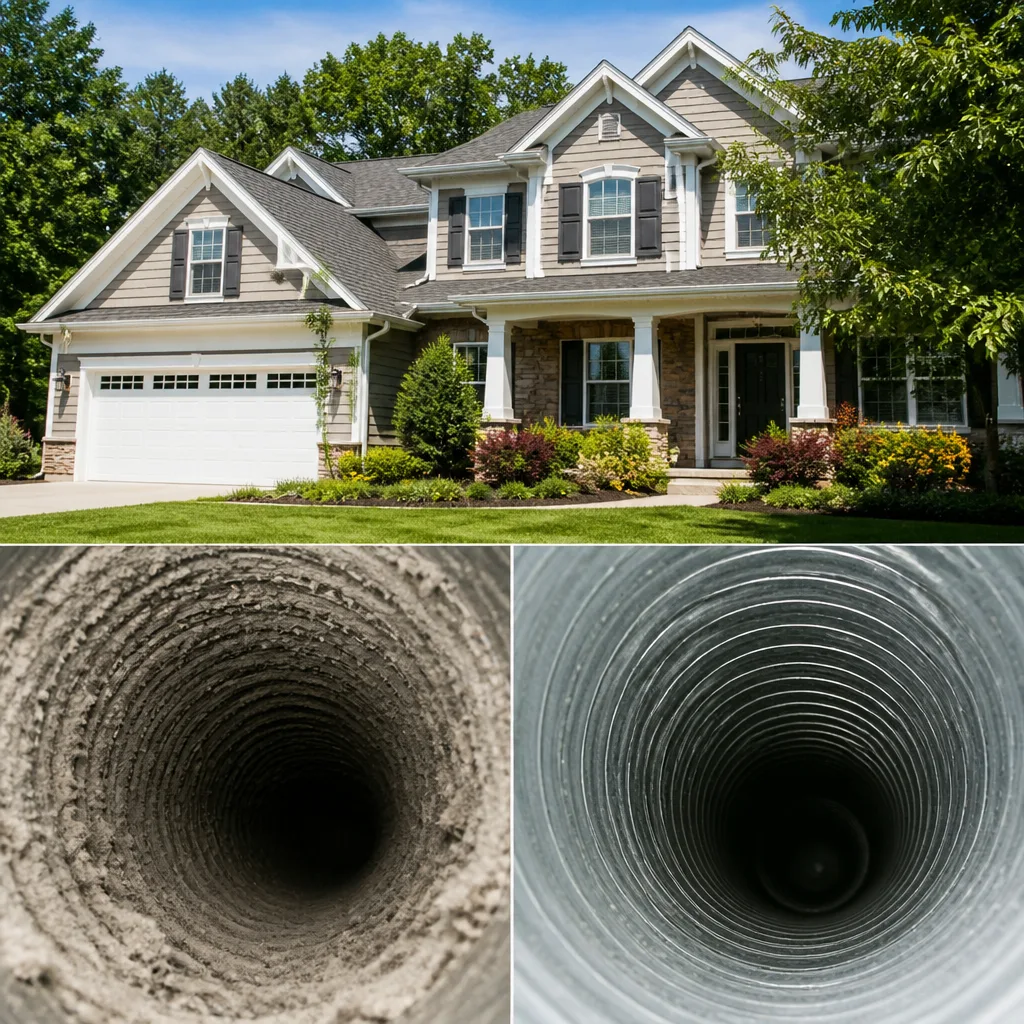 Whole-home duct cleaning
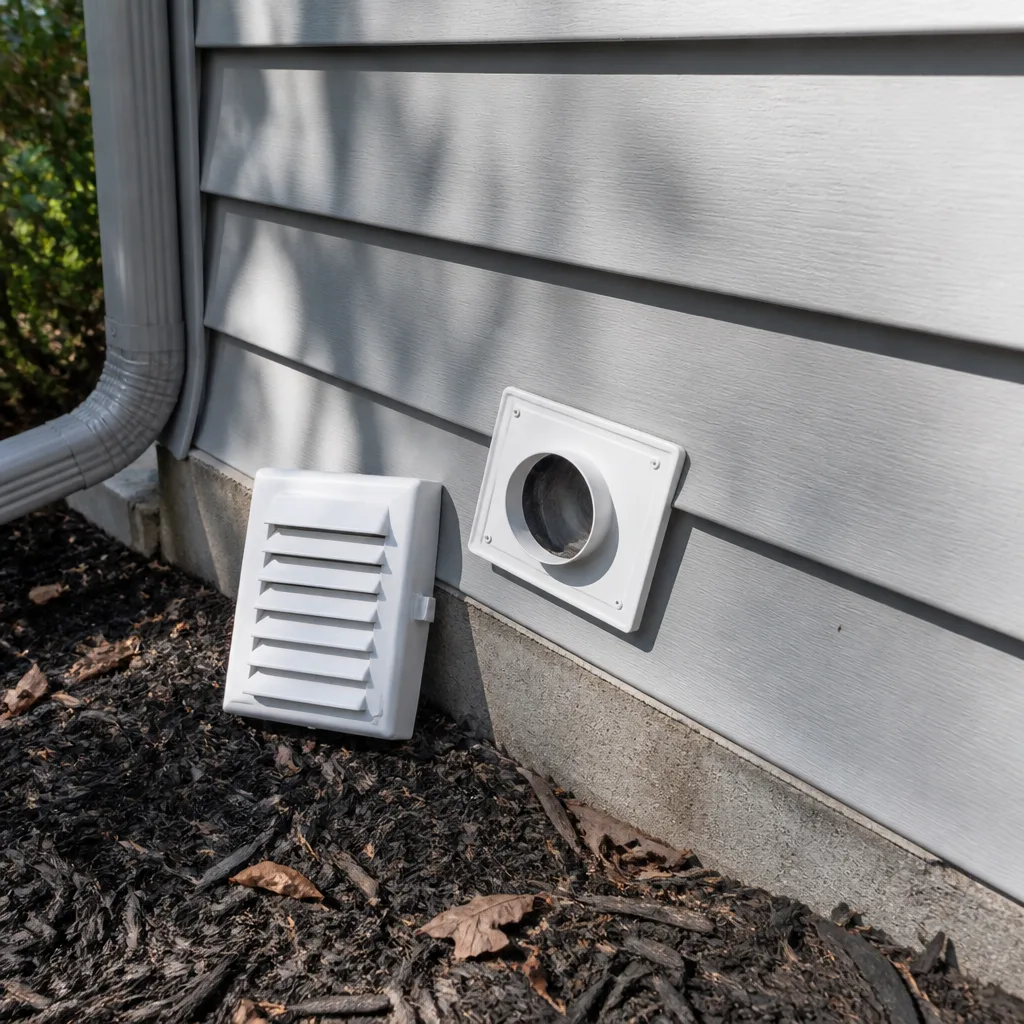 Dryer vent cleaning
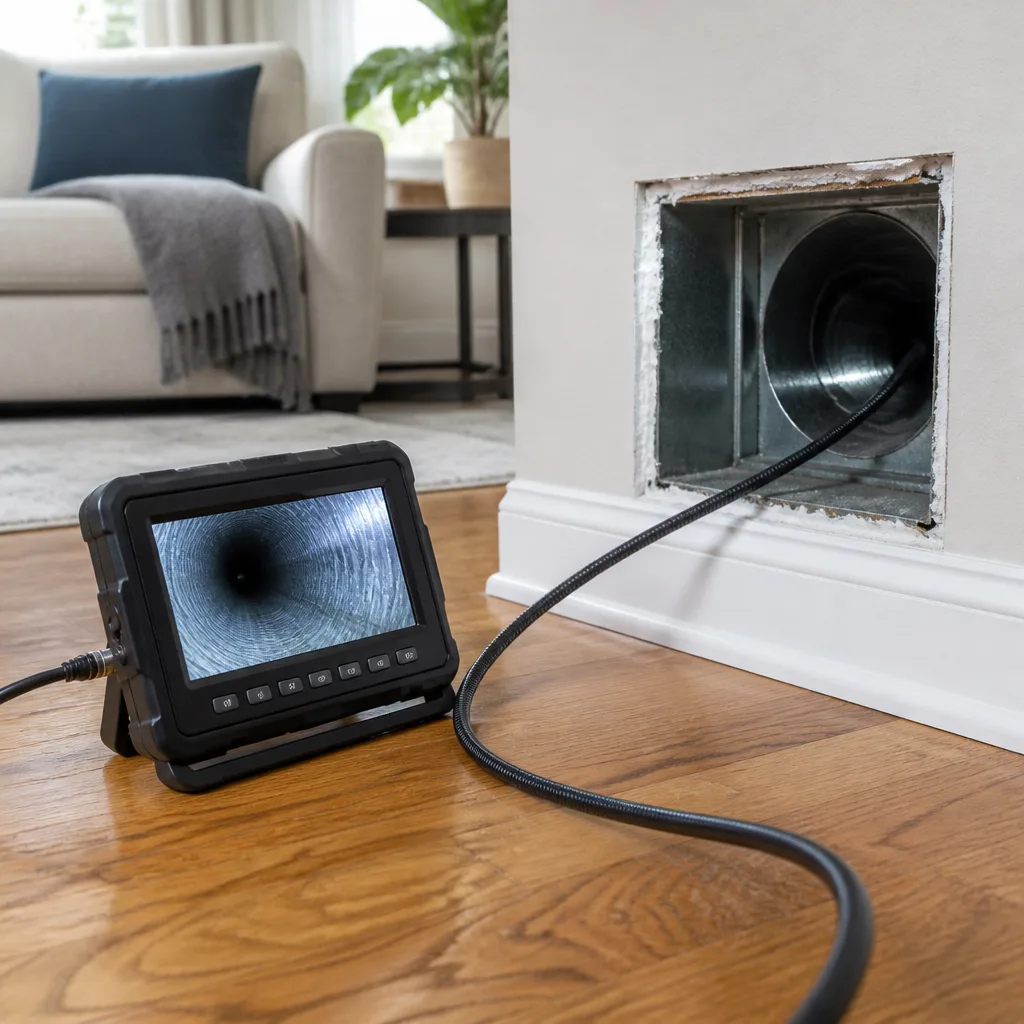 Camera inspection
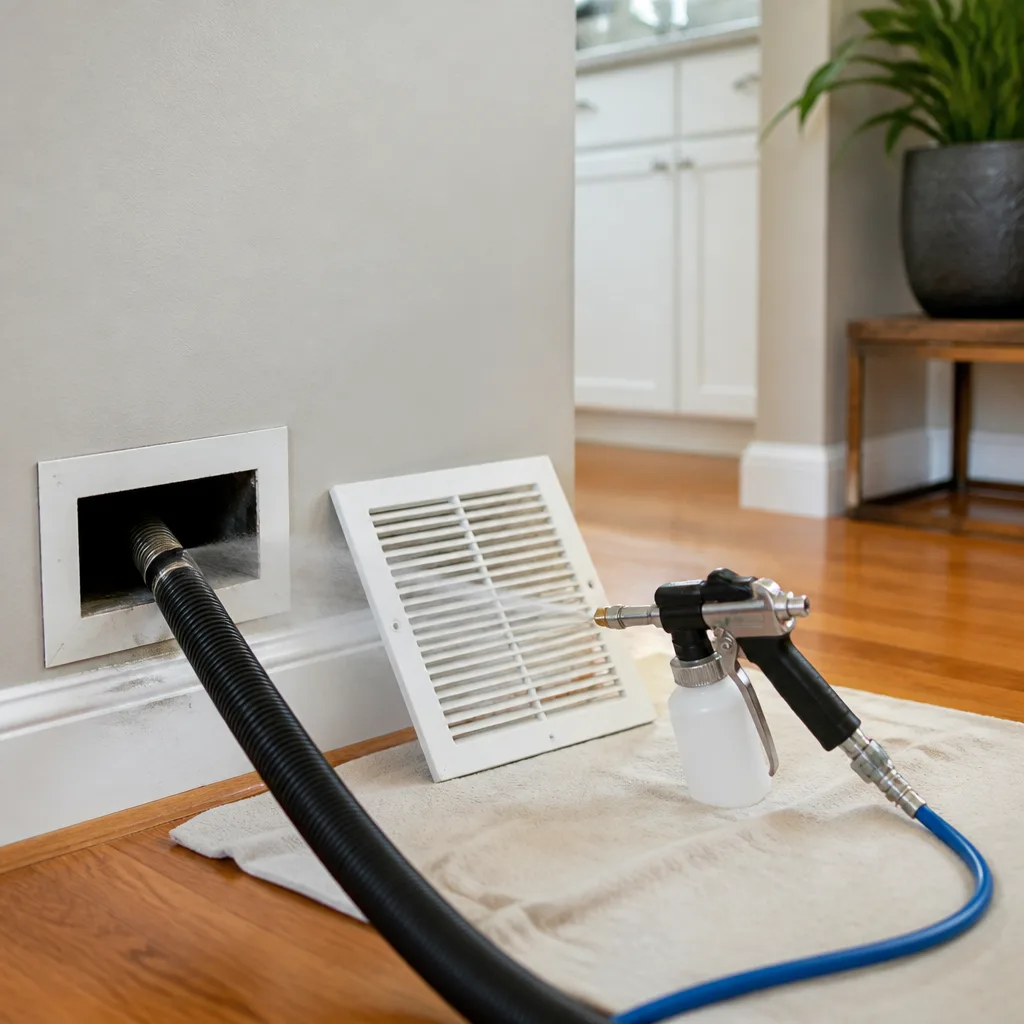 Sanitizing & deodorizing
Whole-system duct and dryer vent check with before-and-after photos - you see exactly what came out of your vents
That "$99 whole-house special" is a bait ad - the real number appears once they are in your hallway, or the "clean" is a shop-vac at the register. We photograph the inside of your ducts before and after instead.
The Complete Guide to Air Duct Cleaning in Salt Lake City
Most homeowners assume duct cleaning is about dust. In Salt Lake City, it’s mostly about what the valley traps. The Salt Lake Valley sits in a natural bowl, and during winter inversions that bowl holds PM2.5 at some of the worst levels measured anywhere in the country. Every time your furnace kicks on, it pulls that particulate load through the return, across the blower, and out through every supply register in the house. A duct system that would stay reasonably clean for years in a windy, well-flushed city accumulates material here on a different schedule. This guide covers what that means for your home: how inversion-season buildup differs from ordinary dust, what professional equipment actually does that a shop vac can’t, and which red flags in Utah’s housing stock point to repair work hiding behind a cleaning job.
Quick Answer
Air duct cleaning in Salt Lake City is the mechanical removal of accumulated dust, mineral deposits, and inversion-season particulate from the supply and return ductwork, the air handler cabinet, and the drain pan, performed with negative-pressure equipment that captures debris instead of blowing it into your living space. A proper job is not a vent-and-vacuum pass; it’s a full-scope service that inspects the duct system, cleans every branch line and the air handler, and reports what it finds. Because of the valley’s inversion cycles and hard water, Salt Lake City homes usually need cleaning on a shorter interval than the national “every three to five years” guideline suggests.
Styles & brands we work with
- Whole-home duct cleaning
- Dryer vent cleaning
- Camera inspection
- Sanitizing & deodorizing
Table of Contents
- Why Salt Lake City Duct Contamination Is Different
- Negative-Pressure Equipment vs. Portable Units
- What a Full Scope of Work Actually Includes
- Hard Water, Evaporative Coolers, and Mineral Deposits
- Red Flags in Utah’s 1970s-1990s Housing Stock
- How Much Does Air Duct Cleaning Cost in Salt Lake City?
- How Often Do Salt Lake City Homes Really Need It?
- Common Mistakes to Avoid
Why Salt Lake City Duct Contamination Is Different
An inversion works like a lid on the valley. Cold air settles, warm air sits on top, and the particulate that normally disperses instead accumulates in the air everyone breathes. PM2.5 in the Salt Lake Valley during a sustained winter inversion reaches levels that make national air-quality headlines. That’s the outdoor picture. The indoor picture matters just as much, because your HVAC system is an air handler before it’s a heating or cooling system. It moves the air in your house through a filter and a duct network, and whatever gets past the filter settles on duct surfaces.
Ordinary household dust is relatively coarse. Inversion particulate is fine enough to stay airborne longer and fine enough to pass through the cheaper filters many Salt Lake City homes run. Over a heating season, that means a gradual coating on the inside of every duct run. The coating doesn’t stay put. Each blower cycle lifts a fraction of it back into the airstream.
What that looks like in practice:
- Faster register soiling. Supply registers in Salt Lake City homes darken more quickly than the national average because fine particulate reaches them first.
- Filter loading you can see. A filter that’s dark within a few weeks of installation tells you the airstream is carrying more than dust.
- Musty or “closed-in” odor on furnace startup. The first heating cycle of the season pushes air across a summer’s worth of settled material.
- Return-side buildup concentrated near the air handler. The return plenum and the cabinet itself collect the heaviest fraction.
For a deeper look at how we approach the cleaning itself, see our air duct cleaning service page. The point for this guide is simpler: a national cleaning interval set for average air doesn’t map onto a valley that holds its own particulate.
Negative-Pressure Equipment vs. Portable Units
This is the single biggest quality difference between duct cleaning companies, and it’s the one homeowners can actually verify before booking. A negative-pressure system puts the ductwork under vacuum, so the moment a brush or air whip dislodges debris, the debris moves toward the collection unit rather than into your rooms. A portable shop-vac setup does the opposite. It creates local suction at the hose end, but the rest of the duct system stays at neutral pressure, and dislodged material drifts out of open registers while the technician works.
Professional systems used on Salt Lake City jobs include contact vacuums and negative-pressure units from Rotobrush and Nikro, paired with Abatement Technologies air-filtration equipment placed in the living space to capture fine particulate at the source. That combination is what commercial and restoration contractors specify for their own projects, and it’s the reason a professional clean doesn’t leave a haze in the air afterward.
Why this matters more in a two-story Utah home:
- Long duct runs. A two-story house with a basement or a conditioned crawlspace often has supply runs that travel 30 feet or more from the air handler. Portable suction falls off over that distance.
- Multiple branch takeoffs. Every takeoff is a place where debris can settle out of the airstream. Negative pressure evacuates the whole trunk, not just the branch being brushed.
- Attic and crawlspace segments. Ducts routed through unconditioned space are the most contaminated runs in the house. They’re also the hardest to clean without a sealed vacuum system.
- Stack effect. Warm air rising through a two-story home pulls return air from below, concentrating particulate in the lower return trunks.
If a quote doesn’t mention the type of vacuum system, that’s a sign to ask. “We use a big vacuum” is not the same answer as “we run a negative-pressure system with on-site air filtration.” Equipment you can look up by name is a fair thing to expect.
What a Full Scope of Work Actually Includes
The most common complaint about duct cleaning isn’t poor workmanship. It’s a service that cleaned the supply registers and called it done. A full-scope job covers everything the airstream touches, from the grille in the wall to the cabinet that houses the blower.
- Inspection first. Before any equipment runs, the technician inspects accessible ductwork, confirms what material it’s made of, and identifies any disconnected joints, crushed runs, or damaged insulation.
- Source capture. Air-filtration units are placed in the living space to capture particulate dislodged during the job.
- Negative pressure established. The vacuum connects to the trunk line, putting the system under continuous suction for the duration.
- Supply and return registers cleaned. Every grille is removed, cleaned, and reinstalled. Return grilles in Salt Lake City homes often carry more buildup than supplies.
- Branch lines and trunk cleaned. Rotary brush and air-whip tools travel each run, agitating material into the vacuum.
- Air handler cabinet and drain pan cleaned. The blower compartment and the evaporator coil area are where the heaviest accumulation sits. A cleaning that skips the cabinet leaves the source of the problem in place.
- Sanitizing treatment. A Guardsman-rated product formulated for HVAC environments is applied to duct interiors. This is a formal step in our process, not an upsell dangled at the end of the job.
- Reassembly and a documented check. Registers go back, airflow is confirmed, and you get a report of what was found and what was done.
That’s also why we treat cleaning, sealing, and repair as one scope. If the inspection turns up a disconnected joint in a flex run, patching it during the same visit costs far less than booking a separate contractor later. One company for cleaning, repair, sealing, and sanitizing, with no handoffs. Our HVAC cleaning service covers the mechanical side of that work.
Hard Water, Evaporative Coolers, and Mineral Deposits
Utah’s water is hard. That’s a familiar household fact, but it has a duct-cleaning consequence fewer people connect: mineral particulate. Evaporative coolers, common in older Salt Lake City homes and outbuildings, pull outdoor air through wetted media and deliver it humidified. When the media breaks down, mineral scale and fibers can be carried into the distribution system. The result is a fine, chalky deposit that clings to duct walls differently than ordinary dust does.
Standard brushing alone doesn’t fully address this. Mineral scale bonds to surfaces, and on internally lined duct, it settles into the liner’s texture. It takes a combination of mechanical agitation and a sanitizing treatment rated for HVAC environments to bring the duct surface back. We use Guardsman-line products for exactly this reason; they’re specified for the environment and won’t leave residual odor cycling through the house afterward.
A few other points worth knowing:
- Homes that have run an evaporative cooler through the same ductwork as the furnace need the changeover checked. Debris from the cooler season ends up in the supply trunk.
- Humidifier mineral scale shows up in the same way. Scale flakes move through the duct system and settle in the branch runs downstream.
- Aprilaire and Honeywell components are common in Salt Lake City systems, and they’re inside our technicians’ scope of familiarity. If the air-quality hardware in the system needs cleaning or replacing, that happens in the same visit.
- Visible white or gray residue at the registers is a mineral signal, not a dust signal. Don’t assume the standard cleaning interval applies.
Red Flags in Utah’s 1970s-1990s Housing Stock
A lot of Salt Lake City’s residential inventory was built between the 1970s and the 1990s, and duct systems from that era share identifiable weaknesses. Knowing them tells you when a cleaning quote needs to include a repair line.
- R-6 flex duct with a sagging interior liner. The inner liner can detach from the outer jacket, folding into the airstream and reducing flow. It’s also where particulate collects. If a flex run has collapsed or the liner is torn, it needs replacement, not a brushing.
- Horizontal attic runs with poor support. A lot of Utah homes route supply ducts through the attic. Horizontal stretches sag between hangers, trapping moisture and dust, and joints in that space tend to separate over time.
- Disconnected or unlidded joints. Flex duct connections at takeoffs and boots come loose. An open joint doesn’t just lose air; it pulls attic or crawlspace air (and its dust and insulation fibers) into the system.
- Original sheet metal with failing duct mastic. Duct sealant from that era cracks. Re-sealing the accessible runs during a cleaning is a real airflow improvement.
- Air handler cabinets with no gasketing. Unsealed cabinet seams pull air from wherever they sit, including unconditioned space.
These are the things a thorough inspection finds. If a duct cleaning company shows up, vacuums the registers, and leaves without opening the air handler or checking the attic runs, you haven’t had the problem addressed.
How Much Does Air Duct Cleaning Cost in Salt Lake City?
Air duct cleaning in Salt Lake City typically runs in the range you’d expect for a mid-sized valley home, with a full-scope job priced by system, not by vent. That’s the important distinction. We set one flat price per system before work starts, agreed in a written estimate, so the final invoice matches the number you were given. A full-scope job for a standard single-family Salt Lake City home generally lands in the several-hundred-dollar range, with larger homes, multiple systems, or a full attic-run HVAC system in the higher end of that range because the work and the time go up.
What moves a quote up or down:
- Number of systems. A home with two furnaces is two jobs, not one.
- Duct type and layout. Attic and crawlspace runs, long branch lines, and internally lined duct all take more time than accessible sheet metal in conditioned space.
- Condition. Heavy buildup, mineral deposits from an evaporative cooler, or discovered damage that needs repair changes the scope.
- Additional steps. Sanitizing treatment, air-handler cabinet cleaning, and duct sealing add work when they’re not folded into the base scope. We fold them in by default so the estimate reflects the actual job.
We don’t quote per-vent prices and we don’t publish teaser coupon numbers, for a simple reason. A per-vent price is set to sound low and designed to grow once the technician is in the attic. The written estimate is the price. Before-and-after photos of your own ducts come with the job.
For a specific number, call (855) 658-4198. Estimates are free. We answer 24/7. Fast dispatch from 7am to 7pm, Sunday through Friday.
How Often Do Salt Lake City Homes Really Need It?
Most national guidance says every three to five years. In Salt Lake City, that interval works for some homes and runs long for others. What we’ve learned from jobs in this valley is that the calendar is the wrong tool. Specific conditions are the right tool.
Cleaning makes sense sooner than the general interval when you notice any of these:
- Visible buildup at the registers that returns within a season of cleaning.
- Persistent dust after putting a fresh filter in. If the filter loads fast and the rooms still collect dust, the dust is coming from the duct system, not the filter.
- A musty smell on furnace startup that fades only after the system runs a while.
- An evaporative cooler season that ran through the same ductwork, or a humidifier that’s left mineral scale in the airstream.
- A recent renovation. Drywall dust is the single most aggressive duct contaminant, and Salt Lake City’s older homes get remodeled regularly.
- A new home to you. You can’t know how the previous owners maintained the system. An inspection resolves it.
- Heavy inversion seasons. A winter with sustained inversion cycles adds more load than a mild one.
Homes with pets, smokers, or family members with respiratory sensitivity generally fall on the shorter end of the range. Property managers with rentals should treat turnover as a cleaning trigger. Our Salt Lake City Air Duct Cleaning Co page covers the scheduling question in that context.
Common Mistakes to Avoid
- Booking on price alone. A quote well below what a full-scope job requires usually reflects a portable vacuum and a register pass. The savings disappear when you book a second company to do the work properly.
- Assuming “duct cleaning” means the air handler is included. In a lot of Salt Lake City homes, the air handler cabinet is where the heaviest accumulation sits, and a cleaning that skips it misses the worst of it.
- Ignoring attic-run condition. Torn flex liner or disconnected joints in the attic won’t get better with cleaning. They need repair, and a company that doesn’t handle repair will tell you everything looks fine.
- Skipping the inspection on a new house. You inherit whatever the previous owners did or didn’t do. An inspection is the only way to know.
- Treating sanitizing as unnecessary. On a system with mineral deposits or a musty odor, cleaning without a Guardsman-rated treatment leaves the underlying condition to return.
- Reusing a filter past its life to save money. A loaded filter bypasses air around its frame. That unfiltered air is what coats the ducts.
- Not asking for documentation. Ask for before-and-after photos of your own system. A company that can’t provide them hasn’t given you a way to verify the work.
See the difference
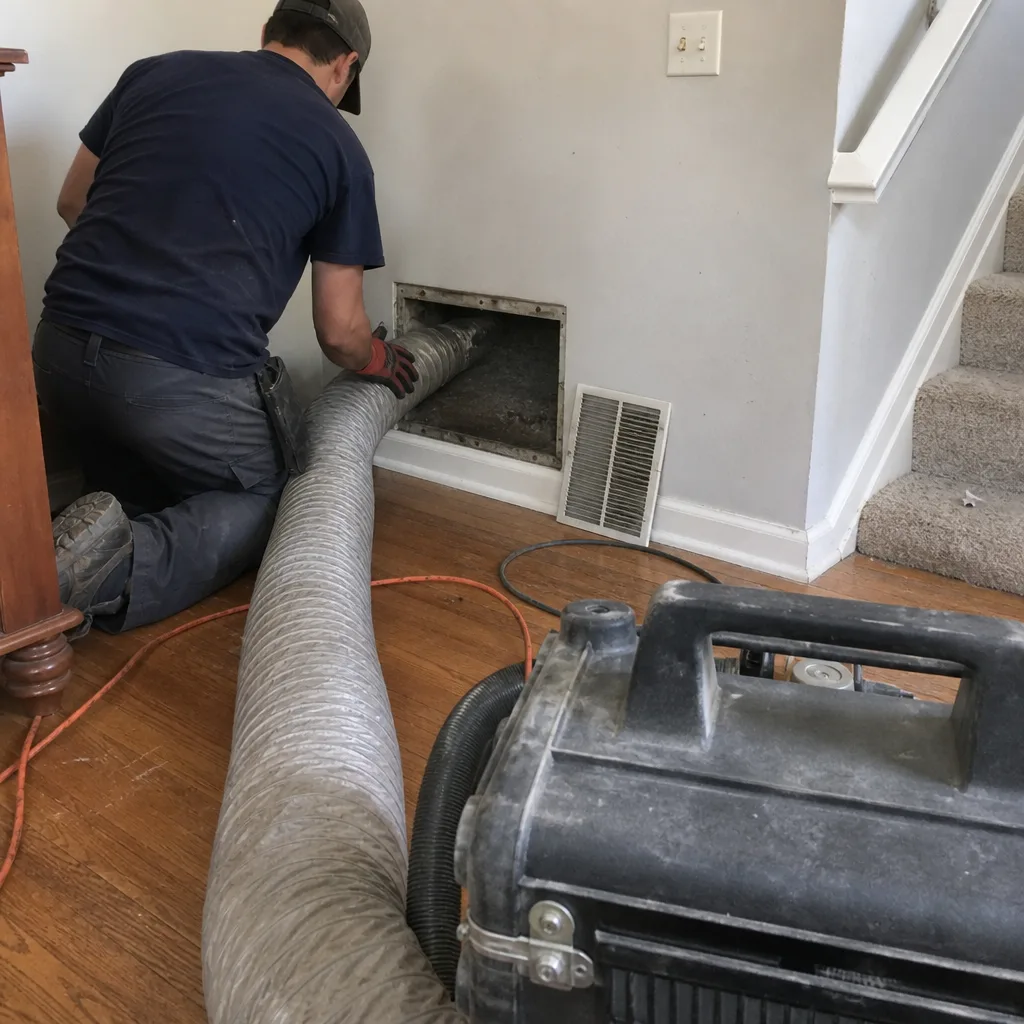 Before
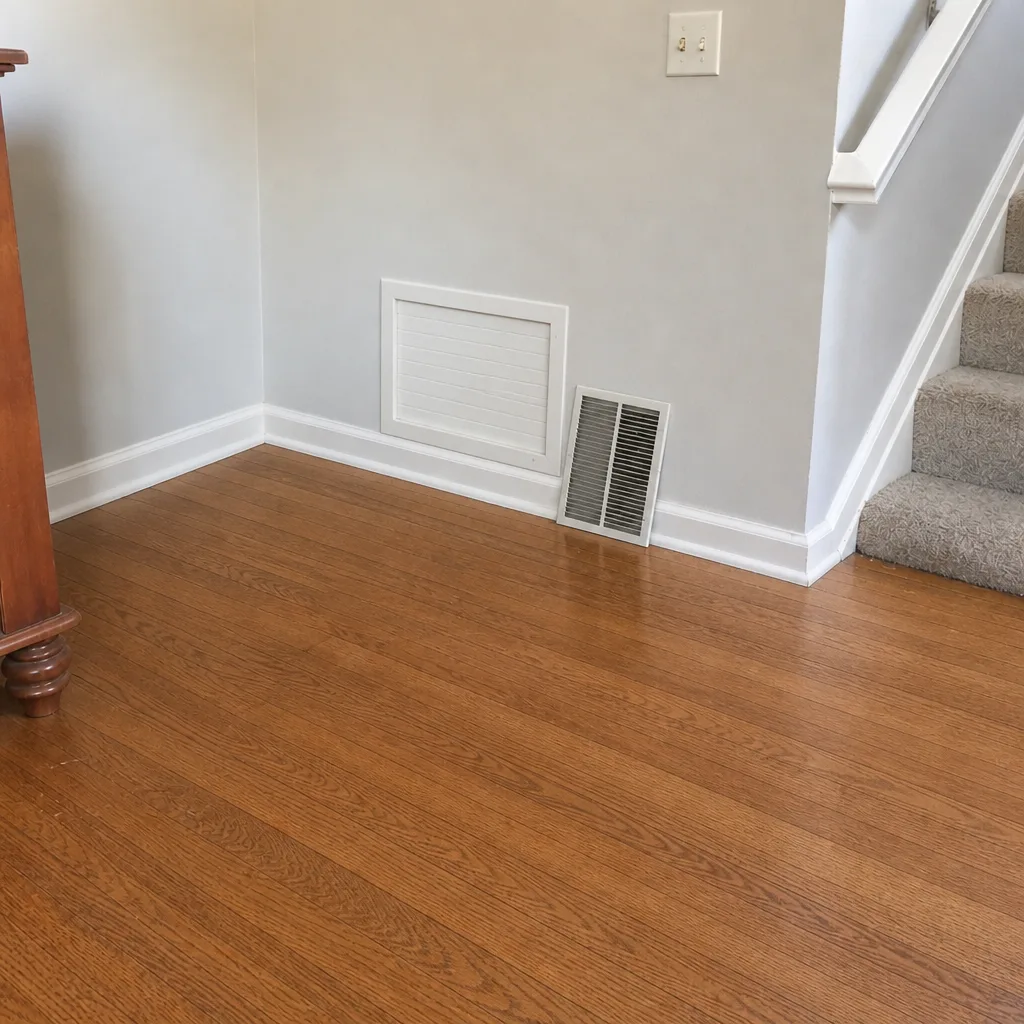 After
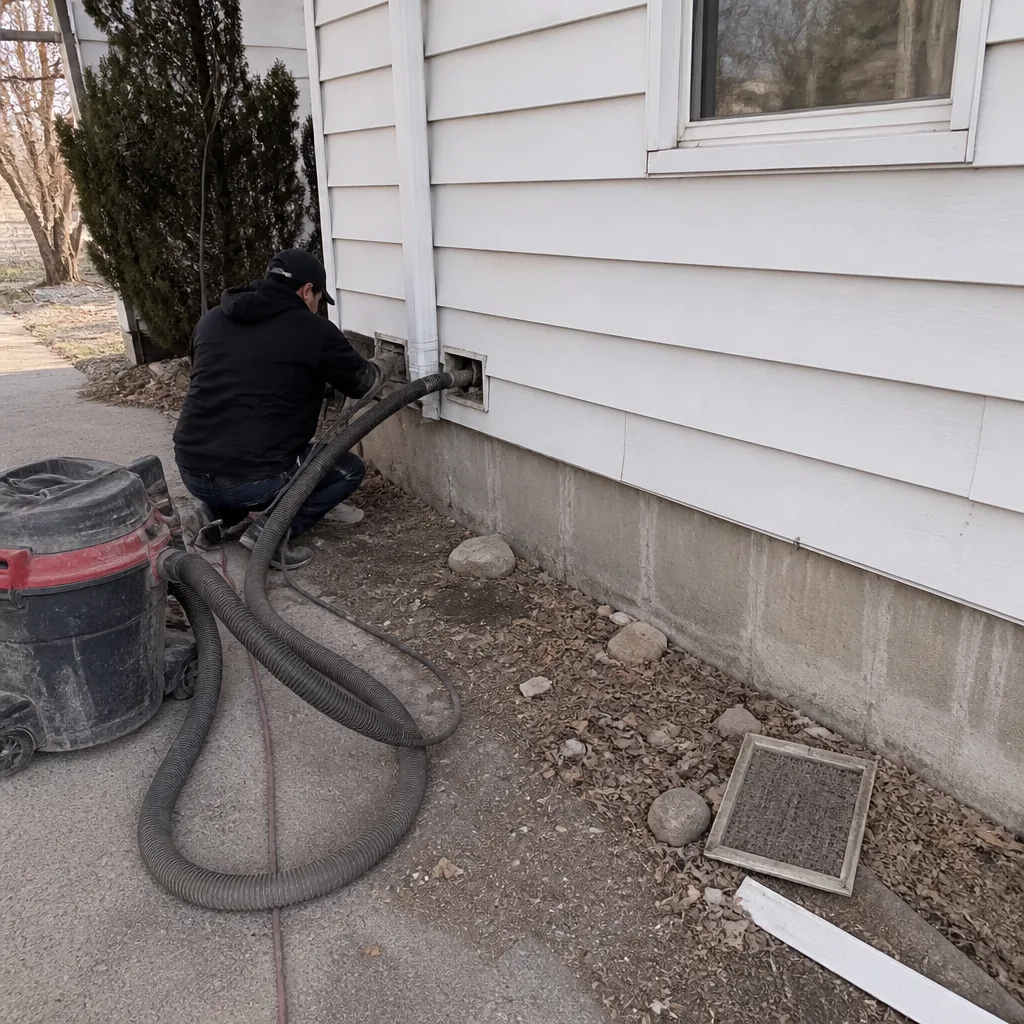 Before
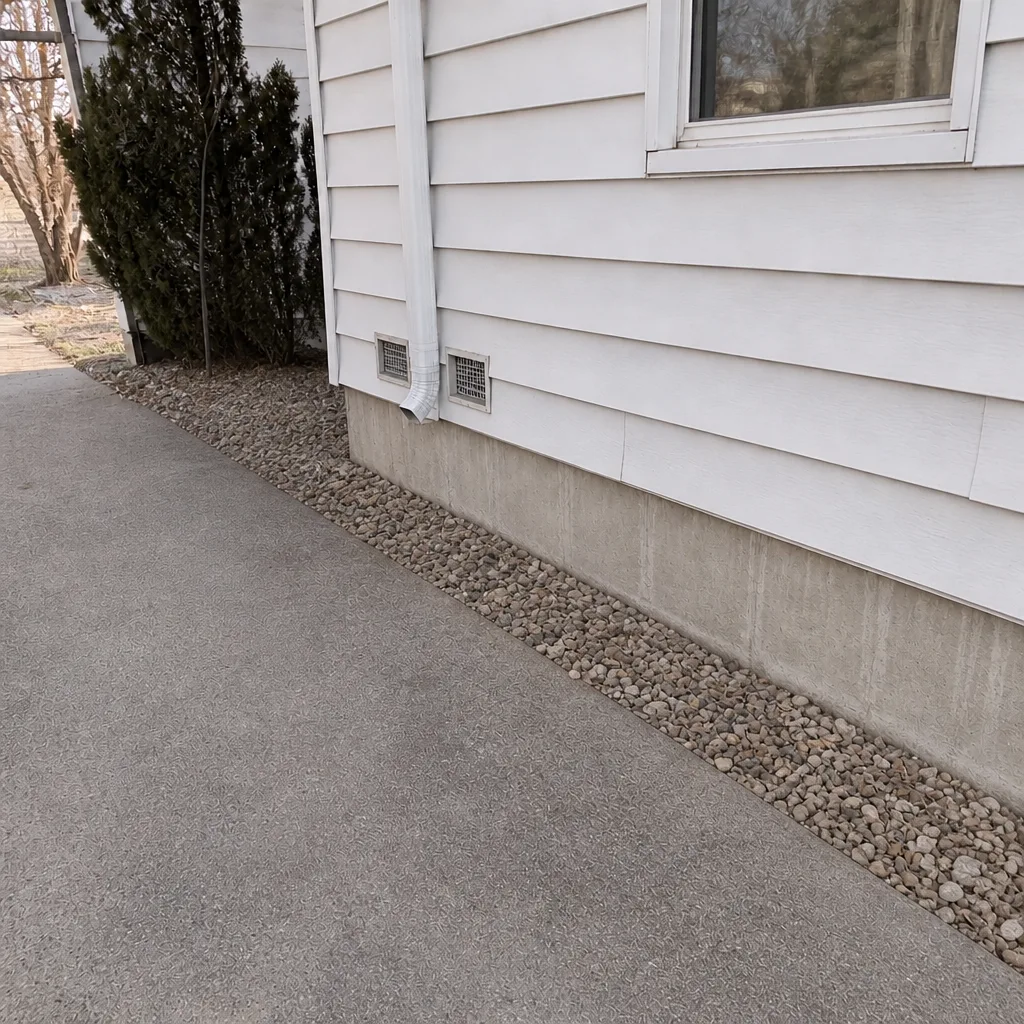 After
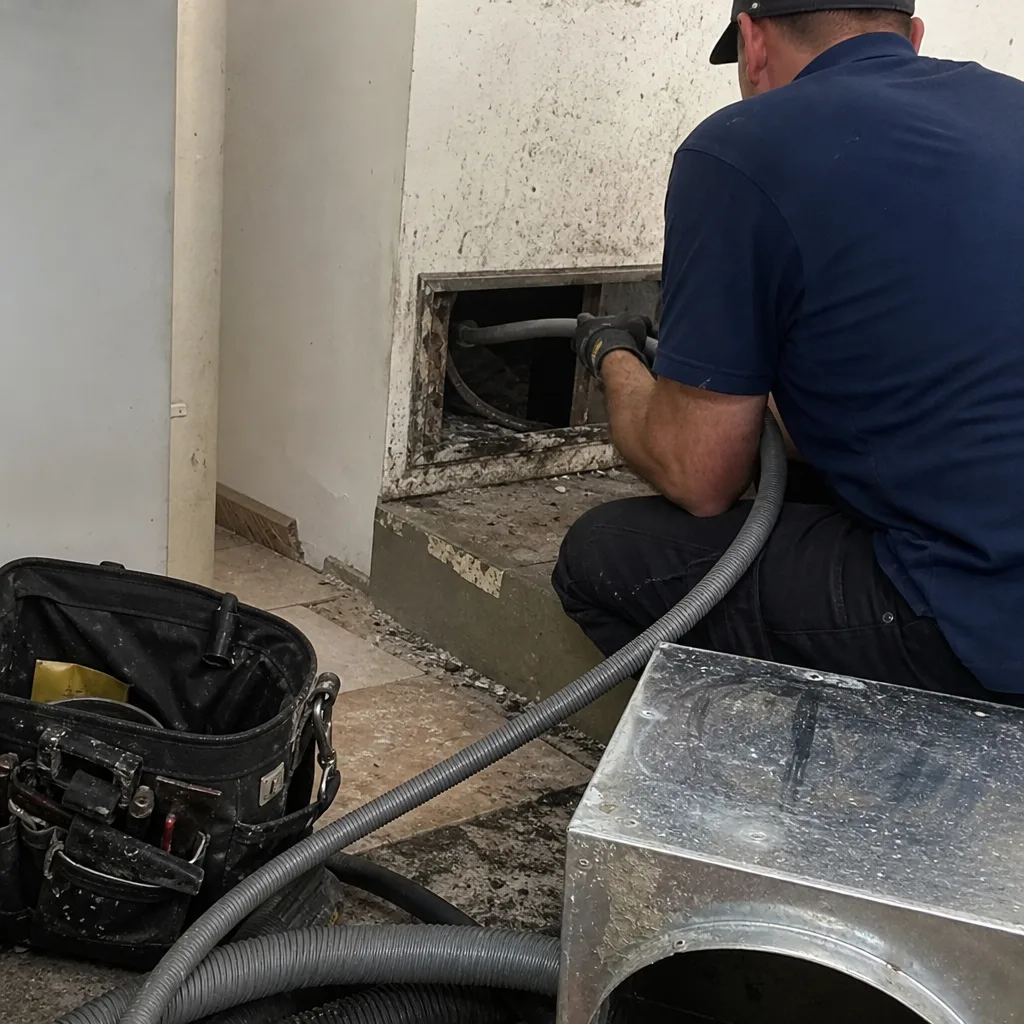 Before
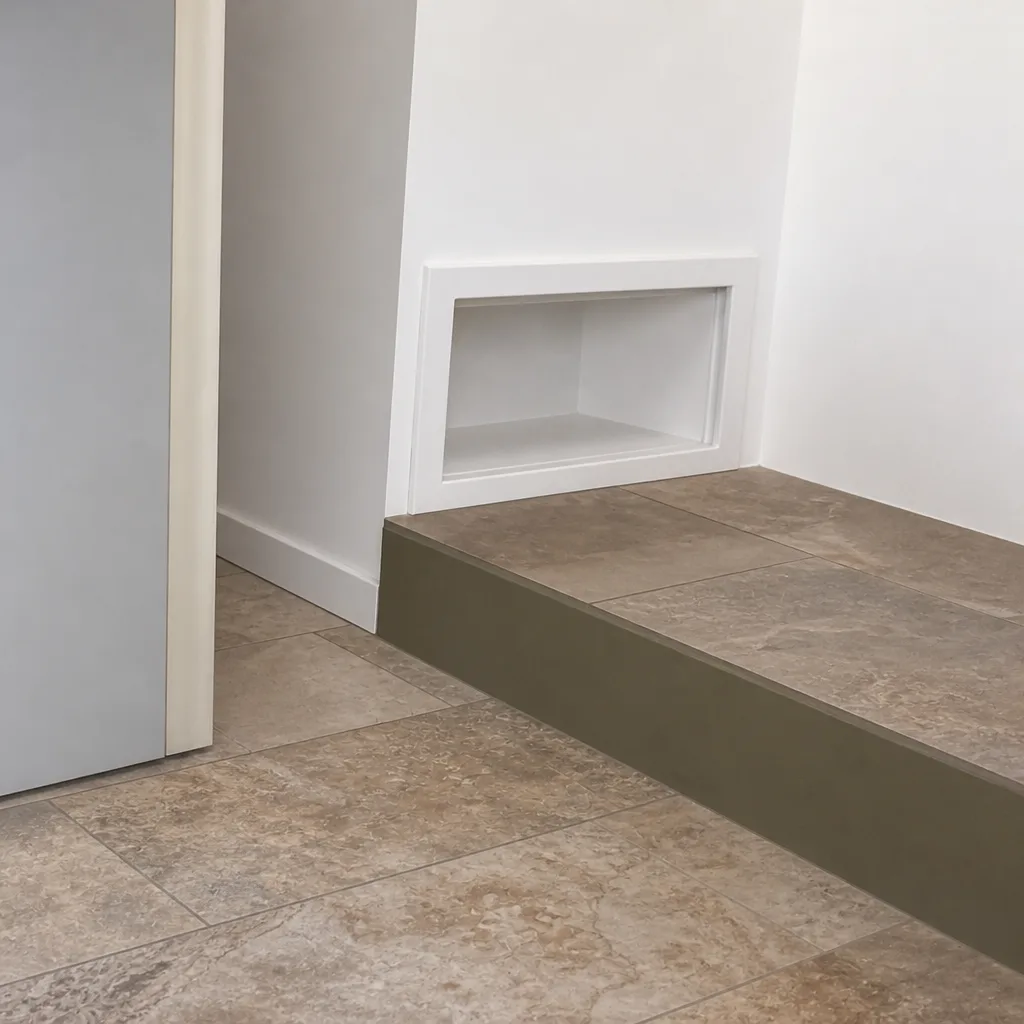 After
When to Call a Professional
Call a professional when you can see or smell the problem, not just suspect it. Visible buildup at supply or return registers that comes back quickly, a musty odor on furnace startup, dust settling in a room after the system runs, or noticeably weak airflow from registers that used to push hard all point to a system that needs more than a filter change. So does a recent renovation, a change in household occupancy, or a new home to you with no service history. Some of these situations can also point to a dryer vent that needs attention; our dryer vent cleaning service covers that side. If airflow is weak enough that the furnace is short-cycling or a room won’t warm, don’t wait; that’s a system issue, not a dust issue. Salt Lake City Air Duct Cleaning Co offers free estimates in Salt Lake City. Call (855) 658-4198. We answer 24/7. Fast dispatch from 7am to 7pm, Sunday through Friday.
Frequently Asked Questions
A full-scope duct cleaning for a typical single-family Salt Lake City home generally runs in the several-hundred-dollar range, priced per system rather than per vent. Larger homes, multiple furnace systems, and heavy attic-run work push toward the higher end because the labor does. The written estimate sets the final price before work starts. Call (855) 658-4198 for an exact quote. Estimates are free. We answer 24/7. Fast dispatch from 7am to 7pm, Sunday through Friday.
Cheap quotes are usually built around a portable vacuum and a pass over the registers, which is not the same service as a negative-pressure cleaning with the air handler included. The low number reflects the equipment and the scope, and the gap shows up in the outcome: dust returns quickly, and the air handler is still dirty. Ask any company what vacuum system they use and whether the air handler cabinet is included before you compare prices. Call (855) 658-4198 if you want a quote that reflects the full scope. Estimates are free.
You’ll know because you’ll have before-and-after photos of your own ducts, an inspection report of what was found, and a system that pushes air more freely and stops shedding dust. Any of those alone is a good sign; all three together is documentation. If a company can’t offer photos of your system specifically, ask why.
More often than the national three-to-five-year guideline suggests, because inversion-season particulate and hard-water mineral deposits both accumulate here faster than in average climates. Homes with pets, recent renovations, or evaporative cooler use on the same duct system should consider a shorter interval; a routine inspection tells you which interval fits your house. Call (855) 658-4198 to schedule an inspection. We answer 24/7. Fast dispatch from 7am to 7pm, Sunday through Friday.
It helps indoors, which is where you spend most of your time during an inversion. A clean duct system stops re-suspending accumulated particulate each time the furnace runs, and a properly sealed system stops pulling attic or crawlspace air into the airstream. It doesn’t change outdoor PM2.5 levels, but it does remove one source of indoor exposure. Call (855) 658-4198 for a free estimate on the indoor side.
Sometimes. Weak airflow in second-floor rooms of Salt Lake City homes usually traces to one of three things: a crushed or disconnected flex run, a sagging duct with a detached liner, or a leaking joint pulling in attic air. Cleaning removes accumulation, and a repair during the same visit resolves the restriction. An inspection tells you which problem you have before you commit to anything.
The Bottom Line
Salt Lake City’s geography makes duct contamination a local problem with a local schedule. Inversion-season PM2.5 settles into ductwork and cycles back through the house on every furnace run. Hard water and evaporative cooler use leave mineral deposits that standard brushing doesn’t reach. Housing built between the 1970s and 1990s has attic runs and flex duct that often need repair alongside cleaning. The answer is a full-scope job with negative-pressure equipment, air-handler cleaning, sanitizing treatment, and before-and-after documentation, priced as one flat rate per system agreed in writing before work begins. Cleaner ducts, confirmed; air quality you can measure, not just feel. Call Salt Lake City Air Duct Cleaning Co at (855) 658-4198 for a free estimate. We answer 24/7. Fast dispatch from 7am to 7pm, Sunday through Friday.
Written by the team at Salt Lake City Air Duct Cleaning Co.