
Last updated November 24, 2026
 Whole-home duct cleaning
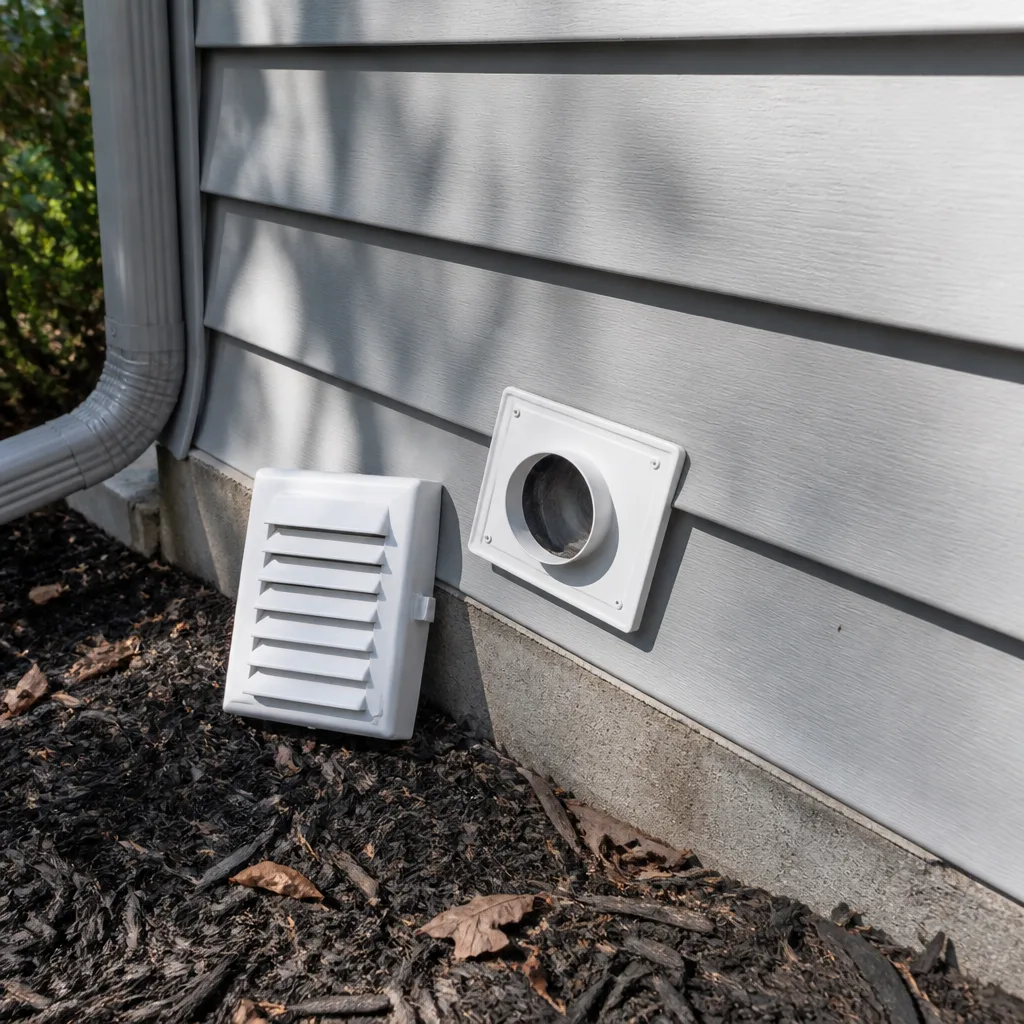 Dryer vent cleaning
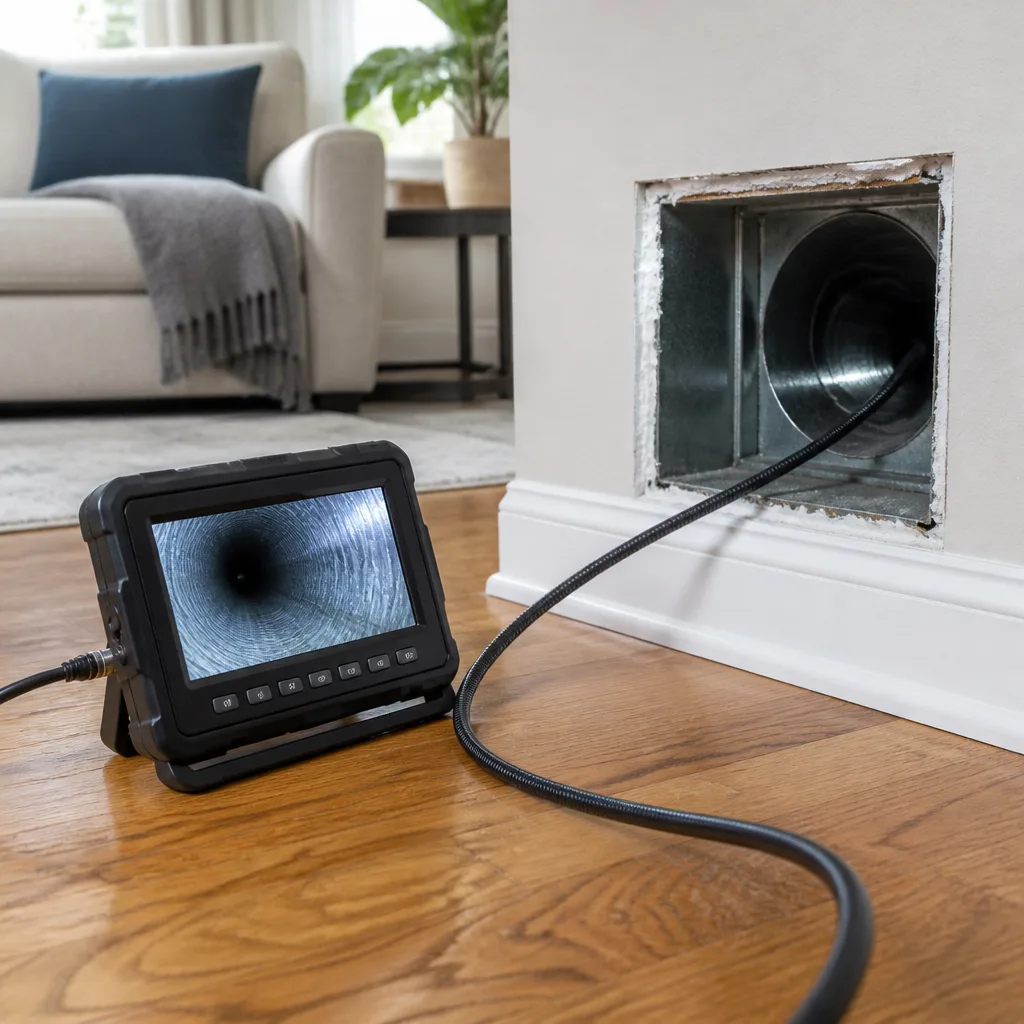 Camera inspection
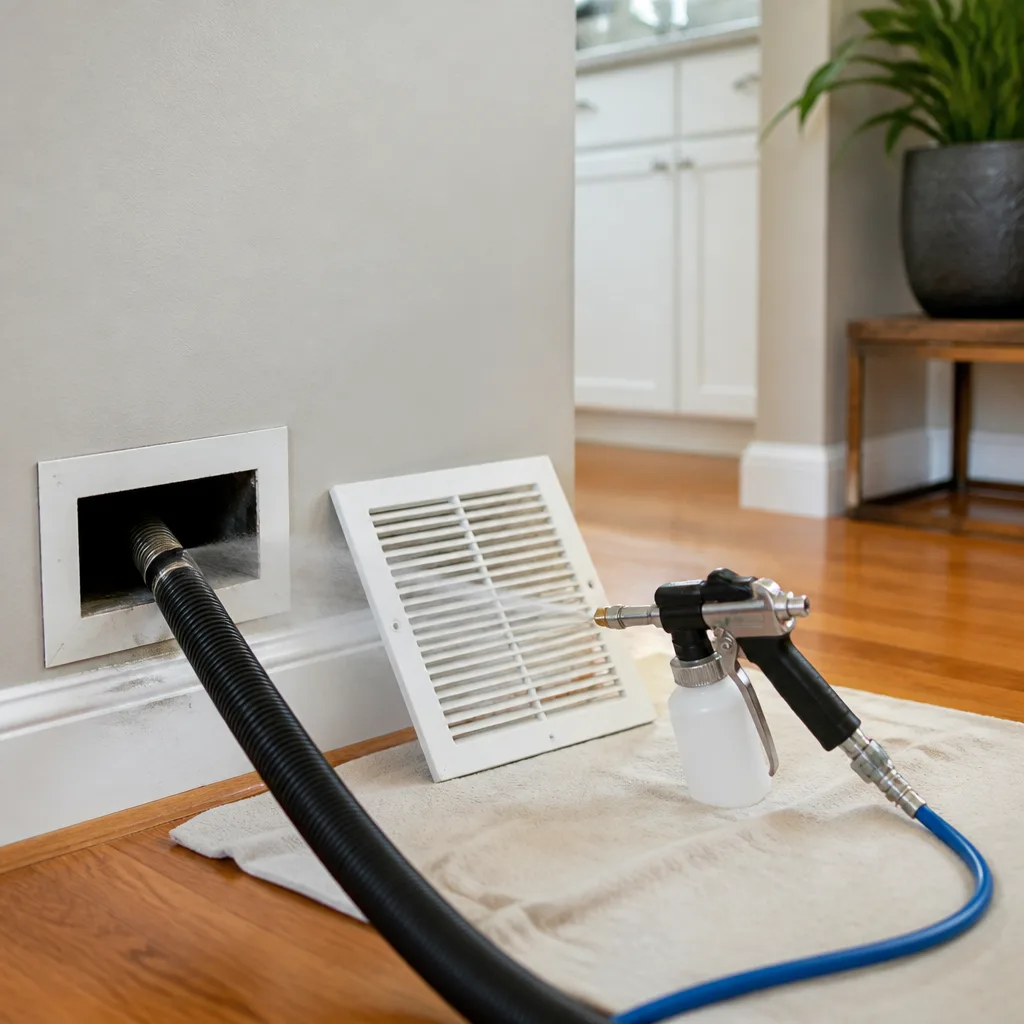 Sanitizing & deodorizing
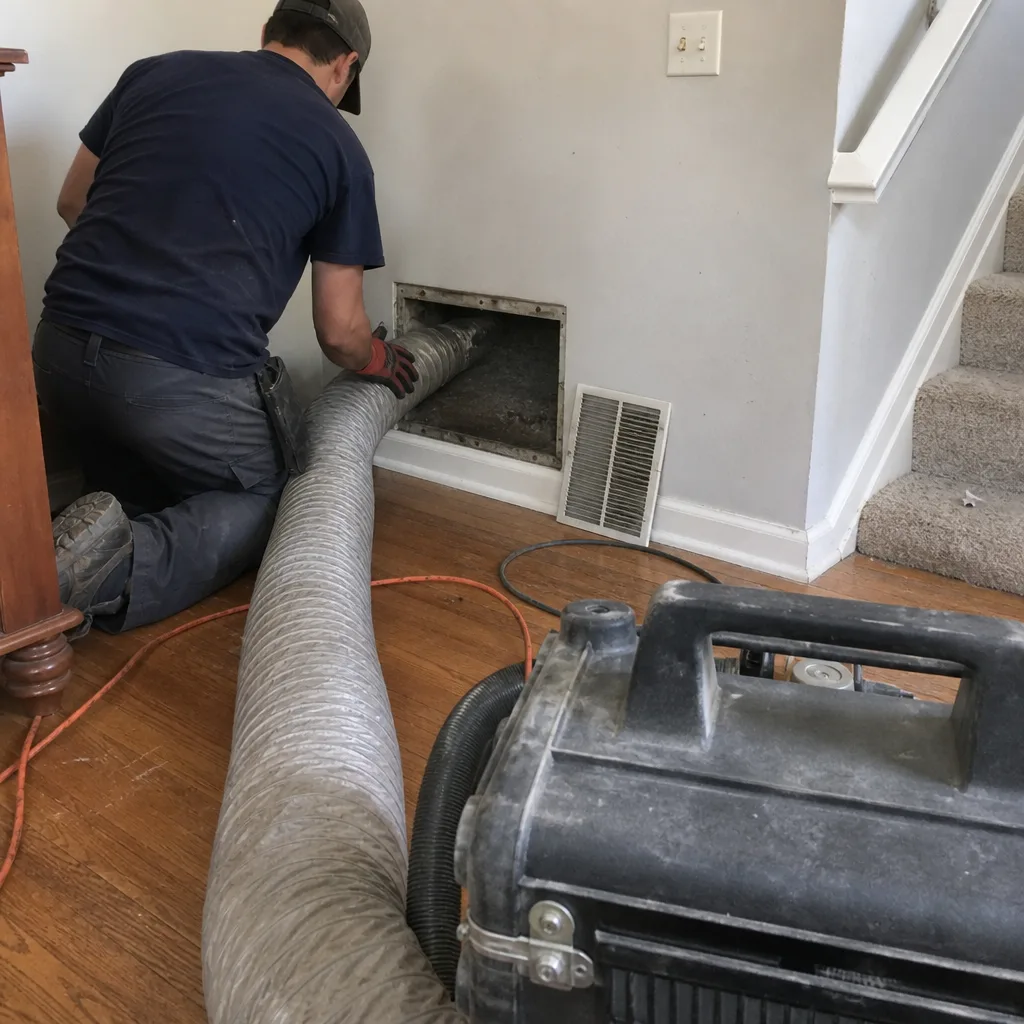
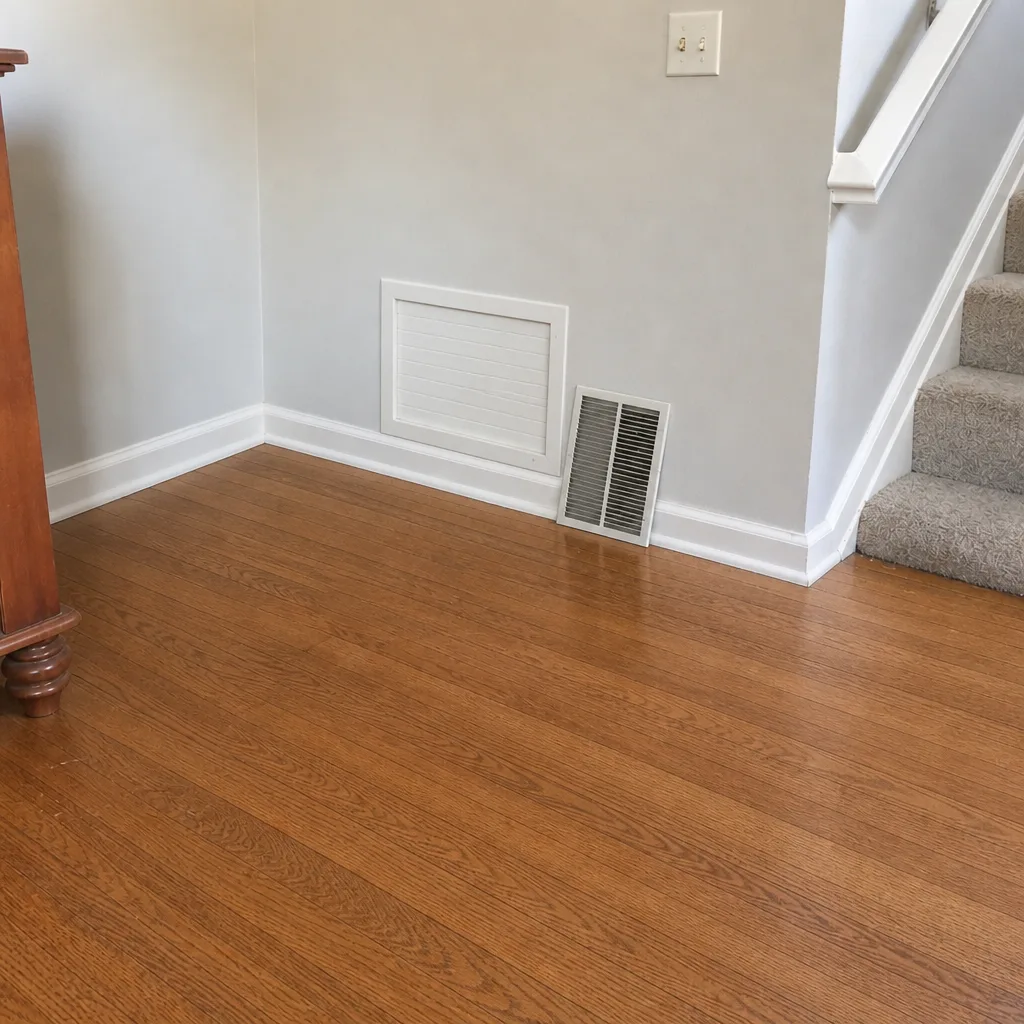
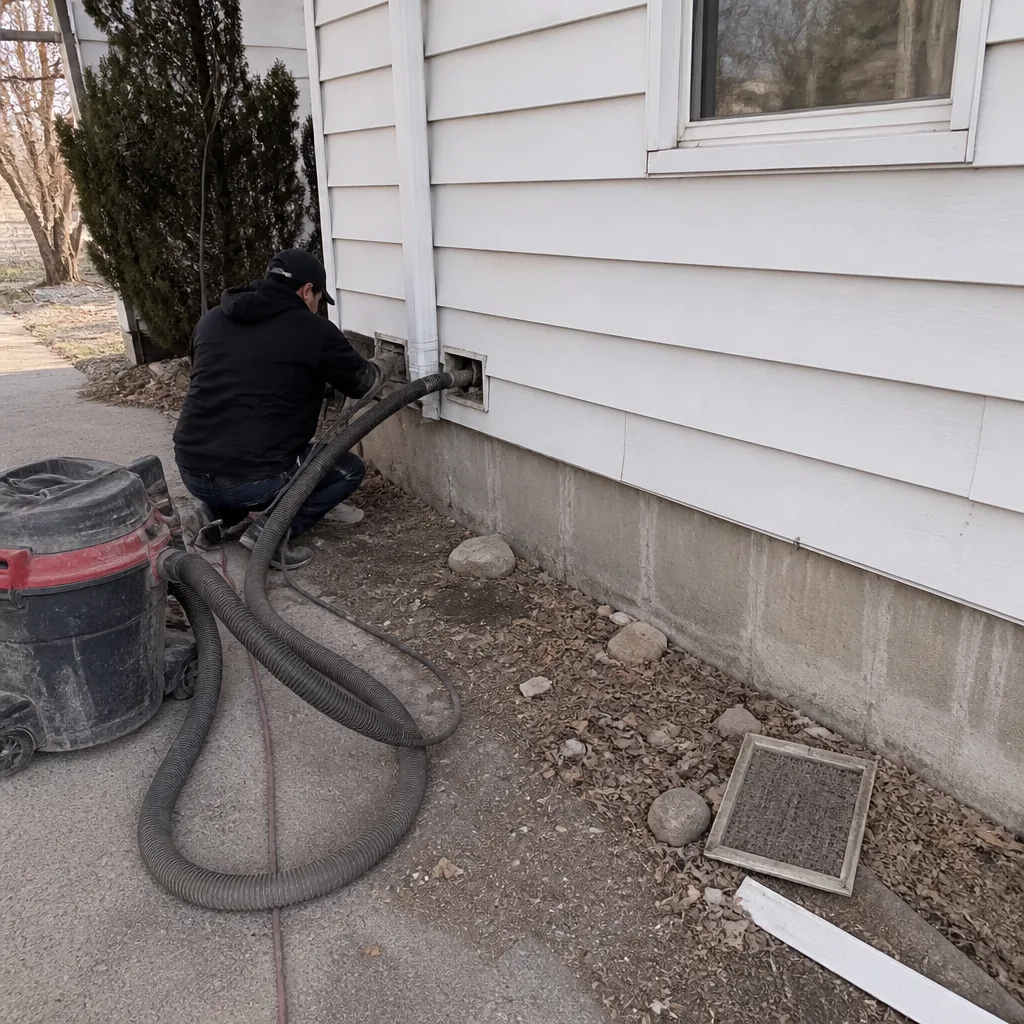
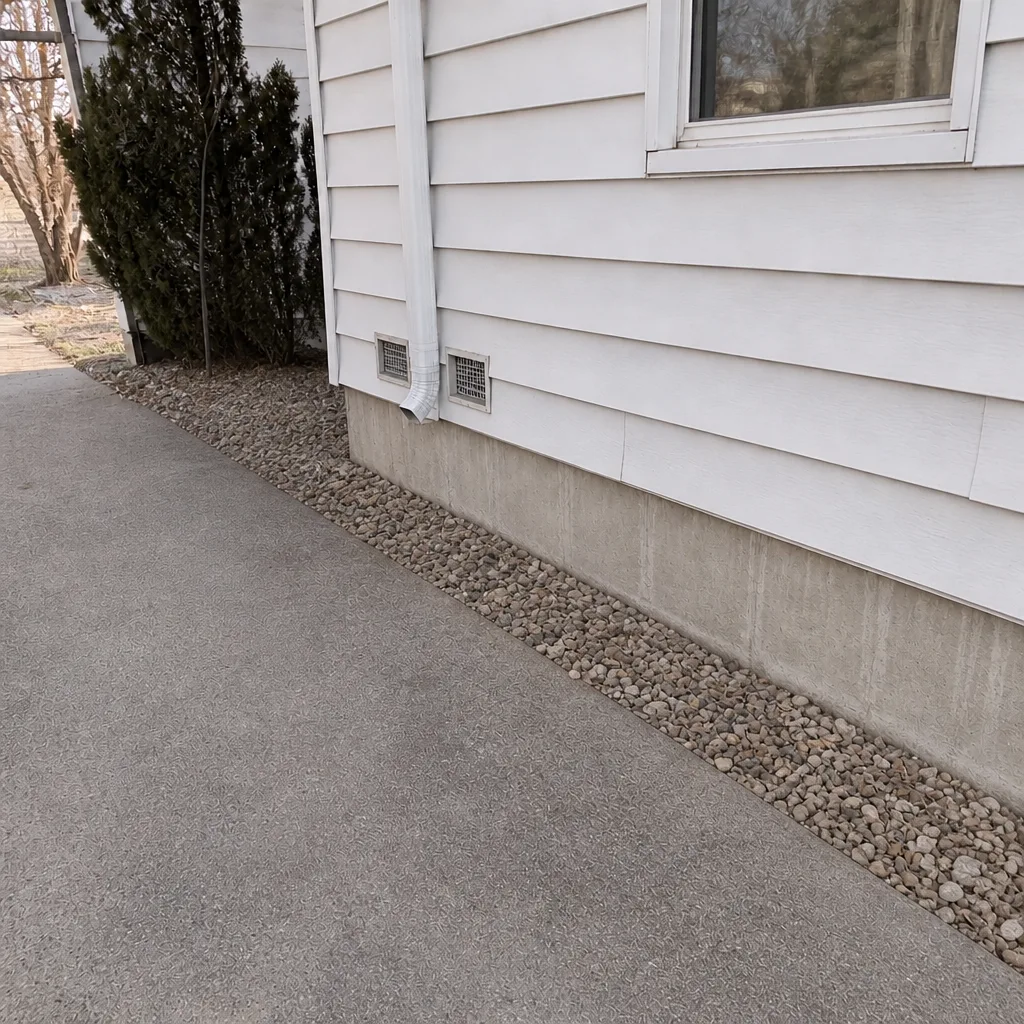
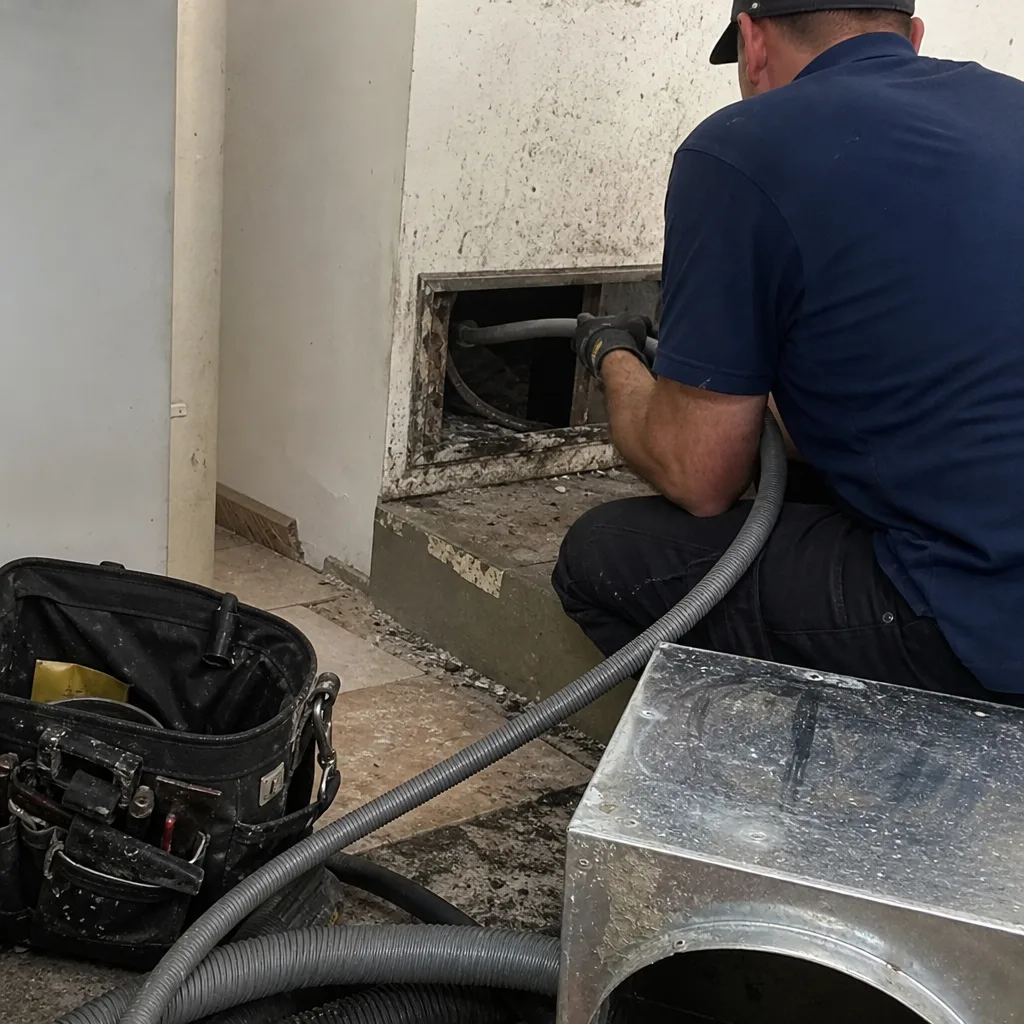
Whole-system duct and dryer vent check with before-and-after photos - you see exactly what came out of your vents
That "$99 whole-house special" is a bait ad - the real number appears once they are in your hallway, or the "clean" is a shop-vac at the register. We photograph the inside of your ducts before and after instead.
Air Duct Cleaning Warning Signs: A Salt Lake City Homeowner’s Reference Guide
Visible dust at a supply register is the last warning sign, not the first. By the time a grey fringe builds up on the grille face, your system has been pushing contaminated air through that room for months. The signals that matter arrive much earlier, and they’re quieter: a bedroom that never catches up to the thermostat, a faint musty note in the hallway return, a flex run in the crawl space that has sagged and pinched shut against a joist. Utah’s housing stock hands us a specific set of failure points, from 1970s duct board that has crumbled at the seams to 1990s fiberglass liner that has peeled away from the sheet metal. This guide covers how to read those signals in a Salt Lake City home, how to tell normal dust from something that needs a different response entirely, and how to know whether a previous cleaning actually reached the whole system.
Quick Answer
The warning signs that matter most in Salt Lake City are performance and material signals, not visible dirt: rooms that run 4 to 8 degrees hotter or colder than the thermostat setting, dust returning within days of a cleaning, musty odors at the return grille, condensation on duct surfaces that keeps coming back, and deteriorating duct board or fiberglass liner inside older systems. Any of these points to a duct problem rather than simple dirt, and each calls for inspection before anyone runs a brush through the system. Visible build-up at the register is confirmation that the issue is well advanced.
Styles & brands we work with
- Whole-home duct cleaning
- Dryer vent cleaning
- Camera inspection
- Sanitizing & deodorizing
Table of Contents
- Performance Signals That Show Up Before Visible Dirt
- What Utah’s 1970s-1990s Housing Stock Reveals Inside the Ducts
- Normal Dust vs. Biofilm, Mold Spore Deposits, and Pest Debris
- Condensation on Ducts: One-Time Event or Chronic Failure?
- Uneven Rooms and High Static Pressure: What They Actually Mean
- Was the Last Cleaning Real? Inspection Points That Reveal the Truth
- A Register-by-Register Walkthrough You Can Do Yourself
- When the Signs Cross Into Professional Territory
Performance Signals That Show Up Before Visible Dirt
Airflow problems announce themselves through the HVAC system long before contamination becomes visible at a grille. When a duct run is restricted, the blower works harder to move the same volume of air, and the house feels it in specific ways. Learning to read those ways is the single most useful skill in this guide, because it lets a Salt Lake City homeowner act months earlier than the dust-at-the-register crowd.
Here’s what to watch for:
- Rooms that never reach the setpoint. A room that runs a few degrees off from the rest of the house during both heating and cooling season usually has a supply or return problem, not a thermostat problem. Consistent gaps point to a pinched or disconnected run.
- Weak airflow at one register, strong at another. Hold a tissue to each supply grille. Noticeable difference between registers on the same branch tells you something has collapsed, separated, or been closed off.
- Longer run times with no change in comfort. If the furnace or air handler cycles longer than it used to but the house doesn’t feel better, restricted ductwork is a strong candidate.
- Whistling or whooshing at grilles. Higher velocity through a reduced opening. That sound often means a damper is nearly shut or a flexible run has kinked.
- Dust settling on horizontal surfaces within days of cleaning. A house that re-dusts in 48 hours is moving particulates from somewhere. Often that somewhere is the duct system.
Salt Lake Valley’s winter inversions matter here, because they encourage windows-closed, whole-house air circulation for weeks at a stretch. A duct system cycling its own debris during an inversion period concentrates those particles indoors instead of letting them disperse. When we perform air duct cleaning in this valley, the goal isn’t just removing visible dirt, it’s breaking the recirculation loop that keeps refilling the house from inside the ducts.
What Utah’s 1970s-1990s Housing Stock Reveals Inside the Ducts
Duct material age is one of the most overlooked warning signs in Salt Lake City, and it can’t be spotted from the living room. Homes built between roughly 1970 and 1995 sit in a window where three specific duct materials were common and all three are now reaching end of reliable life. Knowing what’s likely inside your walls and crawl spaces narrows down what you’re looking for before any inspection begins.
The three material failures we see most often:
- Duct board deterioration. Rigid fiberglass duct board was standard through much of this era. Over 25 to 50 years, seams open, the foil facing delaminates, and the board itself can fray and shed fibers into the airstream. Once that shedding starts, cleaning stops being enough. Sections have to be sealed or replaced.
- Collapsed or sagging flex duct in crawl spaces. Flexible duct run under joists is prone to sagging between supports and pinching at tight turns. A flex run that has lost its shape can be reduced to a fraction of its intended cross-section without ever leaking. Airflow dies quietly.
- Fiberglass liner separation. Sheet metal trunks were often lined inside with fibrous insulation to reduce noise and heat loss. That liner can peel away from the metal as the adhesive ages. Detached liner becomes a shield that traps debris behind it, and no amount of surface brushing gets to it.
Homes in neighborhoods built heavily during those decades are the ones where these materials show up. A walkthrough of the mechanical space usually tells you which construction era you’re dealing with within minutes. If your home has any of these duct types and you notice falling performance, an assessment of the actual duct interiors is the right first move, not a discount cleaning.
Normal Dust vs. Biofilm, Mold Spore Deposits, and Pest Debris
Not all contamination in a duct system is the same thing, and treating it all like routine dust is one of the most common mistakes we encounter. Normal dust is dry, grey, and powdery. What you’re looking at when you find something else in your ducts determines what response is appropriate, and it’s usually different from a standard cleaning.
Here’s how to distinguish the categories, and why each requires its own approach:
Routine dust accumulation
Dry, loose, uniform in color. Settles on the bottom of horizontal runs. Responds well to professional contact-vacuum cleaning with negative pressure holding the debris in the equipment rather than the living space. This is what a lot of Salt Lake City homes have in reasonable amounts, and it’s a maintenance situation rather than an emergency.
Biofilm
Biofilm is a wet, sticky, microbial layer that adheres to duct surfaces. It appears where moisture has been present long enough for organisms to establish. It has a smell most people recognize as musty or earthy at the return grille. Dry vacuuming alone doesn’t remove it, because the layers stick. Biofilm means sanitizing is part of the response, using products specified for HVAC interiors, and it means you need to find whatever moisture source allowed it to form in the first place.
Mold spore deposits
Visible mold growth inside a duct system, or mold spore counts that rise with the system running, is a signal to inspect the air handler and the coil before touching the ducts. Mold in the ducts usually has an upstream source on the cooling coil or in the drain pan. Cleaning ducts while leaving the source alone means it comes back. We handle these situations with a filtration setup deployed on site to capture dislodged particles at the source, and abatement-rated sanitizing treatments on the duct interiors, but the source has to be addressed as well.
Pest debris
Rodent droppings, nesting material, and urine staining in a duct system are a different job entirely. They require removal with proper containment, and they often reveal gaps in the duct envelope that let animals in. Any pest entry point has to be sealed before cleaning is meaningful. If the ducts and the shell of the system aren’t both addressed, the problem returns.
The unifying point is this: if you find any of the last three categories, you want an inspector with equipment that can reach the full system and a plan that matches the material. That’s a different scope of work than a routine cleaning, and we approach it that way.
Condensation on Ducts: One-Time Event or Chronic Failure?
Condensation on duct surfaces is normal once or twice a year in Salt Lake City homes, usually during a fast weather shift when warm, humid air hits cold metal. Chronic condensation is not normal, and it’s one of the clearest signals of an insulation or vapor barrier failure. Distinguishing the two takes a little observation, and the answer determines whether you have a small problem or a moisture source that will eventually feed mold growth.
Ask these questions, in this order:
- When did you see it? Condensation appearing once after a humid stretch and then drying out is usually a transient event. Condensation that keeps reappearing within days of drying suggests an ongoing moisture source.
- Where is it appearing? Sweating on the outside of cold supply duct in a basement or crawl space is more concerning than a single drip inside a conditioned space. Exterior sweating points to insulation that has come loose or lost effectiveness.
- Is the vapor barrier intact? Flexible duct carries an outer vapor barrier that keeps humid air away from the cold inner surface. A torn, unsealed, or missing barrier lets humid air contact cold surfaces and condense continuously.
- Does the area stay damp? A crawlspace that never dries out, or a mechanical closet with persistent humidity, is the environment that turns condensation from a nuisance into a biofilm issue.
Insulation loss and vapor barrier failures are repairable, but the repair has to happen before or alongside cleaning. Cleaning a chronically wet duct system and dropping the humidity without fixing the barrier accomplishes very little, because the first humid stretch next spring puts the moisture right back. Repair and sealing work is part of the same job here, which is why we like being able to keep HVAC cleaning and duct repair under one roof rather than hand one to a different contractor.
Uneven Rooms and High Static Pressure: What They Actually Mean
Uneven room temperatures across a Salt Lake City house usually mean the system can’t deliver the air volume it was designed to deliver, and static pressure is the number that reveals it. Static pressure is the resistance air meets as it moves through the ductwork. When a technician measures it, the number tells you how hard the blower is working to overcome that resistance. High static pressure, or low total airflow, is the earliest signal that something inside the duct system is restricted.
What moves the number up:
- Undersized or restricted returns. A single small return on a large system forces the blower to strain every cycle.
- Kinked, sagging, or collapsed flexible runs, especially under a joist or in a tight crawl space.
- Accumulated debris through the length of the duct, which reduces cross-sectional area.
- Detached fiberglass liner blocking part of the internal opening.
- Broken or poorly joined ducts letting air escape before it reaches the room.
Two things to watch in your own home: rooms that run meaningfully hotter or colder than the thermostat setpoint during both heating and cooling, and a yearly loss of performance that you can feel without measuring. Neither is a thermostat problem. Both are duct signals. If we find high static pressure with no obvious debris in the ducts, that’s information. It rules out “just dirty” and points to a physical restriction that has to be addressed before air volume is corrected. Measuring matters more here than guessing. A system cleaned and then measured is a system whose results you can see.
Was the Last Cleaning Real? Inspection Points That Reveal the Truth
A previous “cleaning” that didn’t reach the whole system is one of the most common duct problems we inspect in Salt Lake City homes. The reason you can’t tell from the invoice is that surface-level cleaning and full-system cleaning can look identical from the register. The difference is inside the system: whether it was reached, and whether it was cleaned with equipment designed for it, rather than a shop vacuum brought through the door.
These are the specific inspection points we check when we suspect a prior cleaning was incomplete:
- Condition of the air handler cabinet. The interior of the cabinet, the blower wheel, and the visible interior of the return plenum. If these are undisturbed while the ducts are clean, the previous cleaning didn’t reach the air handler. That’s a scope issue, and it matters because the air handler is often one of the most contaminated parts of the system.
- Return grilles on the second floor or far end of the house. A register far from the main trunk is where a partial cleaning typically stops. If a far return is dirtier than a nearby return, the previous contractor didn’t push the equipment through the whole run.
- Bottom of horizontal runs and low spots in verticals. Debris accumulates at the bottom and in the low sections. Cleaned interiors are visibly clear at those points. A pattern of debris on the bottom with clean sides is a partial cleaning signature.
- Seams and joints. A thorough cleaning includes brush contact with duct surfaces and a negative-pressure dump. A cleaning that only blasted air through the system without removing debris leaves tell-tale residue at seams.
- The register faces themselves. Clean ducts with dusty register faces means the registers received no attention, and that the enclosure environment wasn’t part of the scope.
If two or three of these read wrong, the previous cleaning was likely a partial job. That doesn’t mean a full cleaning will be longer, only that it needs to be done properly. Documenting what was found, and photographing the ducts before and after, is how a homeowner can actually verify that the work was done. We consider those photographs non-negotiable on every job.
A Register-by-Register Walkthrough You Can Do Yourself
You can inspect a lot of a duct system from the rooms it serves, without touching anything mechanical. Fifteen minutes with a flashlight and a notepad is genuinely useful before you call anyone, and it tells a technician where to focus. Do this walk during a heating or cooling cycle when the system is running, and note what you find room by room.
- Hold a tissue to each supply grille. Note exactly which registers have strong pull and which have weak pull. The difference between the strongest and weakest is your starting clue.
- Look at the grille faces. Uniform grey dust is routine. Dark fuzz, sticky residue, or uneven buildup concentrated at one corner or on one side is a signal of a moisture or air-pattern problem at that spot.
- Sniff the return grille with the system running. A musty, earthy smell at the return is worth writing down. A clean system smells like mild dust at most.
- Check for condensation while the system is running. Look at cold supply ducts in the basement or crawl space. Note where moisture appears, and whether it’s inside or outside the insulated jacket.
- Feel wall and ceiling meeting points at supply registers in the coldest or hottest room. Streaking at those points usually means an airflow or leakage issue at the register boot.
- Check the crawl space flex runs by eye, without moving anything. Look for sagging between supports and sharp bends. A flex run that dips below its supports and then rises is a restriction candidate.
Bring those notes to the inspection. A room-by-room record of which registers are weak, which smell, and which appear wet is far more useful than a general impression gathered over time. When we run Salt Lake City air duct cleaning work on a home, that kind of walkthrough information is what lets us point the camera at the right places rather than trusting the biggest, easiest run and calling it a day.
When the Signs Cross Into Professional Territory
Most homes don’t need an inspection because of one sign; they need it because several signs have added up. If you’ve walked the registers and found the same pattern showing up in multiple rooms, or if your notes show two or more of the conditions in this guide, that’s the point where a professional assessment is the right call. Specifically:
- You’ve found visible mold, biofilm, or pest debris inside a duct or at a return grille.
- You have chronic condensation on duct surfaces or persistent mustiness in a mechanical space.
- A room consistently runs well off the setpoint despite a functioning thermostat.
- You suspect duct board, flex, or liner material in your system is at or beyond its service life.
- A previous cleaning’s condition is in doubt after a partial inspection.
Salt Lake City Air Duct Cleaning Co offers free estimates in Salt Lake City. Call (855) 658-4198. We answer 24/7. Fast dispatch from 7am to 7pm, Sunday through Friday. The technician who arrives is a specialist in this trade, and the local professional is licensed and insured as their state requires.
See the difference
 Before
 After
 Before
 After
 Before
 After
Common Mistakes to Avoid
- Treating every sign as “just dirty.” Biofilm, mold, and pest debris each need a different response. If you book a routine cleaning without flagging what you found, the scope won’t match the problem, and the problem returns.
- Judging cleaning by what you see at the grille. A grille can be wiped clean in seconds while the air handler and far return stay untouched. The condition of the air handler interior is the real test.
- Skipping the crawl space. In Salt Lake City’s older neighborhoods, a surprising number of duct problems live in the crawl space – sagging flex runs, disconnected joins, torn vapor barriers. Any inspection that doesn’t look there is incomplete.
- Repairing without cleaning, or cleaning without repairing. Opening up a duct to fix a joint and then leaving the system full of debris means starting over. Cleaning, repair, and sealing are part of the same job for a reason.
- Assuming the thermostat is at fault. Uneven rooms almost always trace back to air volume and static pressure, not the thermostat settings. Replacing controls before the ducts are assessed can waste money.
- Booking based on a low advertised price. Discount cleaning in this trade often means a shop-vac rig and a partial pass. The equipment matters as much as the price, and it’s worth asking what the technician will actually run through the system.
- Waiting for visible dust to call. Dust appearing at the register is the last sign, not the first. If you’re already seeing it, the system has been running a while without attention.
Frequently Asked Questions
You need it when you’re seeing performance signals rather than only surface dust: weak airflow at some registers and strong at others, rooms that don’t reach the setpoint, musty smells at the return, recurrence of dust within days of cleaning, or a crawl space duct system that looks compromised. Any two of those together is a strong indicator. Call (855) 658-4198 for a free estimate and inspection. We answer 24/7. Fast dispatch from 7am to 7pm, Sunday through Friday.
Duct cleaning is priced per system by a written estimate, not by the vent, and the price is set by the scope after the technician inspects the system. That’s the only honest way to price it, because a small single-story home and a multi-level older home with a compromised crawl-space duct system are wildly different jobs. We book the estimate free. Call (855) 658-4198 to schedule one.
Low quotes usually mean a smaller scope and lighter equipment, and the difference only shows up after the “cleaning” is done. A partial cleaning that reaches the main trunk but not the far returns or the air handler can be run with a shop-style vacuum. A full negative-pressure cleaning with professional equipment reaches the whole envelope. The lower price isn’t dishonest on its face. It’s just a different job. Ask what the technician will actually run and which parts of the system will be reached.
Before-and-after photographs of the same points in the system. Bare minimum, you should see the air handler interior, the far return, and the bottom of at least one horizontal run photographed before and after. If a contractor can’t provide those, you’re trusting the invoice alone. Our technicians photograph and document on every job for that reason.
Most homes don’t need it on a fixed schedule. Cleaning is warranted when the signs in this guide appear, or after renovation, pest intrusion, a moisture event, or moving into a home where the system history is unknown. Salt Lake Valley’s winter inversion seasons do push more particulate into the system than a wetter climate would, so a home with pets or a smoker in the house benefits from more frequent attention than a quiet one. If nothing in this guide applies, you can usually go years without needing the service. Call (855) 658-4198 when you want to know whether it’s time.
Sometimes, but the cause matters more than the cleaning. Room imbalance usually traces to restricted or leaking ductwork, collapsed flex runs, undersized returns, or separated liner, not just dirt. Cleaning plus repair and sealing is what addresses those, which is why we handle all of it together rather than handing duct repair off to a second contractor. If the ducts are structurally sound and just dirty, cleaning alone often delivers visible improvement. Call (855) 658-4198 for a free estimate and an honest answer about which your home needs.
The Bottom Line
The warning signs worth watching in a Salt Lake City home are the ones that show up in performance and duct material, not visible dust. Weak registers, rooms that never reach setpoint, musty returns, chronic condensation, and 1970s-1990s duct board or liner that has reached end of life are the real signals. Each one calls for inspection before cleaning, because the response has to match the material. If you’ve found any of them, the honest next step is a proper assessment with professional equipment. You also may want to look at dryer vent cleaning while you’re at it, since lint buildup in a dryer vent follows the same rule – the danger is invisible until it isn’t. Call (855) 658-4198. We answer 24/7. Fast dispatch from 7am to 7pm, Sunday through Friday. Our technicians have up to 14 years of experience, and estimates are free. Cleaner ducts, confirmed, not just a truck and a vacuum.
Written by the team at Salt Lake City Air Duct Cleaning Co.