
Last updated November 24, 2026
 Whole-home duct cleaning
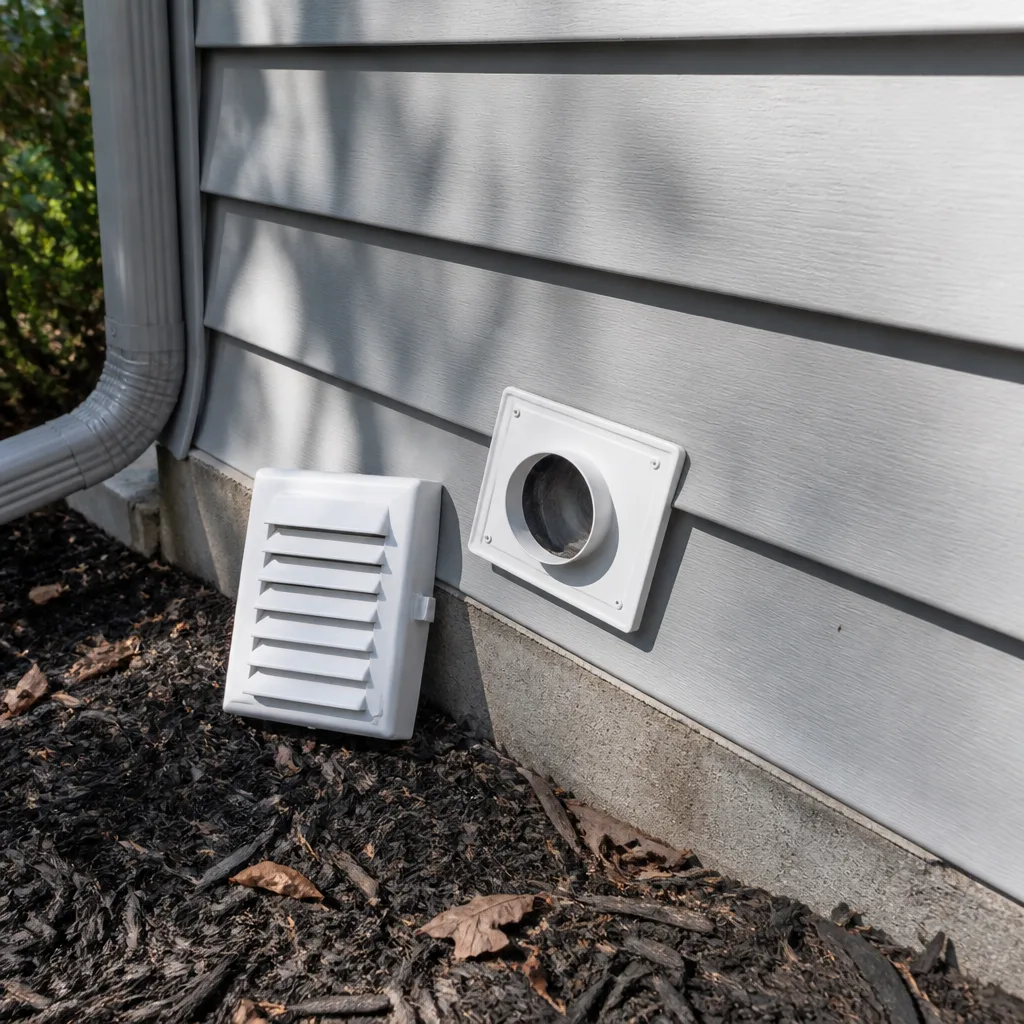 Dryer vent cleaning
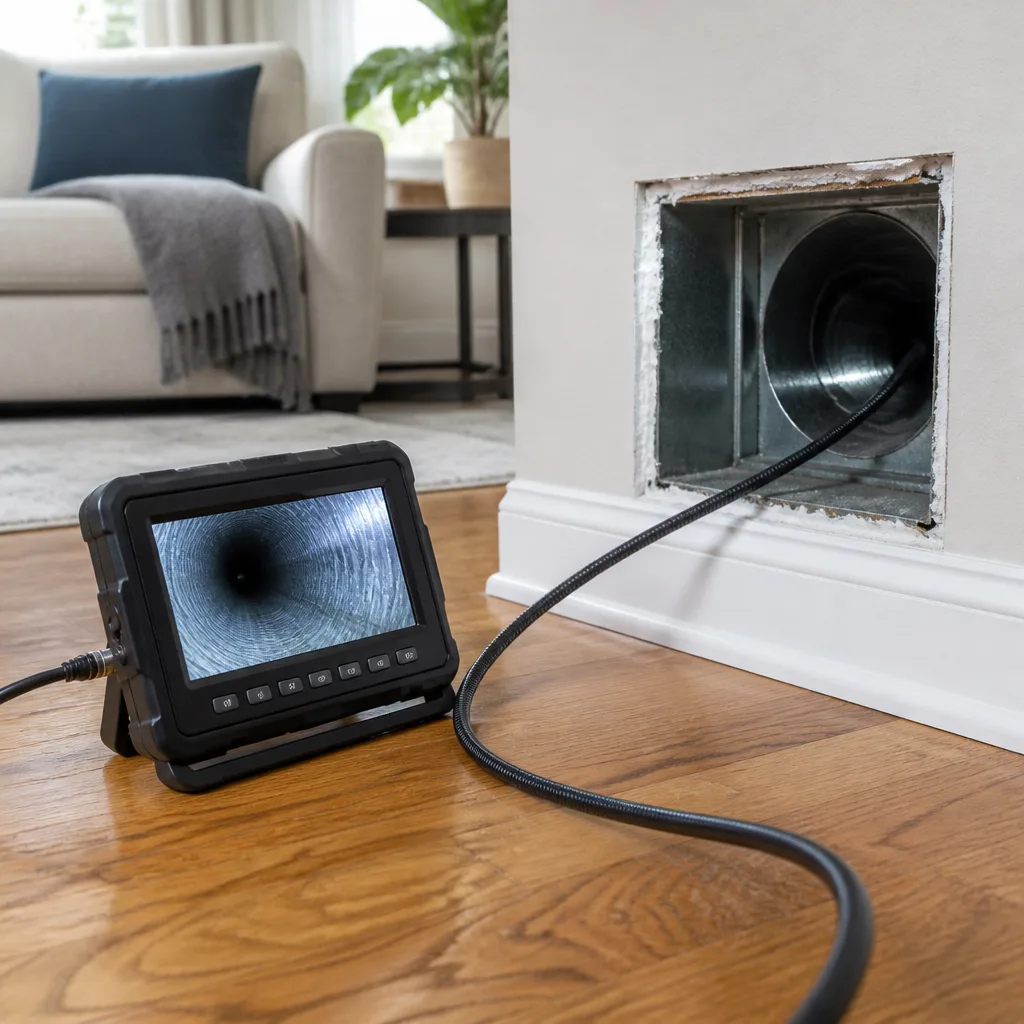 Camera inspection
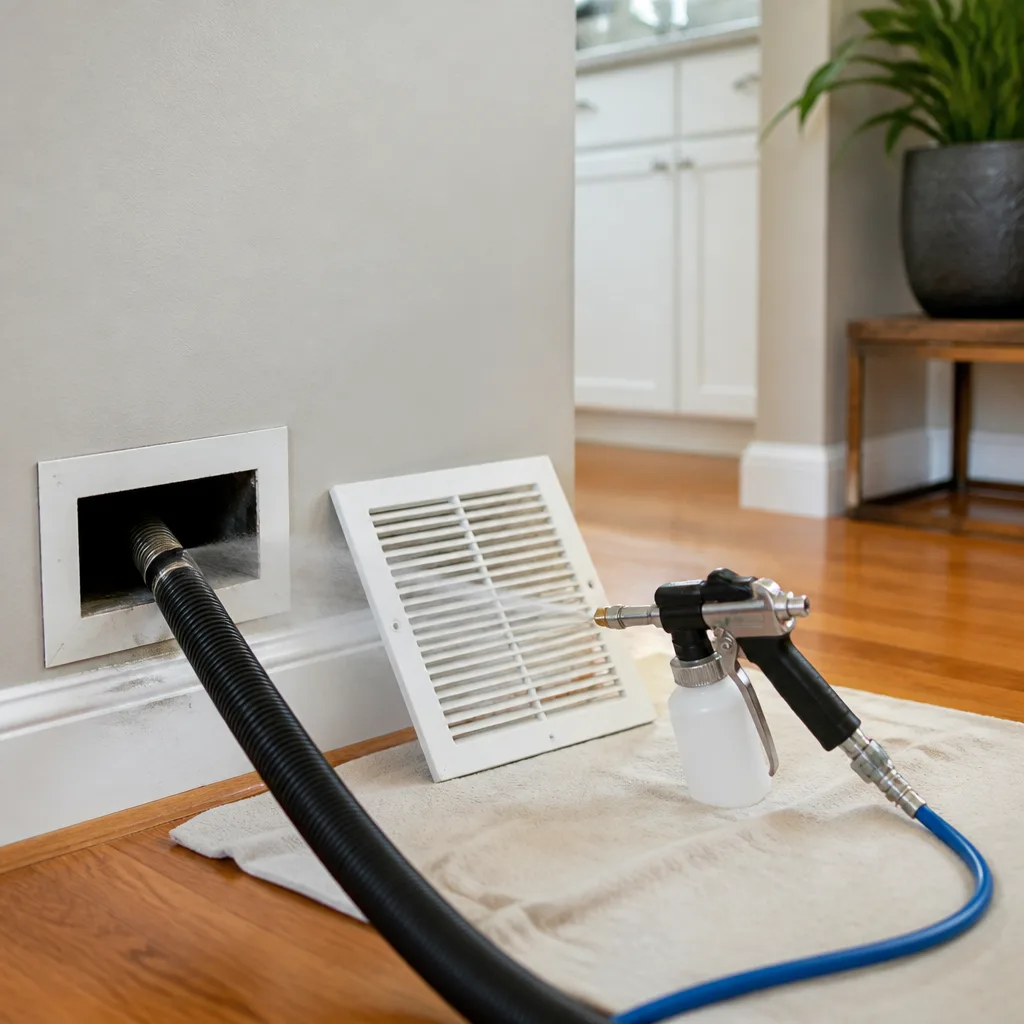 Sanitizing & deodorizing
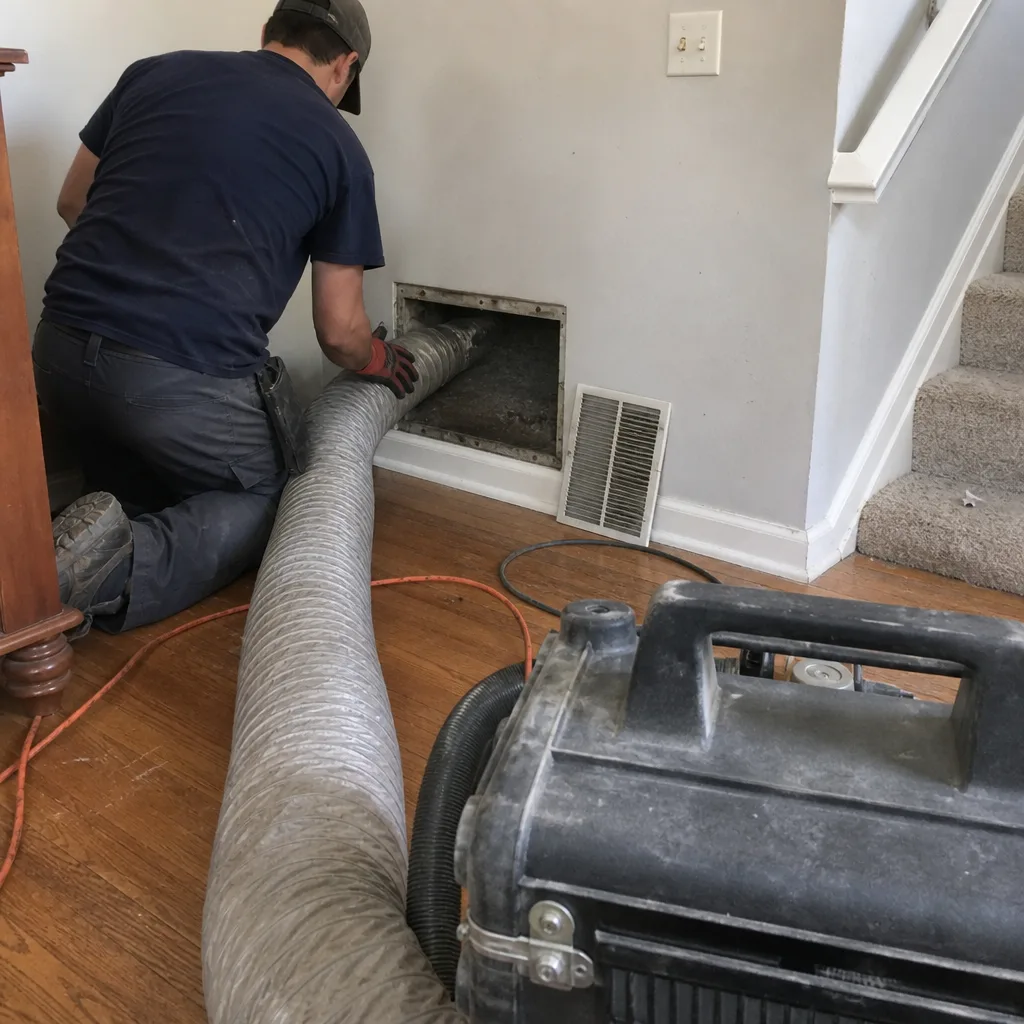
Whole-system duct and dryer vent check with before-and-after photos - you see exactly what came out of your vents
That "$99 whole-house special" is a bait ad - the real number appears once they are in your hallway, or the "clean" is a shop-vac at the register. We photograph the inside of your ducts before and after instead.
Air Duct Cleaning Maintenance Checklist for Salt Lake City Homeowners
If your duct cleaning checklist doesn’t mention January inversions or June evaporative cooler startup, it was written for a city that isn’t Salt Lake. Most maintenance advice floating around online assumes steady humidity, clean outside air, and a standard central-air setup. Salt Lake City gives you none of those. You get winter inversions that trap particulate in the valley, a dry summer that loads the air handler with fine dust, spring runoff that pushes moisture into basements, and new subdivisions throwing off construction debris for years after the last house sells. This guide is a working document: a month-by-month schedule with specific tasks, filter ratings, a ten-minute inspection you can do yourself, and clear triggers that tell you when to stop monitoring and call someone.
Quick Answer
A realistic air duct maintenance schedule in Salt Lake City runs on three anchors: filter changes timed to the inversion season (roughly November through February), a pre-summer check of the cooling and evaporative systems before the first hot week, and a full professional duct cleaning every three to five years, sooner if you’ve had renovation dust, water intrusion, or visible contamination at the registers. Between those milestones, a ten-minute visual inspection at your supply registers and return grilles every month catches most problems early.
Styles & brands we work with
- Whole-home duct cleaning
- Dryer vent cleaning
- Camera inspection
- Sanitizing & deodorizing
Table of Contents
- Why Salt Lake City Needs Its Own Duct Calendar
- The Month-by-Month Checklist
- Filter Ratings and AQI Upgrade Triggers
- The 10-Minute Homeowner Visual Inspection
- Records You Should Keep (and Why They Matter)
- How Often Does Duct Cleaning Really Need Doing?
- Evaporative Coolers, Dry Air, and What They Do to Ducts
- New Construction and Remodel Dust
Why Salt Lake City Needs Its Own Duct Calendar
Salt Lake City sits in a bowl. The Wasatch Range to the east and the Oquirrh Mountains to the west hold cold winter air in place, and during inversion cycles that trapped air collects fine particulate from traffic, wood smoke, and industry. The valley floor from Rose Park through Sugar House fills up first. If you live on the east bench, you may see cleaner air than someone in Glendale on the same day, but your furnace still pulls whatever is in the air into the return and pushes it through the ducts.
The summer brings the opposite problem. Dry heat cracks soil, dust storms roll off the west desert, and homes running evaporative coolers pull unfiltered outside air straight into the living space by design. That’s what a swamp cooler does: it uses outside air, cools it by evaporation, and pushes it inside. The ducts in those homes see a very different load than a sealed central-air system.
Here’s the part most checklists miss. Your ductwork doesn’t fail on a calendar. It fails on a sequence: a dusty stretch, a moisture event, a filter left in too long. In our experience across Salt Lake City homes, the jobs that come back worst are the ones where nobody logged anything. A homeowner who can say “the filter was changed in October and again in February” is a homeowner who can catch a problem before the air handler does.
So the calendar below ties tasks to what Salt Lake City is actually doing that month, not to a generic “inspect annually” note. Treat it as a starting frame; adjust the dates to your neighborhood and your system.
The Month-by-Month Checklist
Think of the year in three phases: inversion season (roughly November through February), cooling changeover (May into June), and dust-and-renovation season (the warm months when outside particulate and indoor projects both spike). The tasks below sit inside those phases.
- October – pre-inversion filter upgrade. Before the cold air settles in, change the filter and step up the rating if you’ve been running a basic one. Check the return grille for dust buildup. Note the date on the filter itself with a marker.
- November through February – monthly register checks during inversions. Once inversion cycles start, walk your supply registers each month. Look for dark streaking around the grille edges and dust tufts on the fins. If you run a furnace fan continuously, check the filter monthly rather than quarterly.
- March – post-inversion inspection. The heating season’s dust load is now sitting in your ducts. Pull the filter and hold it up to a light. Open the return grille and look into the plenum with a flashlight. This is the point where you decide whether to schedule a full cleaning before cooling season.
- April – moisture audit. Spring runoff and snowmelt push water into basements and crawlspaces. Walk those spaces and look for damp insulation, rust on duct seams, or musty smells near the air handler.
- May – pre-cooling changeover. Before the first hot week, check that your AC or evaporative cooler is ready. For a swamp cooler, replace the pad, clean the pan, and inspect the duct run into the house. For an AC system, verify the filter and coil area are clear.
- June through August – dust-season monitoring. After a dust event, check the filter. If you’re running an evaporative cooler, expect more frequent filter and pad attention than a sealed AC home.
- September – pre-heating inspection. Before you switch to the furnace, inspect the heat exchanger area, confirm the return is clear, and look at the ducts you can reach for any new damage from summer heat cycles.
- Every month, all year – the ten-minute visual inspection. It’s the single most useful habit on this list and the one described in detail below.
One note on the monthly sweep: you’re looking for change, not perfection. A light dust film on a grille is normal. A grille that looked clean in October and is dark by January is telling you something.
Filter Ratings and AQI Upgrade Triggers
Filter ratings are where homeowners get talked into expensive swaps they don’t need, or stick with a filter that isn’t doing the job. The right answer depends on the season and the system, not on a single number.
Most residential systems are designed around a filter in the MERV 8 to MERV 11 range. Higher ratings catch finer particles, but they also create more resistance, and a filter that’s too restrictive can starve airflow and strain the blower. That trade-off matters more in Salt Lake City than in a lot of places because our particulate load swings hard with the season.
- Baseline (most of the year): MERV 8 to MERV 11 is a reasonable everyday range for a standard furnace-and-AC system. Change it on the schedule your system manufacturer and your filter’s pressure rating suggest.
- Inversion season upgrade: If your filter is a basic MERV 8 and you want more particulate capture through the winter, an upgrade toward MERV 11 is the usual next step. Don’t jump straight to a HEPA-grade filter in a standard return unless your blower is rated for it.
- AQI trigger: When the local air quality index forecast shows a stretch of poor-air days, shorten your filter interval. Don’t wait for the calendar to catch up. A filter loaded with fine particulate is a filter that’s already off the job.
- Dust-event trigger: After a visible dust storm or a nearby wildfire smoke event, check the filter within a day or two. If it’s visibly loaded, change it.
- Evaporative-cooler homes: Different rules apply. Your cooler is pulling unfiltered outside air by design, so the cooler pad and any inline filter are doing the heavy lifting. Watch them closely through June, July, and August.
If you’re not sure what your system can handle, the answer is in the manufacturer documentation and on the filter’s own rating. We work with Aprilaire and Honeywell components routinely because they’re the air-quality brands most commonly installed in Salt Lake City homes, and we can tell you what the unit is rated for rather than guessing.
The 10-Minute Homeowner Visual Inspection
Most homeowners never look at their ducts until something smells wrong. That’s backwards. A ten-minute monthly check at the grilles you can reach catches contamination long before it reaches the air handler, and it gives you a dated record of what the system looked like. You’re not disassembling anything. You’re looking.
- Start at three supply registers. Pick one in a bedroom, one in a main living area, and one that’s furthest from the furnace. Remove the grille if it lifts off easily. Shine a flashlight into the duct run.
- Look for three things: dark streaking on the duct walls, dust tufts clinging to the grille fins, and any sign of moisture (rust, staining, or a musty smell).
- Check the return grille last. Pull the filter and look past it into the plenum. This is where problems show first. Visible debris accumulation on the plenum walls or around the blower is your early warning.
- Note what you see. Write the date and what you found (even “clean”). You’ll want that record.
- Do a smell test. Stand near the return while the system runs. A musty or sharp odor riding on the airstream is a problem regardless of how the ducts look.
What you’re checking for is change over time. Duped-in debris that’s been there since the house was built is one thing; new accumulation on a register that was clean six weeks ago is another. If you can reach a flexible duct run in the basement or attic, look at it too. Sunken or kinked sections restrict airflow and gather dust.
One safety note: don’t reach into any duct that runs near the furnace or the heat exchanger, and don’t pull the plenum cover off a running system. That equipment moves hot air and, in gas setups, could involve the flue. Visual inspection only. Anything that requires touching the furnace or its wiring is a job for a trained technician.
If what you find looks beyond normal dust, that’s the moment to have the whole system looked at rather than spot-cleaned. Our air duct cleaning service covers the full run, not just the grilles.
Records You Should Keep (and Why They Matter)
A duct maintenance record is worth more than most homeowners realize. It protects warranty claims, documents indoor-air-quality history if you ever sell or rent the property, and gives a technician something to work from beyond “I think it’s been a while.”
Keep a simple log in a notebook, a notes app, or on the folder where you keep your HVAC documentation. The fields below cover what actually matters.
- Last full cleaning date and the company that performed it.
- Filter change log: date, filter rating, and a one-line note on condition.
- Moisture events: any water intrusion, roof leak, or high-humidity stretch, with dates.
- Visible mold or staining: date, location, and a photo.
- Remodel and construction dates: anything that threw dust into the air during the period covered.
- System changes: new furnace, new AC, cooler replacement, or duct modification.
- Inspection notes: the monthly visual inspection results, even when everything is clean.
Why it matters: if a warranty question comes up, a record shows the system was maintained. If you’re a property manager renting a Salt Lake City unit, that same log answers tenant air-quality concerns without guesswork. And when a technician arrives, a written history tells them whether a dust problem is chronic or new. That changes the job.
One more use. If a cleaning reveals damage, you’ll have a documented pre-cleaning baseline. Our HVAC cleaning work often starts with reading whatever record the homeowner has, because it tells us where to look first.
How Often Does Duct Cleaning Really Need Doing?
For most Salt Lake City homes, a full professional duct cleaning every three to five years is a reasonable baseline. Homes with pets, recent renovations, or occupants with respiratory sensitivities should plan closer to every three years. Homes that go longer aren’t necessarily in trouble, but they’re relying on inspection to tell the difference, which is why the ten-minute visual check matters so much.
The three-to-five-year frame is a starting point, not a guarantee. A few things push it shorter:
- Renovation dust. Drywall, sanding, and floor refinishing load the returns. Cleaning shortly after a project finishes is often worth it.
- Water intrusion. Anything that dampens duct insulation or the plenum should be addressed before a cleaning, not after.
- Pet dander and hair. Homes with multiple shedding pets accumulate faster.
- Evaporative coolers. Pulls in outside air; the ducts see a higher particulate load.
- A visible problem the inspection caught. If you’re seeing it, cleaning sooner is the right call.
On the flip side, a duct cleaning isn’t a fix for a bad air-quality problem on its own. It’s one step. If you’ve got a musty smell, the source could be a damp crawlspace or a wet coil rather than the ducts themselves. That’s why the check comes before the clean.
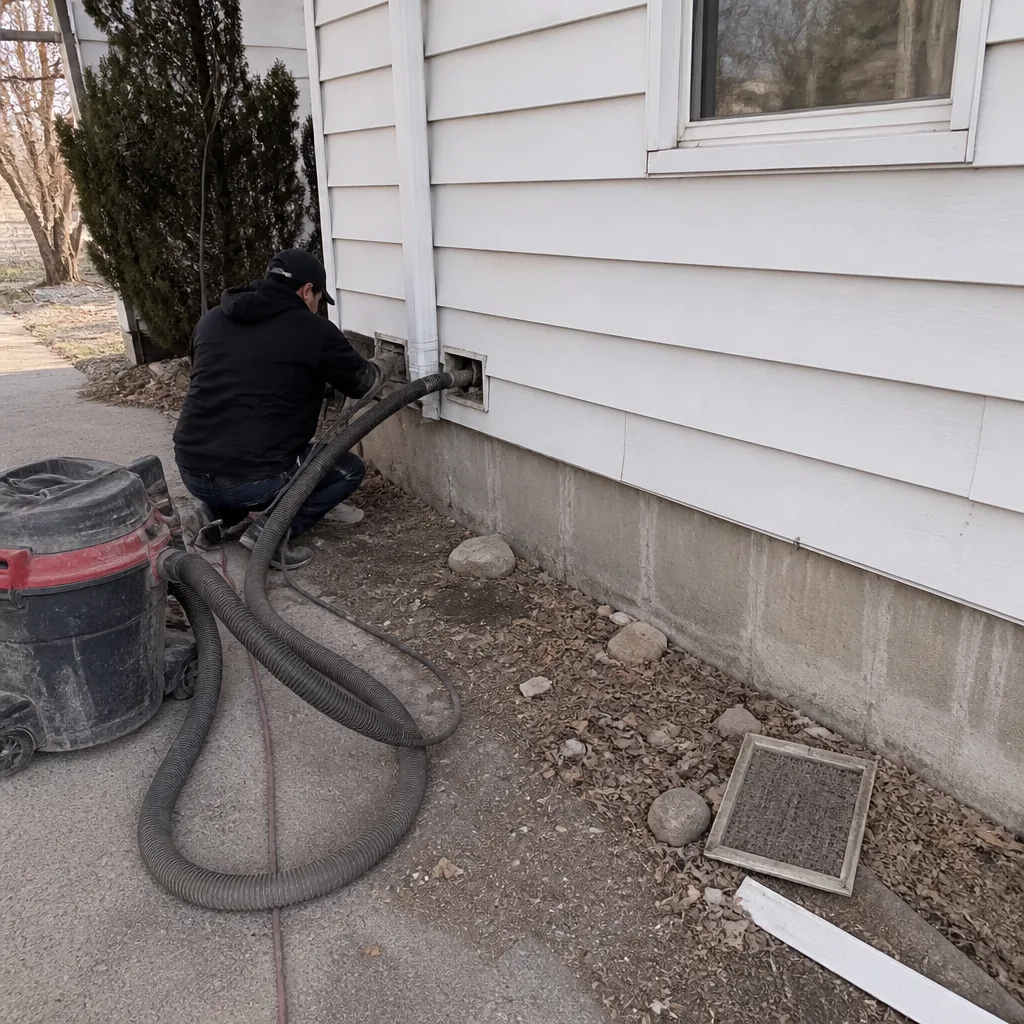
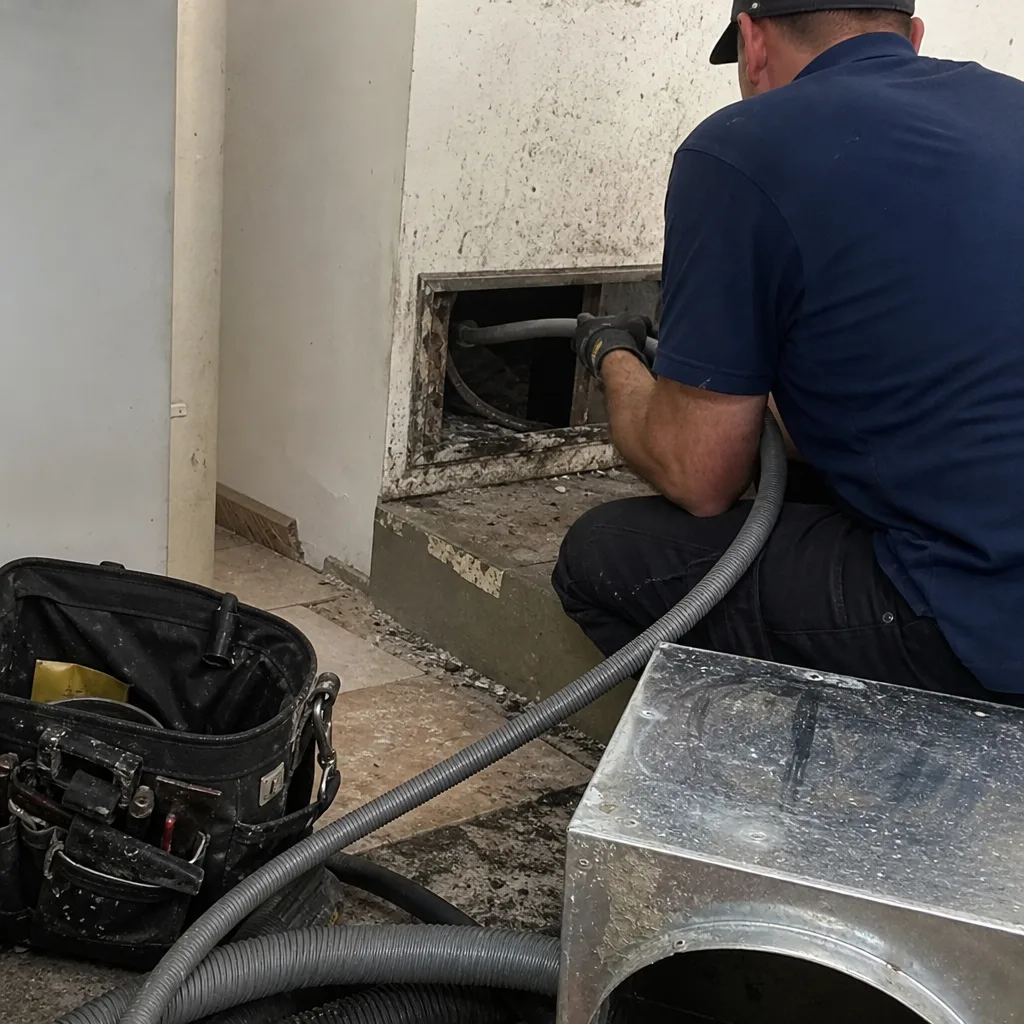
What does a proper cleaning actually involve? Contact-vacuum equipment under negative pressure, not a shop vac taped to a register. The professional systems pull the debris into a sealed vacuum while agitating the duct walls, and air-filtration units capture particulate at the source. The whole point is to move dust out of the system without redistributing it through the living space.
Evaporative Coolers, Dry Air, and What They Do to Ducts
A large share of Salt Lake City homes run evaporative coolers, and those homes need a slightly different maintenance frame. An evaporative cooler pulls unfiltered outside air through a wet pad and pushes the cooled air into the house through ductwork. That’s a different animal from a sealed central-air system, and the ducts see more outside particulate and more moisture cycling.
Here’s what changes in the checklist if your home uses a cooler:
- Pad replacement belongs on the May pre-cooling task, not “whenever it stops working well.”
- Duct runs from the cooler to the house deserve an inspection at least once a year. Look for damp patches or sagging.
- June, July, and August filters get more attention. Fine dust from the west desert reaches the cooler’s intake more easily during dry stretches.
- Winter shutdown matters. Drain the cooler and cover it properly. A cooler left wet through the freezing months can develop problems that find their way into the ductwork.
Dry winter air is the other local wrinkle. Low indoor humidity makes dust easier to lift and circulate, so the same amount of settled dust in a Salt Lake City home becomes airborne faster than it would in a more humid climate. That’s an argument for keeping filters current and for an air-quality step as part of a cleaning rather than treating cleaning as a one-off.
When a cleaning job is done, a sanitizing treatment applied to the duct interior is a formal step we include as a standard option, not a pressure-sell add-on. Guardsman-rated products are designed for HVAC environments. If you’ve had a moisture event, a sanitizing step after cleaning makes more sense than cleaning alone.
New Construction and Remodel Dust
A new-build home in a Salt Lake City subdivision is not a clean-slate duct system. Construction dust, drywall powder, and sawdust from framing get pulled into the ducts during the build, and they don’t all exit when the house is finished. Some settles. Some ends up in the plenum. If you’ve just closed on a new home and the registers are already dusty, that’s not a bug; it’s a construction leftover.
Remodels do the same thing on a smaller scale. A kitchen renovation that runs drywall and cabinet work for a few weeks loads the return with fine particulate. The right move is a cleaning shortly after the project, not during. And add the project dates to your maintenance log so you know when the load landed.
The practical sequence for new construction or a major remodel:
- After the punch list is closed and final cleaning is done, inspect the return plenum and the registers.
- Change the filter immediately if it’s visibly loaded, then again after the first month of occupancy.
- Schedule a full cleaning if the ducts show visible debris at the plenum or the supply grilles are dark with dust.
- Log the cleaning date so your three-to-five-year clock starts from a known point.
Renovation is also a natural time to have duct repair and sealing done in the same visit if the inspection turns up gaps or connections that need attention. One company for cleaning, repair, sealing, and sanitizing means no handoffs between trades, and in a market where everybody’s already booked, that saves real time.
Common Mistakes to Avoid
- Running one filter all winter. Inversion season loads a filter faster than a calendar interval assumes. Check it monthly through the winter and change it when it’s loaded, not when the schedule says.
- Skipping the evaporative cooler check in May. Waiting until July means the first six weeks of cooling season ran through a dirty pad and a dusty duct run. Do the changeover in May.
- Treating a musty smell as a duct problem only. A wet crawlspace or a damp coil will put that smell right back into the air a week after cleaning. Find the moisture source before cleaning the ducts.
- Upgrading to the most restrictive filter possible. A filter that starves the blower is worse for your system than a lower-MERV filter changed on time. Match the rating to what your equipment is rated for.
- Never looking at a register. The ten-minute visual inspection catches contamination before it reaches the air handler. Skipping it means the first sign of a problem is a smell or a bill.
- No written record. If you can’t say when the last cleaning was, you can’t make a decision about the next one. Keep the log.
- Hiring a discount clean-and-go. Portable shop vacuums and blow-and-go services move debris around without a sealed negative-pressure system to capture it. Ask what equipment the crew is using before you book.
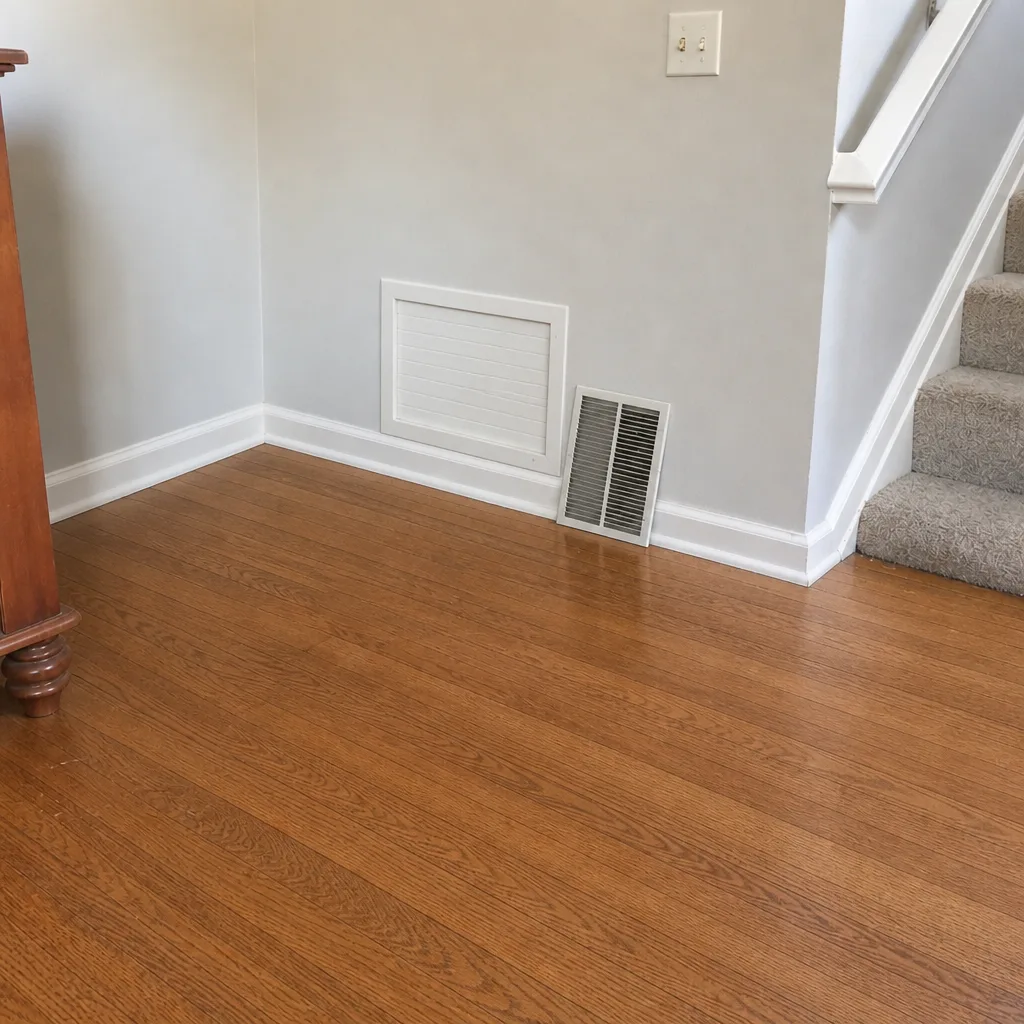
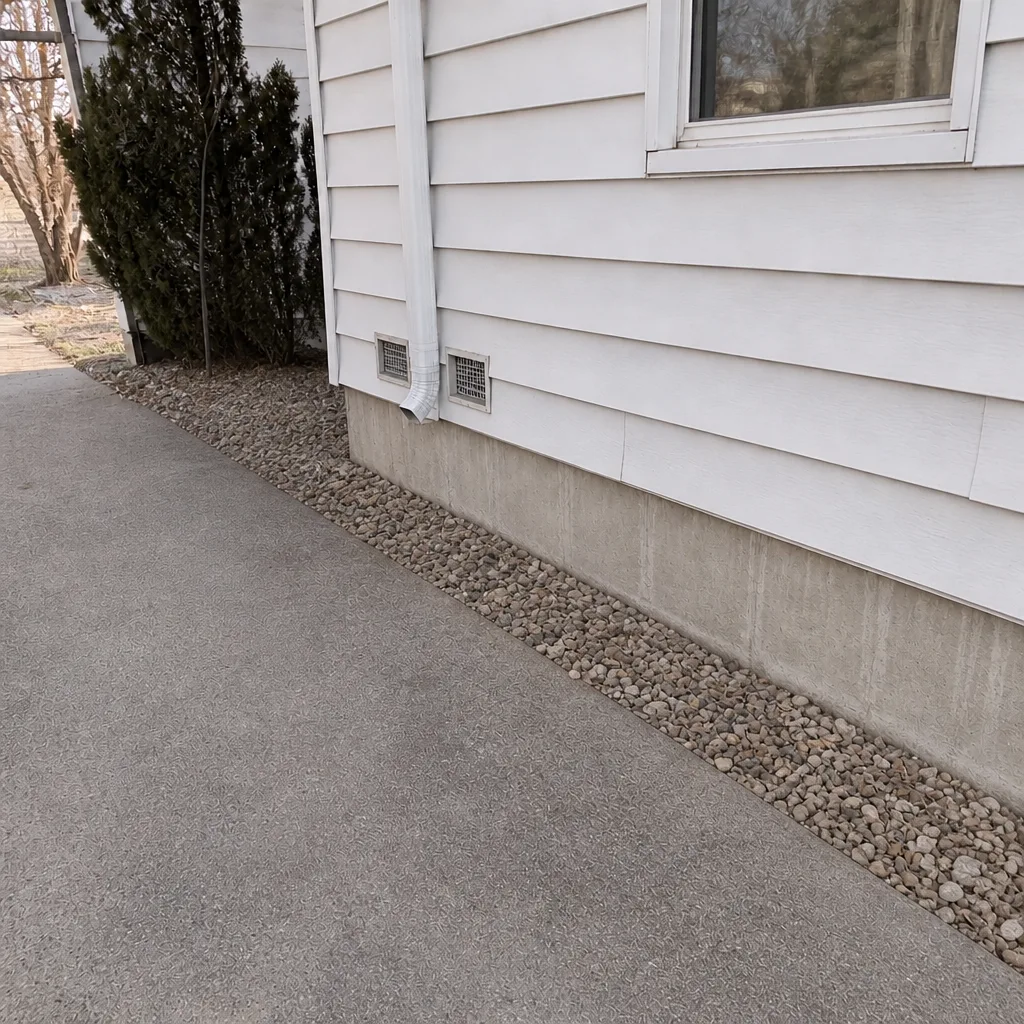
See the difference
 Before
 After
 Before
 After
 Before
 After
When to Call a Professional
The line between “monitor” and “call” is usually visible. Call a professional when you find any of these during inspection: visible debris accumulation on the plenum walls or around the blower; dark, widespread streaking inside a supply duct; a musty smell that keeps returning after a filter change; rust or staining on duct seams; water intrusion that touched duct insulation; visible mold; or a persistent airflow drop you can’t explain. Also call before your first cleaning if the system’s history is unknown, or after a major renovation. In our experience, the items that move from “watch” to “act” are almost always the ones a homeowner noticed two or three inspections in a row. Salt Lake City Air Duct Cleaning Co offers free estimates in Salt Lake City. Call (855) 658-4198. We answer 24/7. Fast dispatch from 7am to 7pm, Sunday through Friday.
Frequently Asked Questions
Every three to five years is a reasonable baseline for a typical Salt Lake City home. Plan closer to three years if you have pets, have done a recent renovation, or live in an area with heavier winter particulate. Monthly visual checks at the registers tell you whether you need to move that schedule forward.
Most standard residential systems are rated for MERV 8 to MERV 11. Stepping from MERV 8 to MERV 11 before inversion season captures more fine particulate without overloading the blower. Check your system’s documentation for its rated filter range before upgrading.
Cheap quotes typically mean portable equipment and a quick pass rather than a sealed negative-pressure system. That approach moves dust around instead of trapping it. Ask what equipment the crew uses; professional jobs use contact-vacuum systems and filtration units to capture debris at the source.
Yes. Add a May pad replacement, an annual inspection of the duct run from the cooler to the house, and a proper winter shutdown. Cooler-equipped homes see more outside particulate, so filter attention through June, July, and August matters more.
Probably yes. Construction dust and drywall powder get pulled into the ducts during the build, and some of it settles. Inspect the return plenum after you close and schedule a full cleaning if you see debris; either way, log the date as your baseline.
You should be able to see the equipment and get before-and-after documentation. Negative-pressure systems are sealed to the duct openings and pull through an external vacuum; Abatement Technologies filtration units capture particulate at the source. Ask for photos of the duct before and after, and keep them with your maintenance log.
Only if the ducts are the source. A musty smell can come from a wet crawlspace, a damp coil, or water intruded into duct insulation. Fix the moisture first, then clean, and consider a sanitizing treatment as part of the job.
The Bottom Line
The checklist works because it’s dated to Salt Lake City’s actual year: inversion season, cooling changeover, dust season, and moisture season. Run MERV 8 to MERV 11 filters on a real schedule; upgrade when the air quality forecast says to. Do the ten-minute visual inspection monthly at three supply registers and the return plenum. Keep a written log of cleaning dates, filter changes, and moisture events. Move a checklist item from “monitor” to “call” when inspection turns up visible debris in the plenum, recurring musty odor, rust or staining on duct seams, or unexplained airflow loss. That’s the whole system, and it’s built to catch problems before they reach the air handler.
When the checklist says it’s time for a full cleaning, or when you want a look at the ducts plus the HVAC system and the air-quality components in one pass, we can help. Our dryer vent cleaning service rounds out the home air picture, and the team brings Rotobrush and Abatement Technologies equipment to every job. If a recent renovation left your ducts loaded, or an inversion season left you guessing, call us at (855) 658-4198 for a free estimate. We answer 24/7. Fast dispatch from 7am to 7pm, Sunday through Friday.
For a quick start on the full-service side, visit Salt Lake City Air Duct Cleaning Co.
Written by the team at Salt Lake City Air Duct Cleaning Co.