
Last updated November 24, 2026
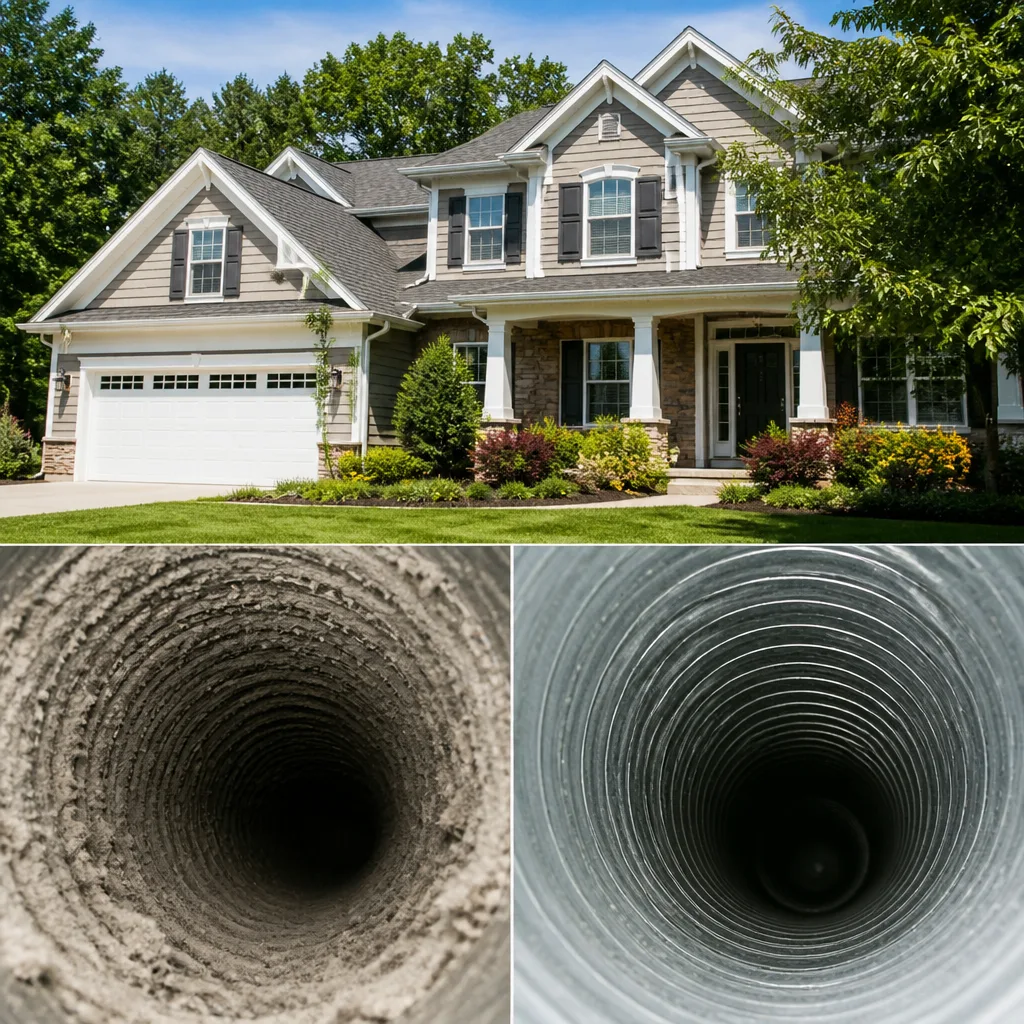 Whole-home duct cleaning
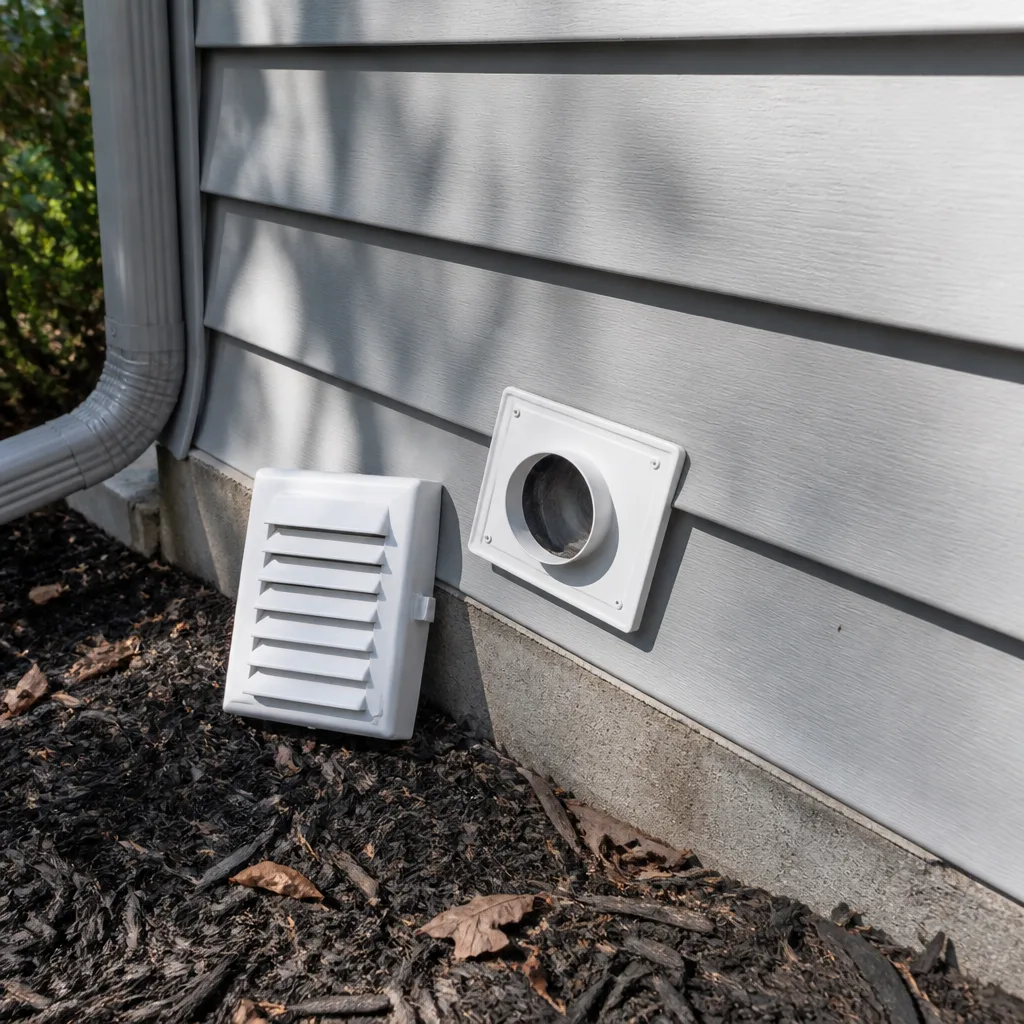 Dryer vent cleaning
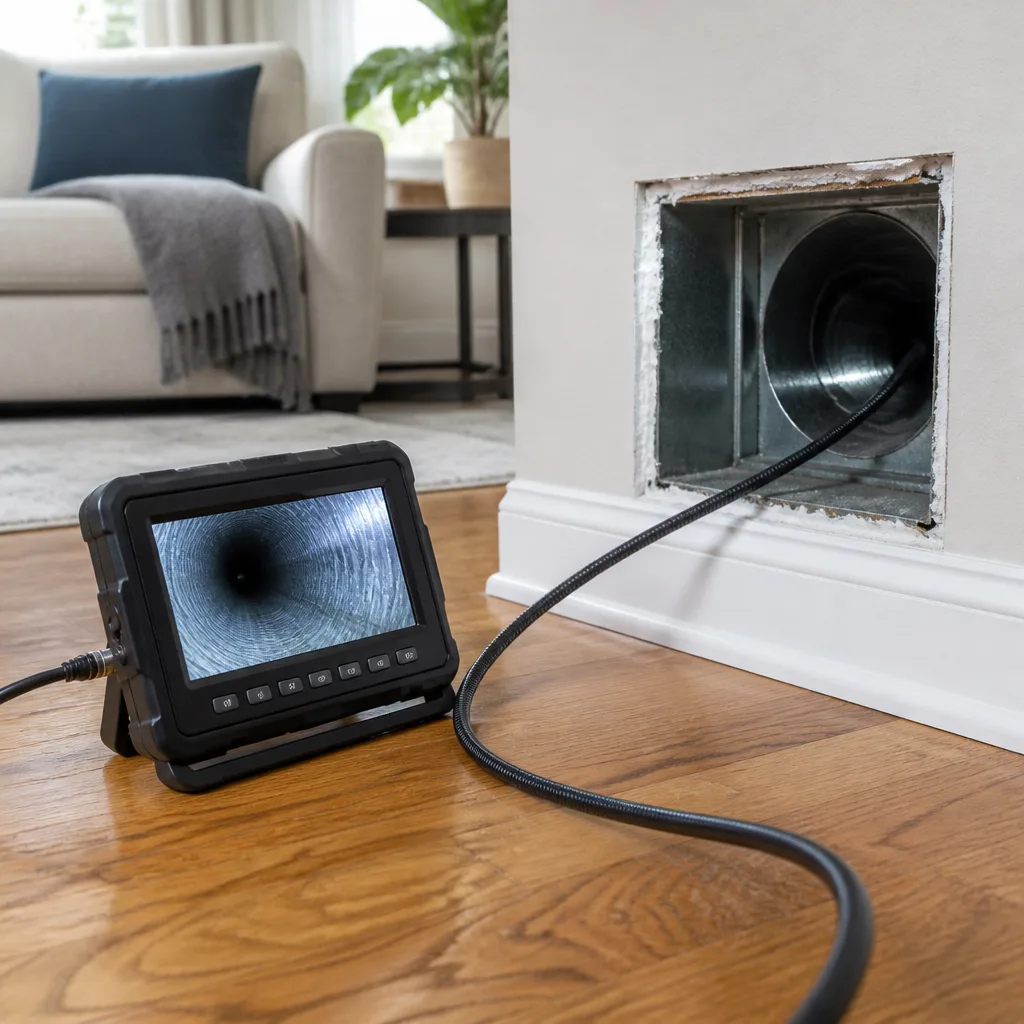 Camera inspection
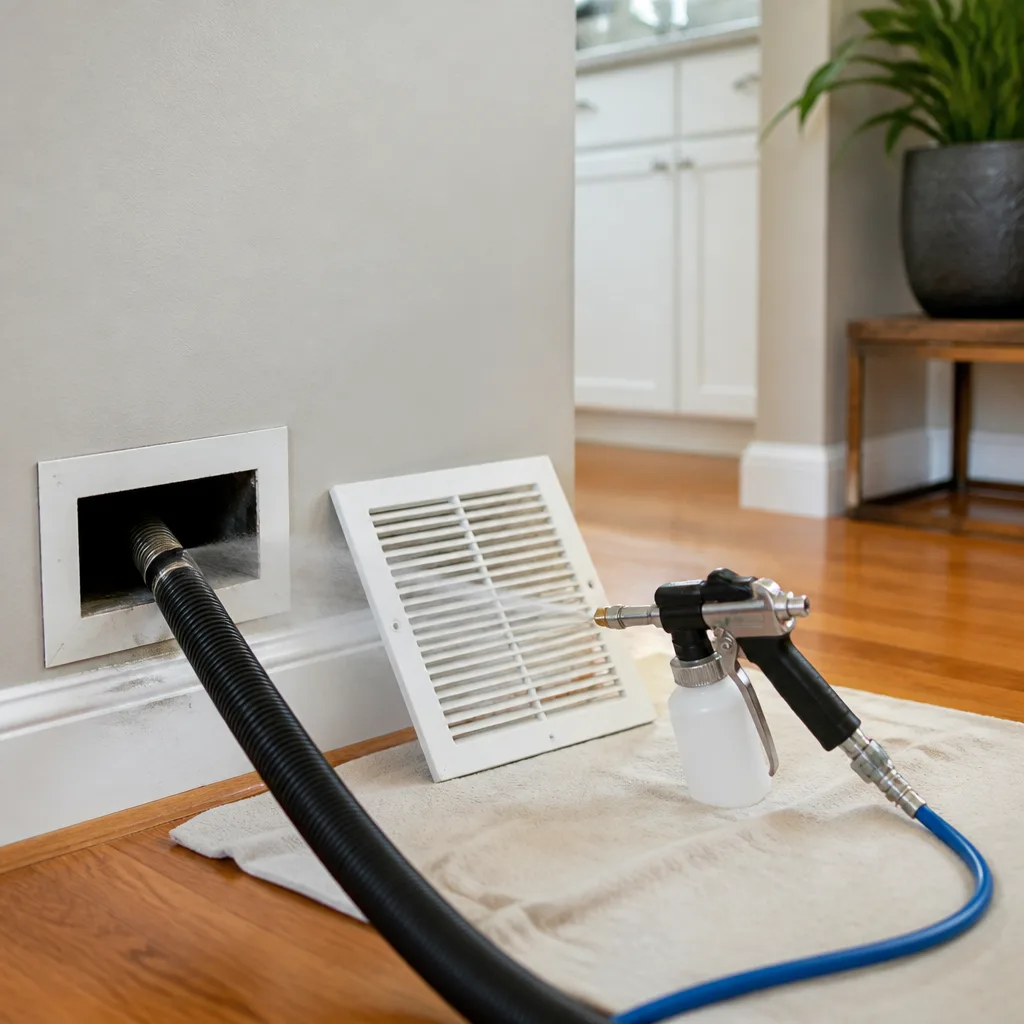 Sanitizing & deodorizing
Whole-system duct and dryer vent check with before-and-after photos - you see exactly what came out of your vents
That "$99 whole-house special" is a bait ad - the real number appears once they are in your hallway, or the "clean" is a shop-vac at the register. We photograph the inside of your ducts before and after instead.
Air Duct Cleaning Emergency Preparedness Guide for Salt Lake City Homes
Most emergency prep lists for Salt Lake City homes cover water, batteries, and a meeting spot. Almost none of them mention the duct system, which is the one part of the house that can spread contamination into every room at once. FEMA’s Wasatch Front earthquake scenario projects major ground shaking across the Salt Lake Valley, and a duct system with disconnected joints or debris infiltration after an event will pump whatever entered the system into every room the moment the furnace kicks on. That risk is manageable, and it’s manageable before anything happens. This guide covers the duct-specific parts of preparedness that standard checklists skip: seismic inspection, wildfire smoke response, flood recovery for crawl-space ductwork, pre-event documentation, and the upgrades that make a bad week less bad. It’s written for homeowners and property managers along the Wasatch Front who want a plan, not a scare tactic.
Quick Answer
Air duct emergency preparedness in Salt Lake City means three things: knowing which duct connections to visually check after ground shaking before you restart the system, acting within roughly 48 hours after a heavy wildfire smoke event, and never restarting a furnace or air handler after a flood until the ductwork and insulation have been inspected. Add a photo log of your air handler, main trunk, and return plenum now, and any insurance claim later gets dramatically easier to support.
Styles & brands we work with
- Whole-home duct cleaning
- Dryer vent cleaning
- Camera inspection
- Sanitizing & deodorizing
Table of Contents
- Post-Earthquake Duct Inspection: What to Check Before Restart
- Wildfire Smoke Infiltration: The 48-Hour Window
- Flood and Moisture Events: Crawl-Space Duct Protocol
- How to Document Your Duct System Before an Emergency
- Pre-Emergency Investments That Reduce Post-Event Risk
- Restarting Your System After a Seismic Event
- Common Mistakes to Avoid
- When to Call a Professional
Post-Earthquake Duct Inspection: What to Check Before Restart
After ground shaking in the Salt Lake Valley, the first duct question isn’t “is it dirty” – it’s “is it still connected.” The Wasatch Fault runs along the valley’s eastern bench, and even moderate shaking can shift rigid metal ductwork at its weakest points: the joints. A duct run that has separated at a takeoff or a trunk junction becomes an open path between your crawl space, attic, or wall cavity and your living space. Start the furnace and the blower pressurizes the whole system and pulls that unfiltered air through.
Here’s the preliminary visual sequence we recommend. This is a check, not a repair – if anything looks wrong, stop and call a professional.
- Shut the system off at the thermostat first. Don’t run the fan while you’re inspecting.
- Check the air handler and plenum connection. Look at the seam where the main trunk meets the air handler cabinet. Any gap, sag, or visible separation means the system stays off.
- Check the main trunk line in the basement or crawl space. Rigid rectangular trunk is the most common configuration in older Salt Lake City homes, and its longitudinal seams and hanger straps are the usual failure points under lateral movement.
- Check branch takeoffs. Where round branch ducts connect to the trunk, look for pulled collars, torn flex duct, or duct tape that has let go.
- Check the return plenum and filter rack. A return that has pulled loose is worse than a supply disconnect because the system pulls unfiltered air directly into the equipment.
- Check attic runs if you have them. Flex duct in an attic can kink or tear where it passes over trusses; sagging runs are a sign the supports moved.
If everything looks intact, you can restart. If anything is displaced, taped, or torn, keep the system off until someone qualified has looked at it. Restarting a compromised system is how a manageable problem becomes a whole-house contamination event. To understand how a proper inspection fits into a full service, see our page on air duct cleaning.
Wildfire Smoke Infiltration: The 48-Hour Window
The 48 hours after a heavy smoke event are the highest-impact window for duct inspection and filter replacement. Here’s why the timing matters more than people assume. During a smoke event, your filter catches a large share of the particulates the blower pulls in, but that filter loads up fast and the system keeps pulling. Once the smoke clears, what’s sitting in the filter, on the air handler coils, and on the duct surfaces is a reservoir. Every time the fan runs after that, it re-suspends some of it.
After a smoke event in Salt Lake City, work through this sequence:
- Replace the filter immediately – don’t wait for the calendar date. A filter that went through a heavy smoke week is done regardless of how long it’s been in service.
- Inspect the filter rack for bypass. Smoke bypasses a poorly fitting filter and bypasses the media entirely, coating the blower and coil with the material you were trying to keep out.
- Wipe down return grilles and registers before running the system again – these collect fallout first.
- Check for lingering odor. If a musty or acrid smell persists after a filter change and a few cycles, contamination has settled on duct surfaces rather than staying airborne.
When is duct sanitizing warranted rather than optional? When odor persists after filter replacement, when smoke combined with moisture (a swamp cooler running through a smoke event, or a roof leak during one) has created conditions for biological growth, or when someone in the home has respiratory sensitivities. Sanitizing is a formal service step for us, not a pressure-sell add-on, and it’s applied with products rated for HVAC environments, including the Guardsman line. If you’re dealing with a loaded system after smoke season, our HVAC cleaning service addresses the coil and air handler, which is where smoke contamination does its longest-lasting damage.
Flood and Moisture Events: Crawl-Space Duct Protocol
After any standing-water event in a crawl space, the rule is simple: do not restart the HVAC system until the ductwork, insulation, and air handler have been inspected. Water plus ductwork is a mold question, and running the system pushes the result into every room.
The inspection sequence differs by duct material, and it’s worth knowing what you have before you need to know:
- Flex duct is the most vulnerable. Its inner liner is thin, and water that wicks into the insulation jacket between the liner and outer wrap is nearly impossible to dry. Flex duct that took on water is usually replaced, not cleaned.
- Duct board is a porous material throughout. Once saturated, it holds moisture and loses structural integrity. Like flex, it typically doesn’t survive a flood.
- Rigid metal duct can often be cleaned and returned to service, but only after it’s fully dried and the interior has been assessed. Standing water inside a metal trunk is a priority issue.
- Insulation on the exterior of ductwork should be checked for dampness separately. Wet insulation keeps the duct surface cold and creates condensation even after the floodwater is gone.
As a rule: if floodwater reached the ductwork, that ductwork can’t simply be dried and called good. If floodwater reached the air handler, the equipment needs to be evaluated separately by an HVAC contractor before any duct contractor touches the system. Keep everything off, document what you find, and get an assessment. We see this most often in homes near the lower bench and the valley floor, where crawl-space construction is common and water pools rather than draining.
How to Document Your Duct System Before an Emergency
Insurance claims for duct damage are won or lost on documentation, and it’s the easiest part of preparedness to skip. Do it now, on a calm day, with your phone. Fifteen minutes of photos today can save weeks of argument after a seismic event or flood.
Here’s what to photograph and record:
- The air handler cabinet and its data plate. Brand, model, and serial – this is what the adjuster needs to assess replacement value.
- The main trunk line, full length. Photograph the full run in segments and note any pre-existing seams, tape, or repairs. These are your baseline. A pre-existing defect documented before an event isn’t a pre-existing defect blamed on us later.
- Every branch takeoff you can see. Wide shots and close-ups, with something in frame for scale.
- The return plenum and filter rack. Photograph the filter installed and the rack condition.
- Crawl-space ductwork in detail. If your ducts run through a crawl space, photograph access points, insulation condition, and any low spots that could collect water.
- Access panels. If panels exist, photograph them. If they don’t, note that – it’s a future recommendation.
- Write down your duct material types room by room. A short written log of rigid vs. flex, supply vs. return, is worth more than you’d expect when a claim form asks.
Store the photos somewhere cloud-based, not just on your phone, and date them. Our Salt Lake City Air Duct Cleaning Co team recommends a fresh photo log every time you have service work done – no handoffs, no gaps in the record.
Pre-Emergency Investments That Reduce Post-Event Risk
Three upgrades do more than anything else to reduce post-emergency duct damage and post-event contamination. They’re worth prioritizing in this order.
Aeroseal Duct Sealing as a Contamination Barrier
Duct sealing doesn’t just save energy – it closes the paths that contamination follows. A sealed system can’t pull air from a crawl space, a wall cavity, or an attic into your living space. In a seismic event, a system with fewer vulnerable connections is simply less likely to open up. Sealing is done with professional equipment and it addresses the small leaks that a visual inspection will never find.
MERV-13 Upgrade Timing Before Wildfire Season
MERV-13 captures the fine particulate that smoke events produce, but it only helps if it’s in the system before the smoke arrives. The right time to upgrade is late spring, before fire season, not mid-event when the hardware store is sold out. Upgrade the filter and check that your filter rack is sized for it – a MERV-13 filter that doesn’t fit the rack is worse than a MERV-8 filter that does. Our technicians work with the Aprilaire and Honeywell filter hardware most commonly installed in Salt Lake City homes, so the upgrade happens at the rack, not just at the filter slot.
Access Panel Placement for Rapid Post-Event Inspection
If your ductwork has no inspection access points, the only way to see what happened after a seismic event or flood is to start cutting. Access panels installed ahead of time – at the plenum, at the main trunk, and at the furthest branch run – turn a destructive inspection into a ten-minute visual check. That’s the difference between a quick assessment and a restoration project.
Restarting Your System After a Seismic Event
Once the shaking stops, the instinct is to get the house back to normal – turn on the heat, warm the place up. The instinct is wrong. Restarting a compromised system is the single worst thing you can do after an earthquake, because a connected system with a single failed joint pulls unfiltered air through the entire house within a few minutes. Follow this sequence instead.
- Turn the system off at the thermostat if it’s still running. Confirm the fan has stopped.
- Do a full visual check of the air handler, main trunk, return plenum, and each branch takeoff (the sequence in the seismic section above).
- Look for water. Seismic events sometimes come with burst pipes or water mains. Water in the crawl space matters as much as duct damage.
- Do not restart if there’s any doubt. A gap in a duct is invisible from fifty feet. If you can’t inspect every connection, call a professional before restarting.
- If everything checks out, restart the system and listen. New hissing, rattling, or a whistle at the registers is a sign a joint opened up under pressure. Shut it off and call.
One thing we recommend that competitors don’t always mention: this is a quick check, not a repair. For anything that needs fixing, sealing, or cleaning on a compromised system, that’s a professional scope – and one we can handle in-full. A compromised system also needs a full clean and sanitizing step before it’s back to service, and our page on HVAC cleaning covers what that involves.
Common Mistakes to Avoid
- Restarting the system after an earthquake because the house “looks fine.” Duct joints fail invisibly. The system looks fine because the gap is in your crawl space, not your living room.
- Waiting weeks to replace a filter after a smoke event. The filter is loaded and the system is re-suspending fine particulate every time the fan runs. Replace it in the 48-hour window.
- Drying a flexible duct and putting it back into service after a flood. The liner traps moisture against the jacket. Flex and duct board that took on water get replaced.
- Skipping a pre-event photo log. If you don’t have a pre-event baseline, the claim process turns ambiguous, and in our experience a photo log is the single easiest insurance document to build.
- Running the system during smoke season with the windows open and a swamp cooler on. This is a Salt Lake City specific pattern – a swamp cooler pulls outside air straight into the system, and smoke comes with it.
- Assuming a visual inspection counted as a cleaning. An inspection looks at the connections. A cleaning removes what’s inside the duct surfaces. They’re different jobs.
- Buying a MERV-13 filter without checking that it fits the rack. Bypass around an oversized filter undoes most of the benefit you were trying to get.
When to Call a Professional
Call us when a visual inspection turns up a displaced joint, a torn flex run, or a duct connection you can’t reach. Call us when a smoke event leaves lingering odor in the house after a filter change. Call us after any flood that reached the crawl-space ductwork, especially if you have flex or duct board. Call us after any seismic event where you see a gap in the plenum or trunk, because these are not homeowner-scope repairs. And call us before the next wildfire season if you want a MERV-13 filter upgrade done properly at the rack, or Aeroseal sealing to close the paths that contamination follows. Salt Lake City Air Duct Cleaning Co offers free estimates in Salt Lake City – call (855) 658-4198. All work is performed with Rotobrush and Nikro negative-pressure systems and Abatement Technologies filtration, and the estimate is written before any work begins.
See the difference
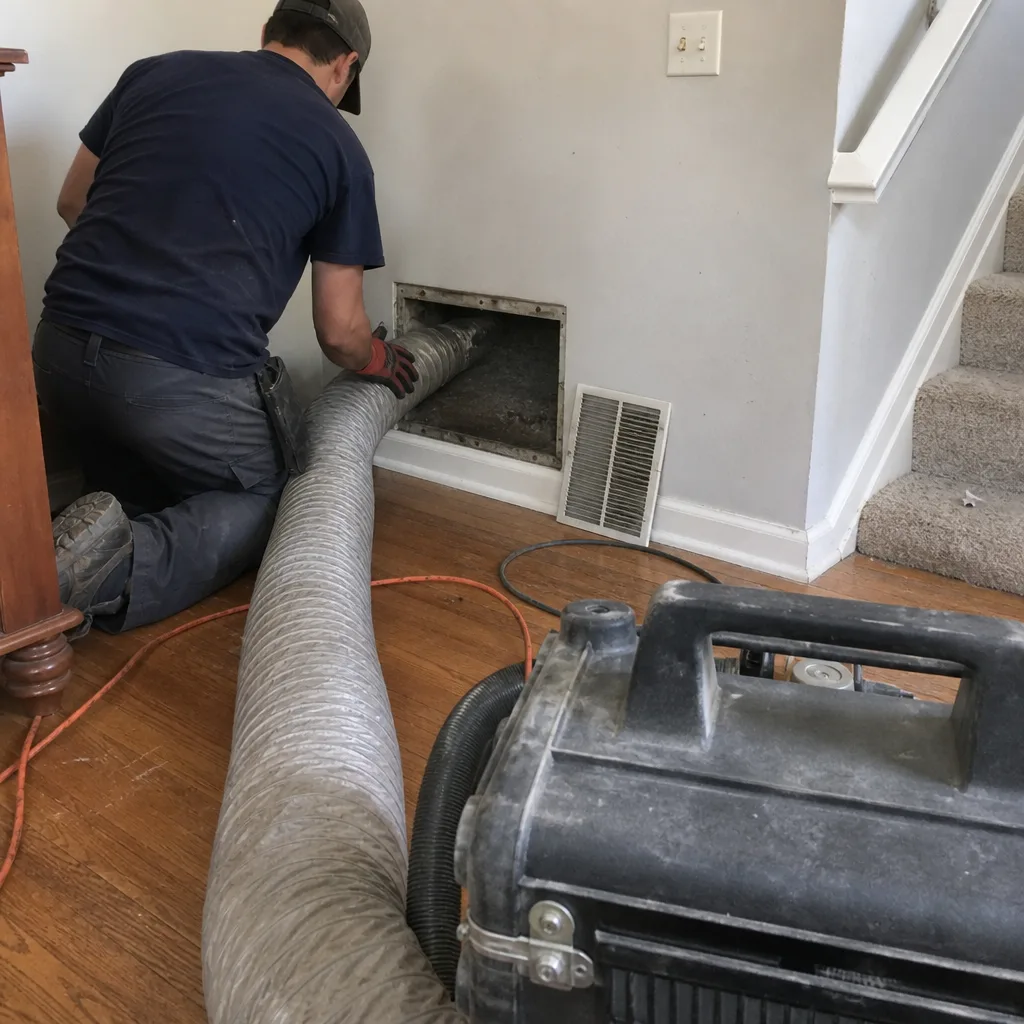 Before
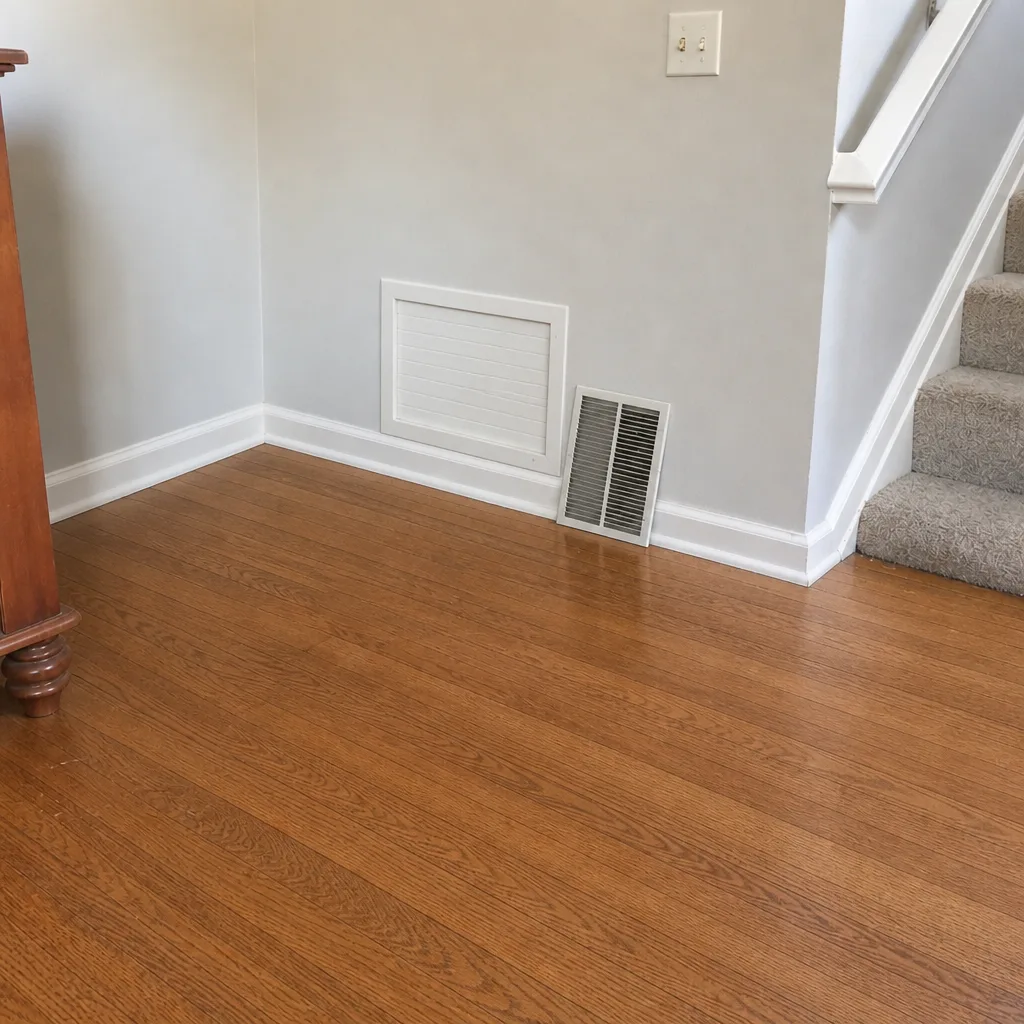 After
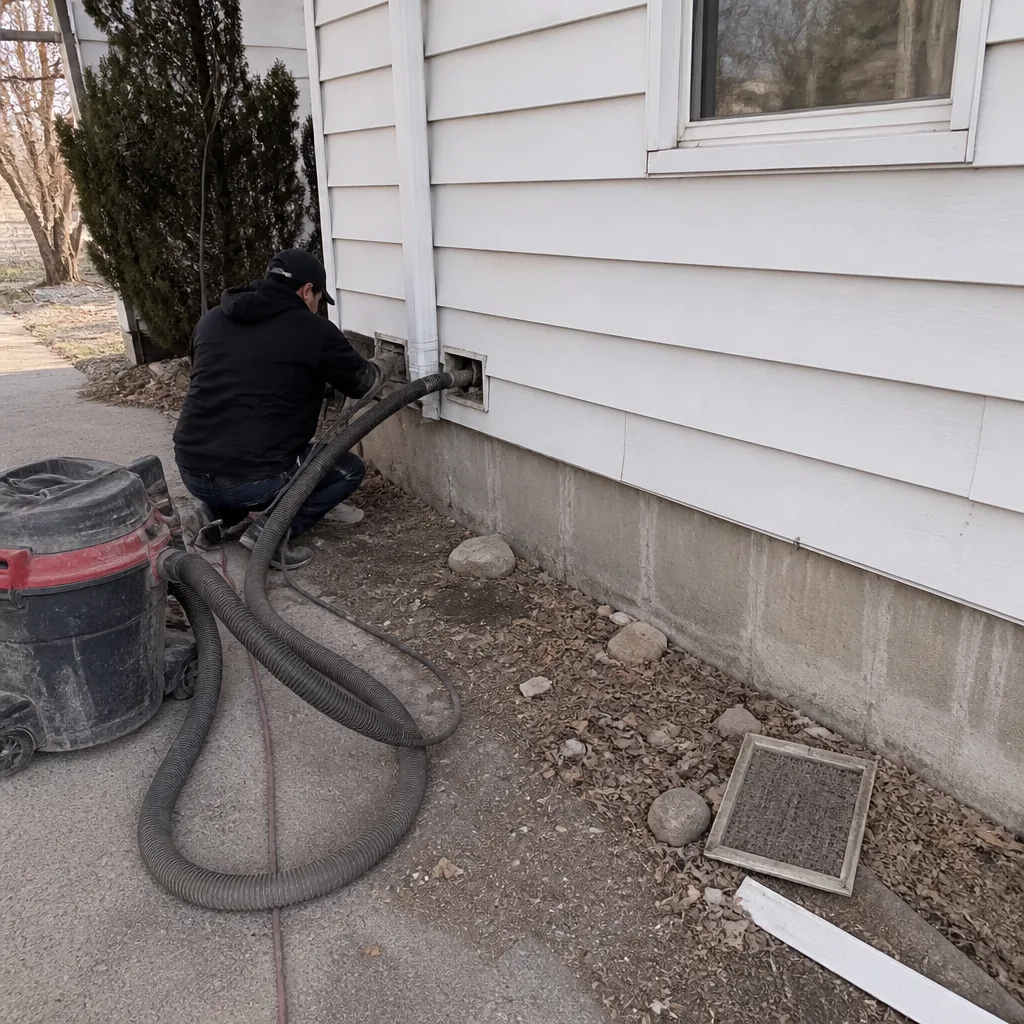 Before
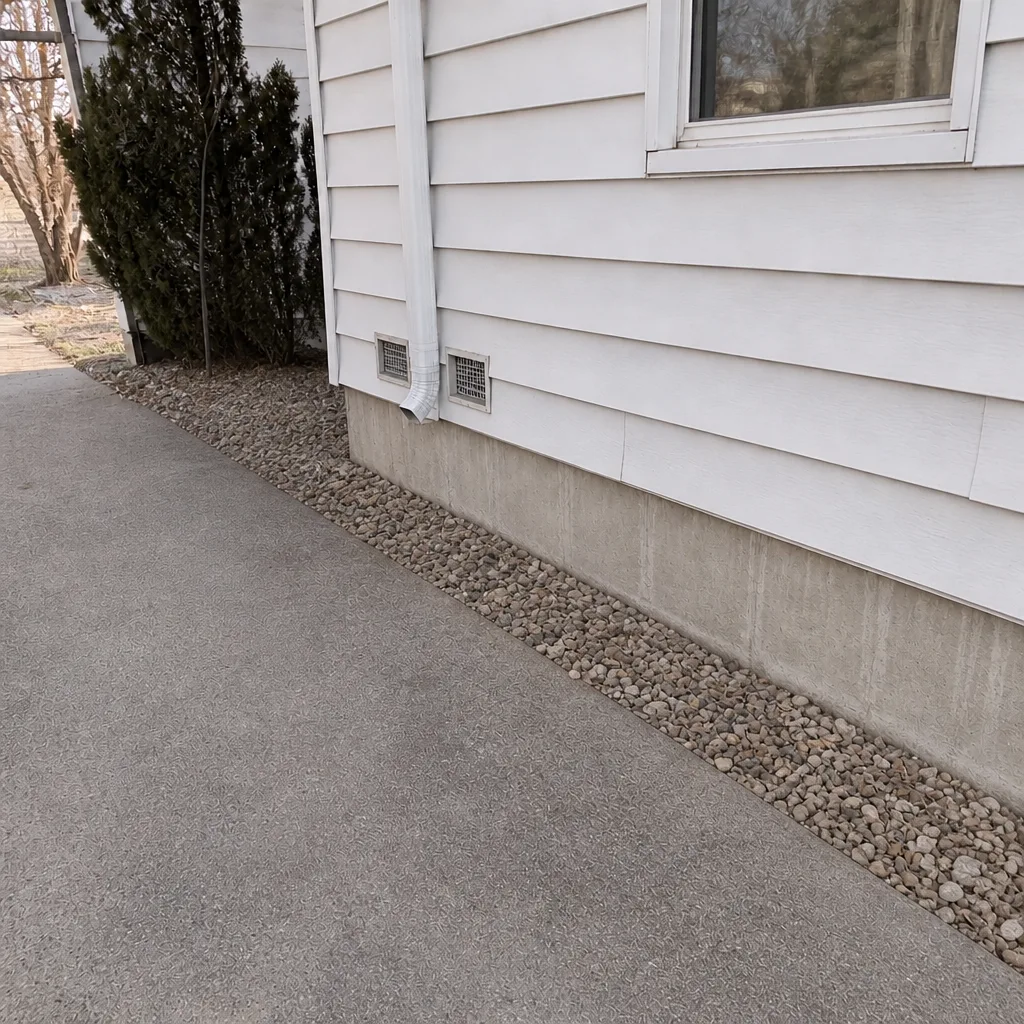 After
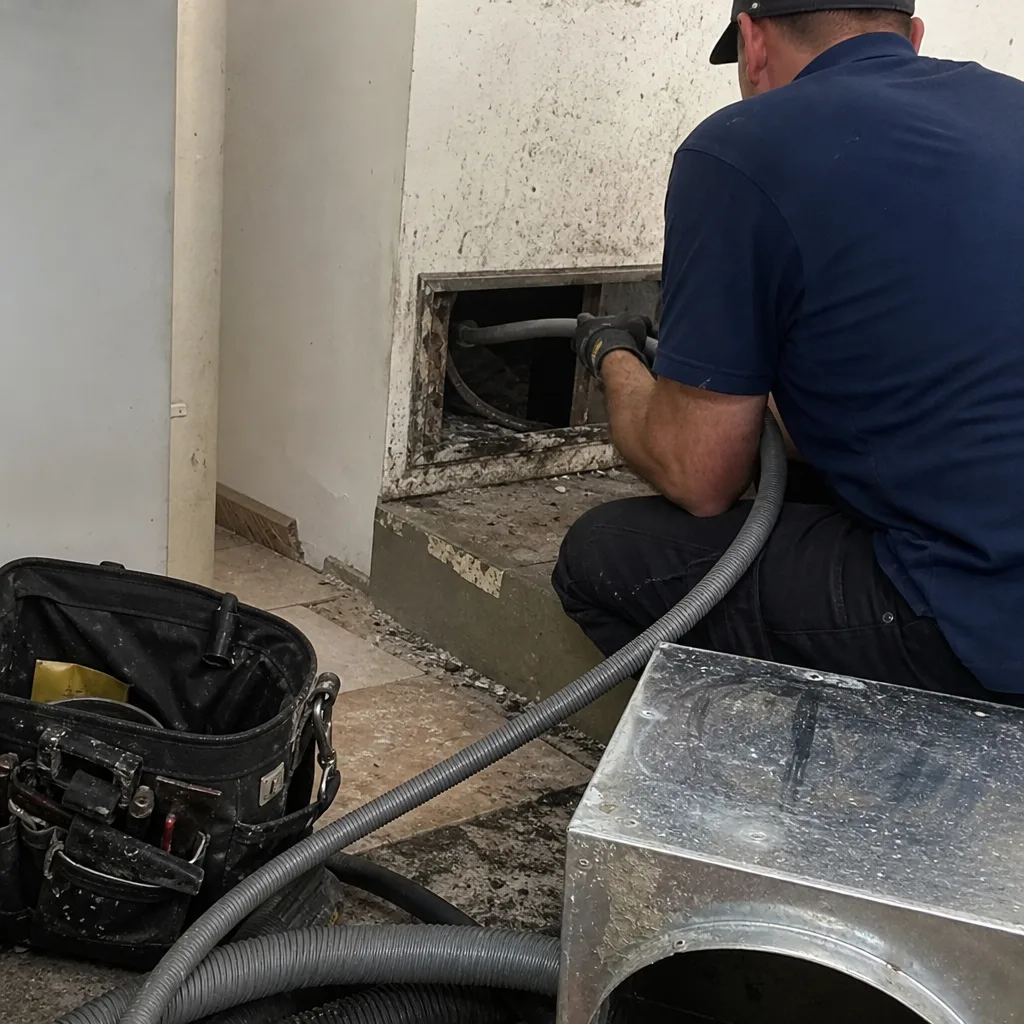 Before
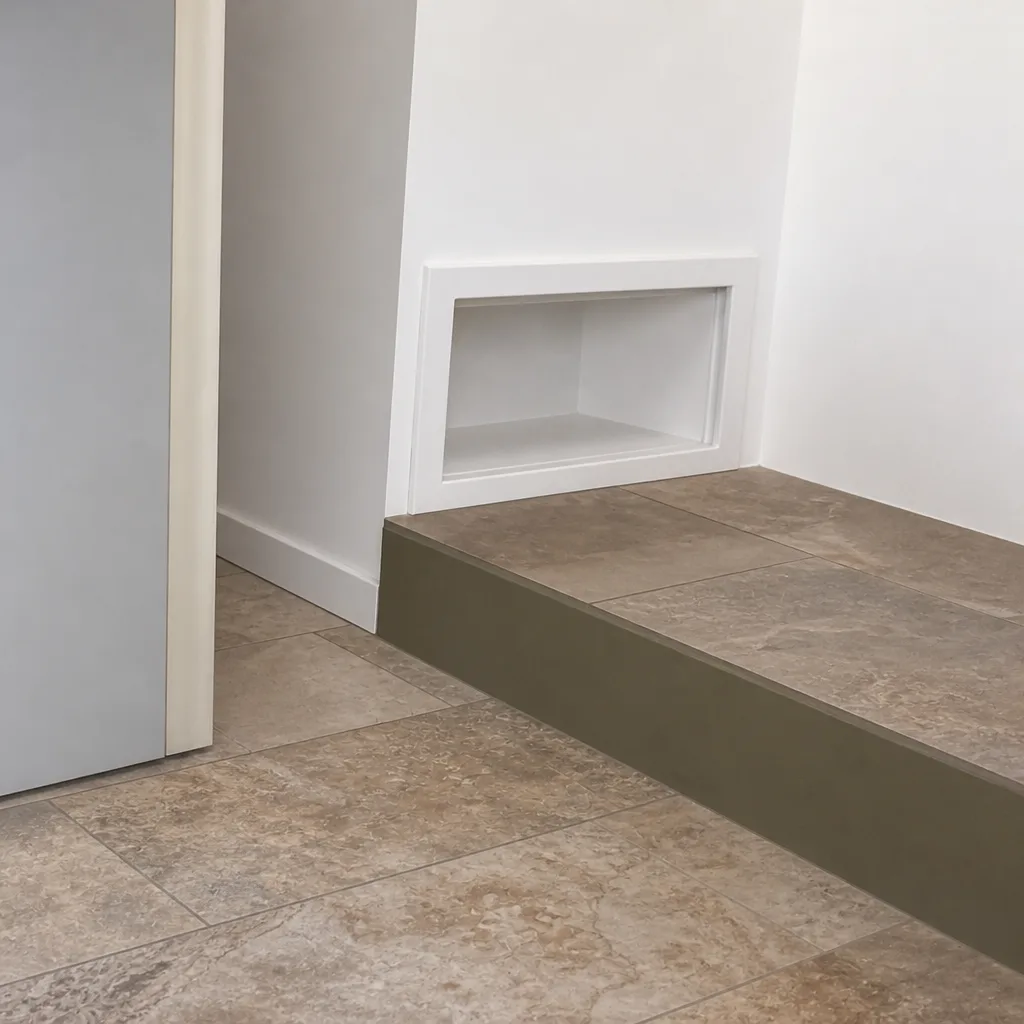 After
Frequently Asked Questions
Check the connection where the main trunk meets the air handler cabinet first, then the main trunk line, then every branch takeoff. Shut the system off at the thermostat before you start any inspection.
Within about 48 hours. That’s the window where a filter replacement, a filter rack check, and a duct inspection do the most good – after that, the contamination has settled into the duct surfaces and a cleaning is the next step.
Usually not. Flex duct has an inner liner that traps moisture against the insulation jacket, and water that reaches the liner typically means replacement rather than cleaning. Duct board behaves similarly. Rigid metal duct can often be cleaned and returned to service once it’s fully dry.
Cleaning removes debris and settled particulate from duct surfaces. Sanitizing is a separate service step applied to the interior of the ducts with products rated for HVAC environments, including the Guardsman line, and it’s typically warranted when odor persists after a filter change or when smoke combined with moisture has created conditions for biological growth.
Yes, and the upgrade should happen in late spring, before fire season, not mid-event. The filter only helps if it’s in the system before the smoke arrives, and it only works if the filter rack is properly sized for it.
No. Most smoke events need a filter replacement and a check of the return grilles. A full cleaning and sanitizing step is warranted when odor persists, when smoke combined with moisture caused growth, or when someone in the home has respiratory sensitivities. Call (855) 658-4198 and we can talk through your situation before booking a job.
The Bottom Line
Duct emergency preparedness comes down to three habits: a visual inspection sequence you know before you need it, a photo log of your system built on a calm day, and the discipline to keep the system off after an earthquake or flood until it’s been checked. Add two pre-season upgrades – Aeroseal sealing and a MERV-13 filter at a properly sized rack – and you’ve closed most of the paths that damage and contamination follow. The rest of it is a phone call. Our technicians have up to 14 years of experience with the full duct ecosystem, and if a post-event inspection turns up something that needs cleaning, repair, or sealing, it can be handled in one visit with the same Rotobrush, Nikro, and Abatement Technologies equipment commercial contractors use. We answer 24/7. Fast dispatch from 7am to 7pm, Sunday through Friday.
Call (855) 658-4198 for a free estimate. The written estimate sets the final price, no work starts before you agree to it, and you get before-and-after photos of your own ducts.
Written by the team at Salt Lake City Air Duct Cleaning Co.